
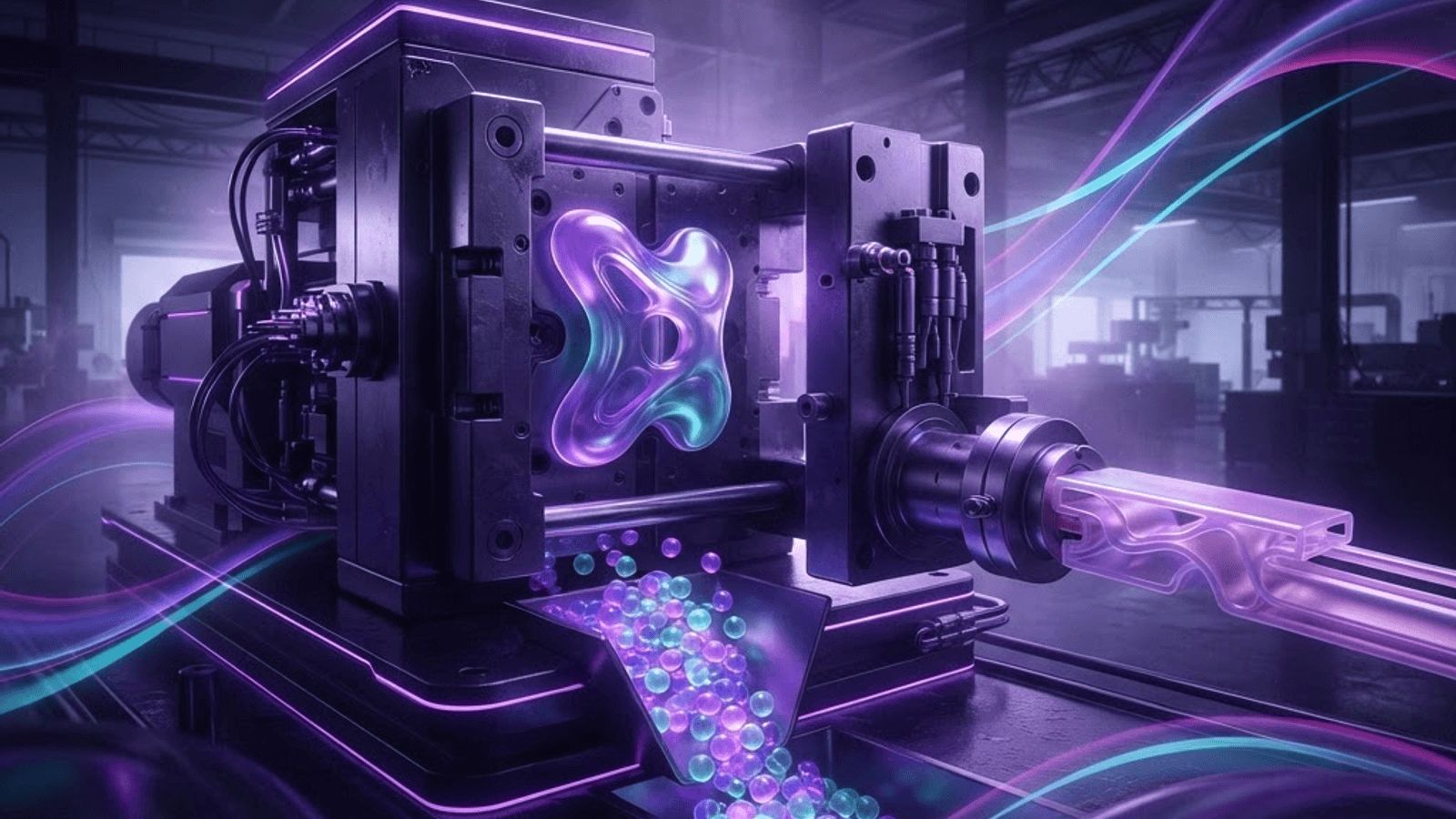
Plastics Manufacturing in the Inland Northwest
Plastics manufacturing occupies an important if under-recognized place in Spokane's industrial economy. Local producers supply components to medical device makers, agricultural equipment builders, electronics manufacturers, food processors, and construction suppliers throughout the region. The sector spans multiple distinct processes, each suited to different geometries, volumes, and material requirements.
Spokane's competitive position rests on several factors. Low-cost electricity matters substantially for processes that heat and cool polymers continuously. Industrial land and building costs remain well below West Coast metro levels. And the region's diversified industrial base provides local demand across enough sectors that no single customer loss threatens a well-run operation.
Injection Molding Operations
Injection molding represents the largest plastics process category in the region. Local molders operate presses across a wide tonnage range, producing everything from small precision components to substantial structural parts. Applications include medical device housings, electronic enclosures, agricultural equipment components, and consumer product parts.
Tooling is the central economic consideration in injection molding. Molds represent significant upfront investment, which makes the process appropriate for higher volumes where tooling cost amortizes across many parts. Molders with internal tool building and maintenance capability offer meaningful advantages: faster tool repairs, quicker engineering changes, and better diagnosis of quality problems traceable to tool condition.
Scientific molding practice separates capable molders from average ones. Systematic process development, cavity pressure monitoring, and documented process windows produce consistent parts across shifts and material lots. Molders relying on operator intuition produce variable results that surface as intermittent quality problems.
Thermoforming and Vacuum Forming Producers
Thermoforming suits large parts at moderate volumes where injection molding tooling would be prohibitive. Spokane thermoformers produce equipment housings, machine guards, trays, protective covers, agricultural components, and point-of-purchase displays.
The process economics are attractive for many regional applications. Thermoform tooling costs a fraction of injection molds, making the process viable at volumes from hundreds to low tens of thousands. Pressure forming and twin-sheet forming extend capability toward sharper detail and structural rigidity for demanding applications.
Plastic Extrusion and Profile Manufacturers
Extrusion produces continuous profiles, tubing, sheet, and film. Regional extruders supply irrigation tubing for Columbia Basin agriculture, protective edging, conduit, custom profiles for window and door manufacturers, and sheet stock for downstream fabricators.
Custom profile extrusion is a particularly valuable regional capability. A manufacturer needing a specific cross-section for its product can commission a die at moderate cost and receive material precisely suited to the application, eliminating the assembly steps that standard shapes would require.
Plastic Fabrication and Machining Specialists
Not all plastic parts come from molds. Fabrication shops cut, machine, bend, weld, and bond plastic sheet and rod into finished assemblies. This approach suits low volumes, very large parts, and applications requiring engineering plastics that mold poorly.
Spokane fabricators work in acrylic, polycarbonate, polyethylene, polypropylene, polyvinyl chloride, and high-performance engineering polymers. Typical products include tanks, chemical-resistant enclosures, machine components, laboratory fixtures, guards, and displays. Because tooling is unnecessary, fabrication delivers prototypes and small runs quickly, which makes these shops valuable partners during product development.
Medical and Cleanroom Plastics Production
Spokane's healthcare and medical device presence supports plastics manufacturing under controlled conditions. These operations maintain cleanroom molding areas, use medical-grade resins with documented lot traceability, and operate ISO 13485 quality systems.
Medical plastics work carries requirements far beyond dimensional accuracy: material biocompatibility documentation, process validation, controlled change management, and full traceability from resin lot to finished device. Manufacturers who have built these systems occupy a defensible market position because the qualification burden deters casual entrants.
Evaluating a Plastics Manufacturer
Process match is the first consideration. Injection molding, thermoforming, extrusion, and fabrication each fit particular combinations of geometry, volume, and material. A manufacturer offering only one process will recommend it regardless of suitability, so understanding the alternatives protects you from a costly mismatch.
Material expertise separates strong partners from order-takers. Polymer selection involves tradeoffs among strength, stiffness, impact resistance, temperature performance, chemical compatibility, ultraviolet stability, and cost. Manufacturers who ask detailed questions about the operating environment and recommend materials accordingly are demonstrating genuine engineering capability.
Quality systems and inspection capability determine consistency. Ask about dimensional inspection equipment, process monitoring, statistical process control practices, and how the shop handles nonconforming material. Documented systems produce dependable parts; informal practices produce surprises.
Trends in Regional Plastics Manufacturing
Sustainability has become a central concern. Customers request recycled content, recyclable material selection, bio-based polymers, and reduced part weight. Manufacturers investing in regrind handling, recycled resin processing, and design-for-recycling consultation are meeting real market requirements.
Automation adoption continues to expand. Robotic part removal, automated inspection, in-mold labeling, and integrated assembly reduce labor content and improve consistency, helping domestic producers compete against lower-wage regions.
Additive manufacturing has changed the prototyping landscape. Many plastics manufacturers now offer three-dimensional printing for prototypes and bridge production, letting customers validate designs before committing to tooling. This capability reduces development risk substantially.
Choosing the Right Partner
Provide complete requirements when soliciting quotes: drawings with tolerances, annual volume estimates, operating environment, regulatory needs, cosmetic expectations, and target cost. Complete information produces comparable quotes and realistic expectations.
Discuss tooling ownership explicitly. Determine who owns the mold, where it will be stored, what maintenance is included, and what happens if you change suppliers. Ambiguity here creates serious problems later.
Finally, weigh engineering support alongside price. A manufacturer that reviews your design for moldability and suggests changes reducing cycle time, eliminating secondary operations, or improving part strength will deliver savings that dwarf small differences in piece price.