
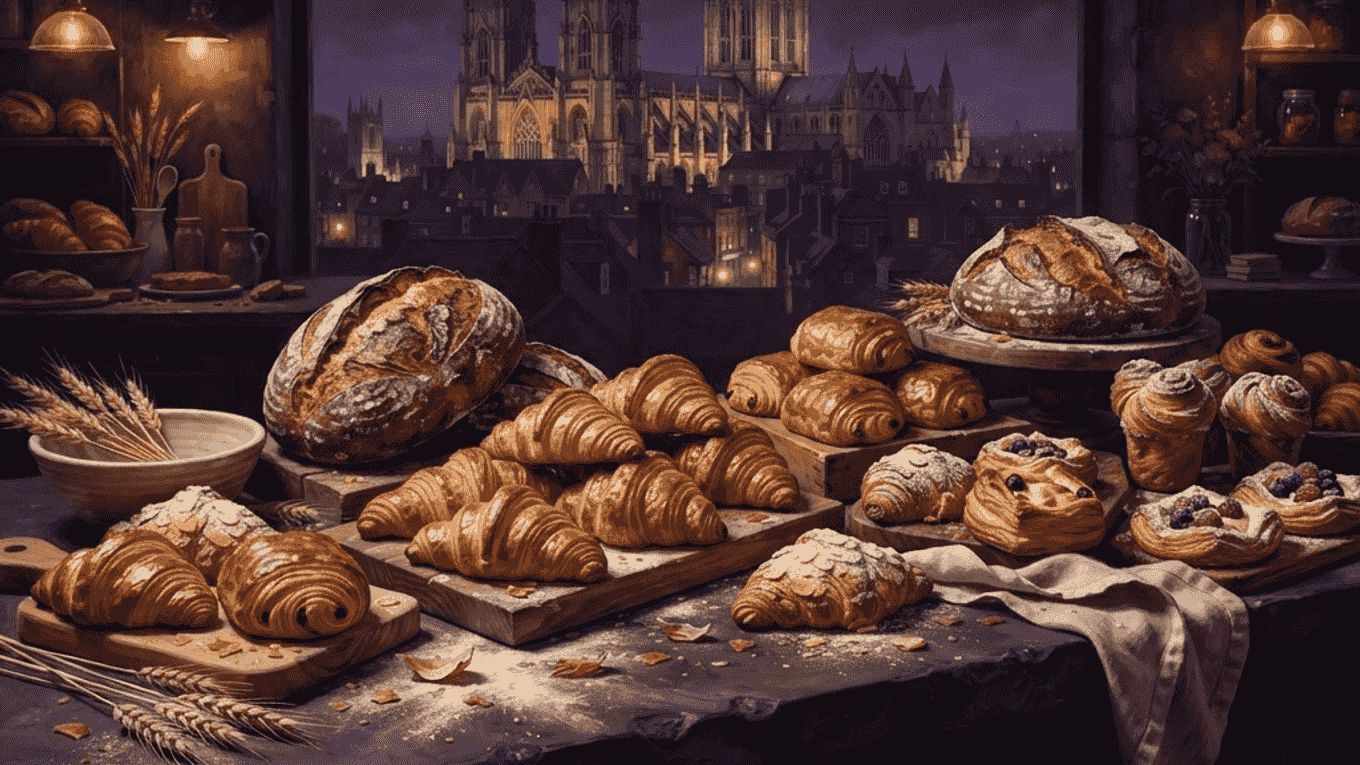
A City With Real Baking Character
Lincoln's bakery scene benefits from an unusual combination: a historic city centre that supports independent retail, a surrounding county producing some of the country's finest cereals, and a population that includes students, families, tourists, and workers all wanting different things from a bakery. The result is genuine variety, from traditional shops turning out reliable morning goods to newer operations fermenting dough for two days before it reaches the oven.
Lincolnshire's agricultural strength matters here. Local flour milled from regional wheat, county dairy, and seasonal fruit all appear in what the better bakeries produce. Several also draw on Lincolnshire's plum bread and sausage roll traditions, giving the city a baking identity distinct from generic high street offerings.
Ten Bakeries Worth Visiting
Steep Hill Bakehouse works with long-fermented sourdough, selling loaves and pastries from a small uphill shop that regularly sells out by early afternoon. Bailgate Bakery is a traditional family business known for morning rolls, custard tarts, and generously filled sausage rolls.
Brayford Bread Company supplies restaurants alongside its retail counter, specialising in rye, spelt, and seeded loaves. Witham Pastry House focuses on laminated pastry, with croissants and pain au chocolat produced fresh each morning. Lindum Plum Bread Co. keeps the county's plum bread tradition alive, alongside fruit cakes and seasonal specialities.
Northgate Patisserie handles finer work: entremets, tarts, and celebration cakes to order. Sincil Street Bakers offers a straightforward, well-priced range popular with market shoppers. Uphill Sourdough operates as a small-batch micro-bakery with pre-order collection. Fossdyke Bakehouse caters to gluten-free and allergen-aware customers in a dedicated production space. Cathedral Quarter Cakes completes the list, combining a café with bakery counter for sit-in visitors.
How to Recognise Genuine Craft Baking
The clearest indicators are visible. Real sourdough has an irregular open crumb, a deeply coloured blistered crust, and a slightly tangy aroma; it also keeps for days rather than going stale overnight. Laminated pastry should shatter when broken, revealing distinct layers, and leave buttery flakes rather than greasy residue.
Ask about fermentation time and ingredients. Bakeries proud of their process explain it readily: which flour, how long the dough proves, whether it is baked on site. Shops that bake off frozen products elsewhere often avoid the question, which is itself informative. Neither approach is wrong, but knowing the difference helps you choose according to what you want.
Seasonality and Specialities
Bakeries follow the calendar closely. Hot cross buns in spring, fruit-heavy bakes through late summer, mince pies and stollen towards Christmas, and plum bread year-round in Lincolnshire households. Seasonal fruit tarts reflect what is actually available, so a summer menu heavy on stone fruit and a winter menu leaning on apples and dried fruit suggests genuine kitchen work rather than a fixed catalogue.
Celebration cakes deserve advance planning. Detailed decoration, tiered structures, and dietary adaptations all require lead time, and the best decorators book up well ahead during wedding season and around holidays.
Dietary Needs and Allergen Handling
Demand for gluten-free, dairy-free, and vegan baking has grown substantially. Genuine gluten-free provision requires separated preparation areas, since flour dust travels easily; bakeries taking this seriously will describe their controls rather than simply listing products. For coeliac customers, that distinction is essential rather than preferential.
Vegan baking has improved markedly, with plant-based laminated pastry and enriched doughs now genuinely good rather than merely acceptable. Ask what is available on a given day, as production often varies through the week.
Getting the Best From a Bakery Visit
Arrive early for sourdough and pastries, particularly at smaller operations with limited daily output. Pre-ordering guarantees availability and helps bakers plan production, reducing waste. Store bread cut-side down in paper or a bread bin rather than plastic, and refresh day-old loaves briefly in a hot oven to restore crust.
Supporting independent bakeries has a wider effect. Their orders sustain local mills, dairies, and growers, and their counters keep footfall in Lincoln's historic streets, where independent retail relies on exactly that kind of daily habit.
Understanding Lincolnshire's Baking Traditions
Lincolnshire plum bread is the county's best-known baked speciality, a dense, lightly spiced fruit loaf traditionally served sliced with a wedge of mature cheese. The combination sounds unusual to visitors and entirely obvious to anyone raised locally. Several city bakeries produce their own version, with recipes varying in fruit content, spicing, and whether the loaf is enriched with lard or butter.
Sausage rolls occupy similar cultural ground, given the reputation of Lincolnshire sausage with its distinctive sage seasoning. A properly made local sausage roll uses coarse-ground pork, generous herbs, and pastry with enough structure to hold up. It is worth asking whether the filling is made from butcher's sausage meat, since the difference is immediately apparent.
Supplying Cafés, Events, and Weddings
Beyond retail counters, many Lincoln bakeries operate significant wholesale and event businesses. Cafés and restaurants rely on daily bread deliveries, offices order breakfast pastries, and wedding cake commissions form a meaningful part of annual revenue for the more decorative operations. Each of these requires different lead times and conversations.
For events, discuss quantities honestly and early. Bakers plan production capacity days ahead, and large last-minute orders are often impossible regardless of goodwill. Tasting sessions are standard for wedding work, and clear conversation about structural requirements, transport, storage, and serving conditions prevents disappointment on the day. Written confirmation of flavours, dietary variants, and delivery timing protects both parties.
Final Thoughts
Lincoln rewards anyone willing to explore beyond the obvious, offering long-fermented sourdough, proper laminated pastry, traditional plum bread, refined patisserie, and dedicated allergen-aware baking. Judge by crust, crumb, and aroma, ask about process, and buy according to the occasion. The city's bakeries repay that attention with some of the most consistently satisfying food available anywhere in Lincolnshire.