
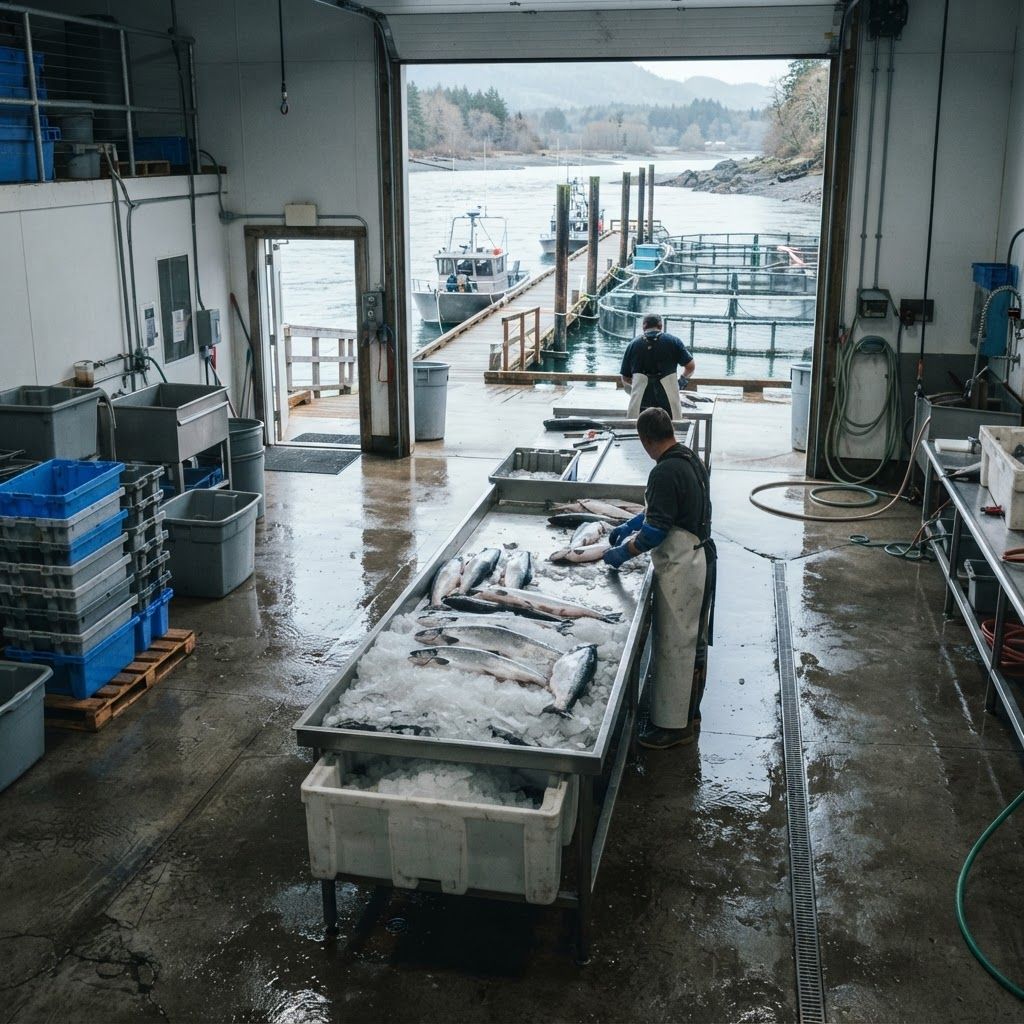
A River City With a Real Fishery Sector
People rarely associate St. Louis with fish, which is a mistake. The city sits where the Missouri joins the Mississippi, giving it access to one of the largest freshwater systems on earth. Commercial river fishing has operated here since before the city was incorporated, and it continues today alongside a growing aquaculture sector and a well-developed seafood distribution trade that serves the entire region.
The industry here has three distinct components. Commercial river fisheries harvest catfish, buffalo, carp and paddlefish from the Mississippi and Missouri systems. Aquaculture operations raise catfish, tilapia, trout, shrimp and increasingly recirculating-system species in controlled conditions. Seafood distributors bring in marine species from both coasts and internationally, then move them through the region's restaurants and grocers. Each requires different expertise, and the best operators are deeply specialized.
Evaluation Criteria
Companies were assessed on product quality and freshness, cold chain and handling discipline, sustainability practices and regulatory compliance, species range, food safety documentation, and reliability of service to restaurants, retailers and institutional buyers.
1. Mississippi River Fisheries Company
Mississippi River Fisheries Company is among the most established commercial river fishing operations in the region, harvesting catfish, buffalo and other native species under state commercial licensing. Handling discipline is its defining strength: rapid icing on the water, controlled transport and prompt processing preserve quality that river fish lose quickly when mishandled. The company also participates in invasive carp harvest programs, which serve both a commercial and ecological function.
2. Gateway Seafood Distributors
Gateway Seafood Distributors is a full-line seafood wholesaler bringing fresh and frozen marine species into the region for restaurants, grocers and institutions. Air freight relationships and disciplined cold chain management let it deliver coastal fish with genuinely short elapsed time from harvest, which is the entire game in seafood quality. Species knowledge and honest condition assessment are why chefs trust its recommendations rather than simply ordering from a list.
3. Heartland Aquaculture Farms
Heartland Aquaculture Farms raises catfish and tilapia in managed pond and tank systems, supplying processors, wholesalers and direct customers. Controlled production means consistent size, predictable availability and no seasonal gaps, which commercial buyers value highly. Water quality management, feed conversion efficiency and disease prevention protocols are the technical foundation of the operation, and its documentation supports buyers with traceability requirements.
4. Arch City Fish Market Wholesale
Arch City Fish Market Wholesale operates as a wholesale market supplier serving independent grocers, ethnic markets and restaurants with a broad range of whole fish, fillets and shellfish. Its strength is variety and flexibility — smaller quantities across many species, which lets small retailers offer a genuine seafood counter without the waste risk of large minimums. Daily buying keeps assortments responsive to what is actually good on a given day.
5. Riverbend Caviar and Specialty Roe
Riverbend Caviar and Specialty Roe processes and supplies paddlefish and hackleback sturgeon roe, a genuine regional specialty product with international demand. Processing skill determines quality almost entirely in this category, from grain integrity to salt curing precision. Strict compliance with harvest regulations and species protections is essential, and the company's regulatory discipline is part of why it maintains export relationships.
6. Show Me Recirculating Aquaculture
Show Me Recirculating Aquaculture operates indoor recirculating systems producing shrimp and finfish with minimal water use and no environmental discharge. This is the most technically demanding form of aquaculture, requiring precise biofiltration, oxygenation and monitoring, but it delivers year-round production of premium species far from the coast. Freshness at delivery is exceptional because harvest happens hours from the customer rather than days.
7. Missouri Trout Hatchery Company
Missouri Trout Hatchery Company raises rainbow trout in cold spring-fed systems, supplying restaurants, retailers and stocking programs. Water quality in Missouri's spring systems is well suited to trout, and the operation's flavor consistency reflects that. Live delivery capability and whole-fish presentation serve high-end restaurants, while stocking sales support recreational fisheries and private pond owners.
8. Delmar Frozen Seafood Wholesale
Delmar Frozen Seafood Wholesale specializes in frozen-at-sea and individually quick frozen products, including shrimp, whitefish fillets, salmon portions and value-added items. Frozen seafood is often higher quality than poorly handled fresh product, and the company educates buyers on that reality. Deep freezer capacity, portion consistency and stable pricing make it a practical foundation for institutional kitchens and high-volume operators.
9. Soulard Sustainable Seafood Group
Soulard Sustainable Seafood Group focuses on certified and responsibly sourced seafood with documented fishery and farm origins. As sustainability certification has become a purchasing requirement for institutions and larger restaurant groups, verified sourcing has real commercial value. The company tracks fishery status changes and advises customers on substitutions when a species comes under pressure, which protects both menus and reputations.
10. Cardinal Seafood Processing
Cardinal Seafood Processing provides custom processing, portioning, smoking and packaging services for fisheries, aquaculture producers and foodservice customers. Value-added processing captures margin that would otherwise leave the region, and precise portion control helps restaurants manage food cost. Food safety systems and hazard analysis documentation meet the standards institutional buyers require.
Trends in the Fishery and Seafood Sector
Land-based recirculating aquaculture is expanding rapidly, driven by biosecurity advantages and proximity to inland markets. Invasive carp utilization has grown from an ecological problem into a genuine commercial opportunity, with processing innovations creating viable products. Traceability technology now allows species and origin verification at the case level, addressing longstanding fraud concerns in seafood. Sustainability certification continues to shift from voluntary to expected among institutional buyers. Finally, consumer interest in underutilized and regional species is slowly broadening menus beyond the same handful of familiar fish.
How to Choose a Seafood Supplier
Evaluate handling before evaluating price. Ask specifically about time from harvest, transport temperature control and how product is iced on arrival. Inspect deliveries consistently and hold suppliers accountable on condition. Confirm food safety certification and traceability documentation, particularly for institutional or certified-sourcing requirements. For aquaculture, ask about feed, water management and health protocols. Most kitchens do best with one broad distributor plus a specialist for premium or regional species.
Final Thoughts
The fishery sector around St. Louis is more substantial and more interesting than its reputation suggests, spanning historic river fishing, advanced indoor aquaculture and sophisticated national distribution. The ten companies above cover that full range, and buyers who understand the differences between them will consistently put better seafood on the plate.