
The Question on Every Marketer's Mind
As artificial intelligence grows more capable by the day, a pressing question echoes across the industry: will marketing be replaced by AI? It's a fair concern. AI can now write copy, generate images, analyze data, run ad campaigns, and even hold conversations with customers. But the reality is more nuanced than a simple yes or no. In this article, we'll explore what AI can genuinely do, where it falls short, and what the future of marketing really looks like.
The short answer is that AI won't replace marketing, but it will transform it. Marketers who understand and embrace AI will thrive, while those who ignore it may struggle. The profession is evolving, not disappearing.
How AAMAX.CO Prepares Your Brand for the AI Era
Adapting to an AI-driven marketing world takes foresight and expertise, and AAMAX.CO can help your business stay ahead. They are a full-service digital marketing company operating worldwide, blending human creativity with AI-powered efficiency to deliver outstanding results. Their digital marketing team uses AI to enhance strategy, while their website development specialists build the modern, high-performing digital foundations that AI-driven campaigns need to succeed. With them, you get the best of both worlds: smart technology guided by human insight.
What AI Does Exceptionally Well
There's no denying AI's strengths. It processes vast amounts of data in seconds, spotting patterns and insights no human could find manually. It automates repetitive tasks like scheduling, reporting, and email sequencing. It generates content drafts quickly, personalizes experiences at scale, and optimizes ad campaigns in real time. In these areas, AI is genuinely transformative.
These capabilities make marketing faster, more efficient, and more data-driven. Tasks that once took days can now be done in minutes, freeing marketers to focus on higher-value work. For routine, high-volume, and analytical tasks, AI is often superior to human effort.
Where AI Falls Short
Despite its power, AI has significant limitations. It lacks genuine creativity, emotional intelligence, and the ability to truly understand human experience. It can mimic patterns from existing data, but it doesn't originate bold, original ideas or grasp cultural nuance the way people do. Great marketing often relies on empathy, storytelling, and intuition, qualities AI cannot authentically replicate.
AI also struggles with strategy that requires deep contextual judgment, ethical decision-making, and understanding of complex human relationships. It can't build genuine trust, navigate delicate brand situations, or make values-based decisions. These distinctly human capabilities remain essential to effective marketing.
The Roles That Are Changing
Rather than eliminating marketing jobs wholesale, AI is reshaping them. Routine tasks are being automated, which means some roles focused purely on repetitive work will shrink. However, new roles are emerging, such as AI strategists, prompt engineers, and specialists who know how to blend AI tools with human creativity.
Marketers are increasingly expected to be part strategist, part creative, and part technologist. The most valuable professionals will be those who can direct AI effectively, interpret its outputs critically, and add the human touch that technology can't provide. Adaptability and continuous learning are becoming core career skills.
The Human-AI Partnership
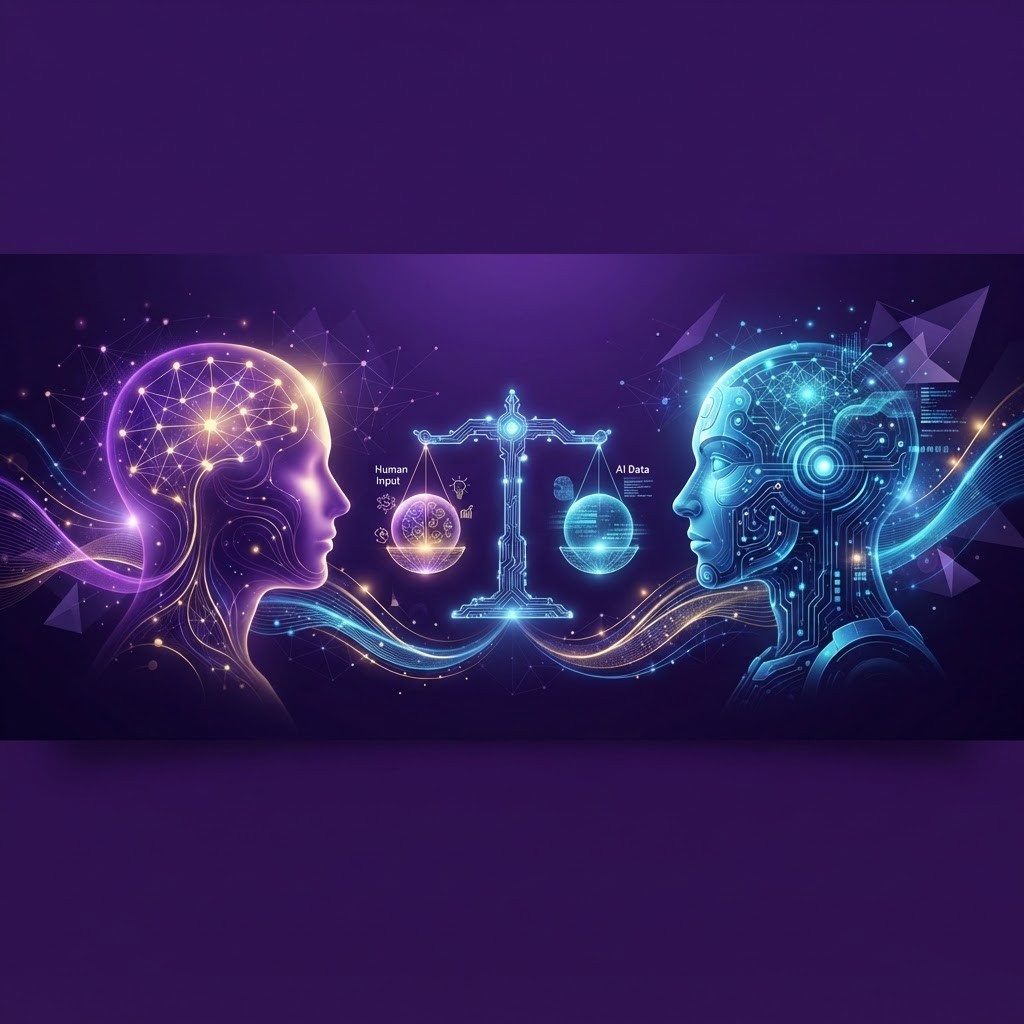
The future of marketing isn't humans versus AI; it's humans working with AI. Think of AI as a powerful assistant that handles the heavy lifting so marketers can focus on what they do best. AI can draft ten versions of an ad, but a human decides which resonates emotionally. AI can analyze customer data, but a human crafts the strategy and story that turns insights into connection.
This partnership amplifies human capabilities rather than replacing them. Marketers who learn to collaborate with AI will accomplish more, work faster, and deliver better results than either humans or AI could alone. The combination is far more powerful than either part.
Why the Human Element Endures
Marketing, at its heart, is about connecting with people, understanding their needs, desires, and emotions. That fundamentally human endeavor can't be fully automated. Customers respond to authenticity, creativity, and genuine relationships. Brands are built on trust and emotional resonance, things that require human insight and care.
As AI handles more of the mechanical work, the human elements of marketing become even more valuable, not less. Creativity, empathy, strategic thinking, and ethical judgment will distinguish great marketing from the generic, AI-generated noise that floods the market.
How to Future-Proof Your Marketing Career
To thrive in this new era, embrace AI rather than fear it. Learn how to use AI tools effectively, understand their strengths and limitations, and focus on developing the uniquely human skills that AI can't replicate. Cultivate creativity, strategic thinking, emotional intelligence, and the ability to tell compelling stories.
Stay curious and keep learning, because the tools will keep evolving. The marketers who commit to continuous growth and adaptation will not only survive but flourish. Position yourself as someone who can harness AI to deliver exceptional, human-centered results.
Conclusion
Will marketing be replaced by AI? No, but it will be profoundly transformed. AI excels at data, automation, and scale, while humans remain irreplaceable for creativity, empathy, and strategy. The future belongs to marketers who partner with AI, combining technological efficiency with human insight. Rather than a threat, AI is an opportunity to do more meaningful, impactful work. Embrace it, and your marketing, and your career, will be stronger for it.