
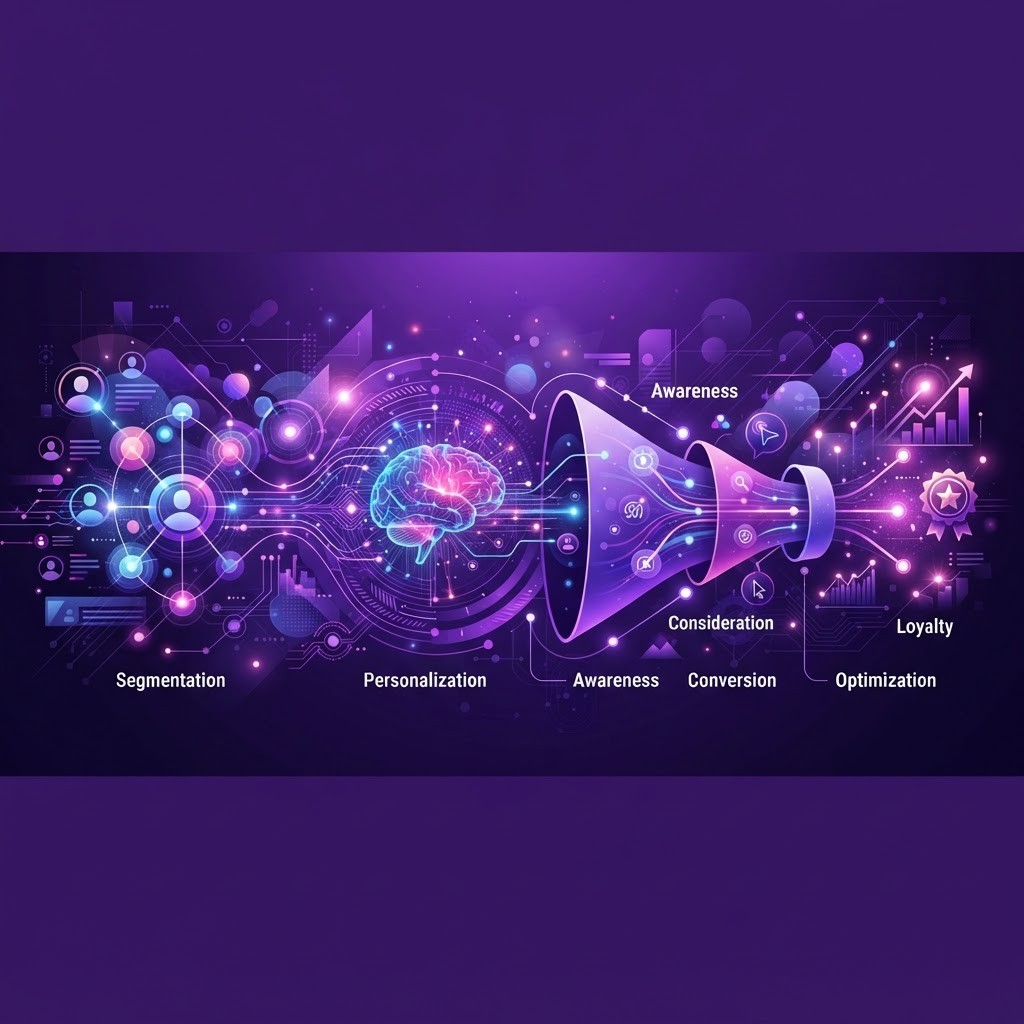
Understanding Marketing Behaviour in the AI Era
Marketing behaviour refers to the actions, decisions, and processes that marketers use to attract, engage, and retain customers. These behaviours range from researching audiences and creating content to managing campaigns, analyzing data, and nurturing customer relationships. Artificial intelligence has the power to enhance nearly all of these activities, making them faster, more accurate, and more effective. The key is understanding which marketing behaviours benefit most from AI and how to apply it thoughtfully.
Rather than replacing marketers, AI acts as a force multiplier. It handles data-heavy and repetitive tasks with speed and precision, freeing human marketers to focus on strategy, creativity, and relationship-building. When applied to the right behaviours, AI transforms marketing from a reactive discipline into a proactive, data-driven one.
How AAMAX.CO Applies AI Across Marketing
AAMAX.CO is a full-service digital marketing company serving clients worldwide, and their team specializes in applying AI to the marketing behaviours that deliver the greatest impact. They help businesses use AI to personalize customer experiences, predict trends, automate routine tasks, and make smarter decisions with data. By integrating AI into a broader, results-focused strategy, they help brands work more efficiently while improving engagement and conversions. Their expertise ensures that AI is used where it genuinely adds value rather than as technology for its own sake.
Personalization and Customer Targeting
One of the marketing behaviours that benefits most from AI is personalization. Modern customers expect experiences tailored to their interests and needs, and delivering that at scale is nearly impossible without automation. AI analyzes customer data to understand preferences, behaviors, and intent, then delivers personalized content, product recommendations, and offers to each individual. This dramatically improves relevance, engagement, and conversion rates.
Closely related is audience targeting. AI can segment audiences with far more nuance than manual methods, identifying high-value groups and predicting which prospects are most likely to convert. This allows marketers to focus their efforts and budgets where they will have the greatest effect.
Content Creation and Optimization
Content is central to marketing, and AI can enhance many aspects of the content process. AI tools help generate ideas, draft outlines, and identify the topics and keywords most likely to resonate with target audiences. They can also optimize existing content for search visibility and readability, and analyze which pieces perform best so marketers can double down on what works.
While AI can accelerate content production, human creativity and judgment remain essential for crafting authentic, on-brand messaging that truly connects with people. The best approach uses AI to handle research and optimization while relying on skilled writers to bring voice, insight, and emotion to the content.
Predictive Analytics and Decision-Making
Another marketing behaviour transformed by AI is data analysis and decision-making. AI excels at processing vast amounts of data to uncover patterns and predict future outcomes. Predictive analytics can forecast customer behavior, anticipate demand, identify churn risks, and estimate the likely return of different strategies. This empowers marketers to make informed, forward-looking decisions rather than relying on intuition or lagging indicators.
These insights help allocate budgets more effectively, prioritize the highest-impact activities, and adjust strategies before problems arise. In a competitive environment, this ability to anticipate and adapt is a significant advantage.
Automation of Repetitive Tasks
Many marketing behaviours involve repetitive, time-consuming tasks such as scheduling posts, sending emails, adjusting bids, and generating reports. AI-powered automation handles these efficiently and accurately, reducing errors and freeing marketers to focus on higher-value work. Automated workflows can trigger the right actions at the right moments based on customer behavior, ensuring timely and consistent engagement without constant manual effort.
This efficiency not only saves time but also improves the customer experience by delivering relevant communications precisely when they are most likely to be welcomed.
Improving Search Visibility
AI also enhances the behaviour of optimizing for search. As search engines evolve to include AI-generated answers, marketers must adapt their content and technical practices accordingly. AI tools assist with keyword research, technical audits, and content structuring that improves visibility across both traditional and AI-driven search experiences. Pairing these tools with strong search engine optimization practices ensures brands remain discoverable as the search landscape changes.
Conclusion
Nearly every marketing behaviour can benefit from AI, but the greatest gains come in personalization, audience targeting, content optimization, predictive analytics, task automation, and search visibility. The common thread is that AI excels at data-heavy and repetitive work, amplifying human marketers rather than replacing them. By applying AI thoughtfully to the behaviours where it adds the most value, and integrating it into a coherent strategy, businesses can market more efficiently and effectively than ever. The result is stronger engagement, smarter decisions, and better outcomes across the board.