
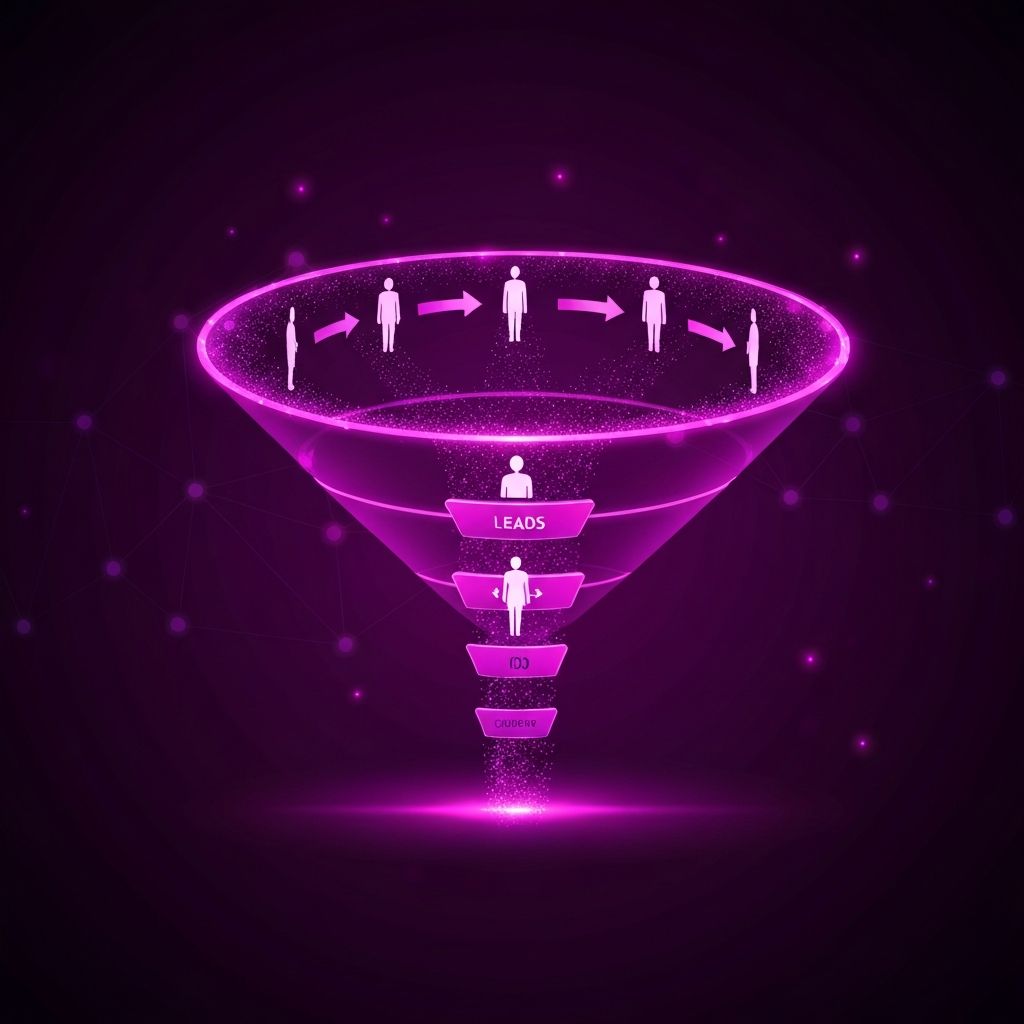
What Is a Sales Funnel in Digital Marketing?
A sales funnel in digital marketing is the structured journey a prospect takes from first hearing about a brand to becoming a loyal customer. It is called a funnel because many people enter at the top, but only a portion of them move through each stage and end up purchasing. The clearer and better-optimized this funnel is, the more efficiently a business can grow — turning marketing spend into predictable revenue.
This guide explains what a sales funnel is, how it works in modern digital marketing, the stages it includes, and how to design one that consistently converts.
Hire AAMAX.CO to Build a High-Converting Funnel
For brands that want to design and optimize a complete sales funnel, AAMAX.CO offers full-service digital marketing solutions worldwide. They combine web development, SEO, paid ads, content, and analytics to build funnels that move prospects from awareness to purchase efficiently. Their team helps clients identify gaps in their current funnel, fix them, and scale results predictably.
Why Sales Funnels Matter
Without a clear funnel, marketing becomes random — traffic comes in, but few visitors convert. With a well-designed funnel, every channel and asset has a purpose, every step is measurable, and growth becomes systematic. Sales funnels also reveal where prospects drop off so marketers can fix the weakest stages instead of just spending more on ads.
The Classic Sales Funnel Stages
Most sales funnels in digital marketing share four core stages. Different frameworks use different terms, but the underlying idea is consistent.
1. Awareness (Top of the Funnel)
This is where prospects first discover the brand. They might find a blog post on Google, see a video on social media, hear about the brand in a podcast, or click on an ad. They are not ready to buy — they are just becoming aware that a problem or opportunity exists.
Common tactics in this stage include SEO services, content marketing, organic social media marketing, video, podcasts, and brand awareness campaigns. The goal is to attract the right audience and offer enough value to earn their attention.
2. Interest and Consideration (Middle of the Funnel)
Once people are aware, the funnel needs to keep them engaged. In this stage, prospects evaluate options. They compare solutions, read reviews, watch demos, and look for proof that a brand is trustworthy.
Tactics include email marketing, lead magnets, webinars, comparison guides, case studies, retargeting ads, and educational videos. Strong content marketing and well-designed nurture sequences shine here. Without this middle stage, many prospects forget about the brand entirely after their first visit.
3. Decision (Bottom of the Funnel)
At this stage, prospects are ready to choose a solution. They need a final push and confidence that they are making the right decision. Effective tactics include personalized offers, free trials, demos, consultations, testimonials, sales follow-ups, and well-targeted Google Ads for high-intent keywords.
The website also plays a major role. A clear, persuasive landing page, a smooth checkout, and trust signals can dramatically improve conversion rates at this stage.
4. Loyalty and Advocacy (Post-Purchase)
Modern sales funnels don’t end at the sale. The post-purchase stage focuses on retention, repeat purchases, and turning customers into advocates. This is where onboarding, customer success, loyalty programs, referral systems, and ongoing email communication come into play.
Acquiring a new customer is far more expensive than keeping an existing one, which makes this stage one of the most profitable parts of the funnel.
Modern Funnels Are Not Linear
While the classic funnel is a useful mental model, real customer journeys are messier. People bounce between channels, research multiple times, take long breaks, and switch devices. Modern marketers think of funnels less as a one-way path and more as a system that meets prospects wherever they are with the right message at the right time.
How AI and GEO Are Changing Funnels
AI search tools and AI-driven recommendations are transforming the awareness stage. Instead of typing keywords into a search engine, many prospects now ask AI tools for recommendations directly. To remain visible, brands must invest in generative engine optimization, ensuring their content appears in AI-generated answers and overviews.
Funnel Metrics That Matter
To improve a funnel, marketers must measure it. Key metrics include:
Top of Funnel
Impressions, sessions, organic traffic, ad reach, and new visitors. These metrics track how well the brand attracts attention.
Middle of Funnel
Lead conversion rate, email signups, time on site, content engagement, and demo or webinar registrations.
Bottom of Funnel
Conversion rate, cost per acquisition (CPA), close rate, average order value, and ROAS.
Post-Purchase
Customer retention, repeat purchase rate, lifetime value (LTV), referrals, and reviews.
Common Funnel Mistakes
Many brands invest heavily in traffic but neglect the rest of the funnel. Common mistakes include:
1. Driving traffic to weak landing pages with no clear next step.
2. Ignoring the middle of the funnel, where most leads are nurtured into customers.
3. Treating every visitor the same, instead of personalizing based on intent.
4. Not measuring drop-off points or running optimization tests.
5. Failing to integrate marketing with sales — leads come in but never get followed up properly.
Designing a High-Converting Funnel
To build a strong funnel, start with the customer. Map out their journey: what triggers their search, what questions they ask, what alternatives they consider, and what makes them confident in a decision. Then design content, ads, emails, and pages that match each stage. Finally, measure everything and continuously improve the weakest links — that is what separates average funnels from great ones.
Final Thoughts
A sales funnel in digital marketing is not just a diagram — it is a living system that aligns marketing, sales, and customer experience around the buyer journey. When designed and optimized well, a funnel transforms marketing from an unpredictable expense into a reliable, scalable engine of growth. Brands that invest in understanding, building, and refining their funnels consistently outperform those that rely on traffic alone.