
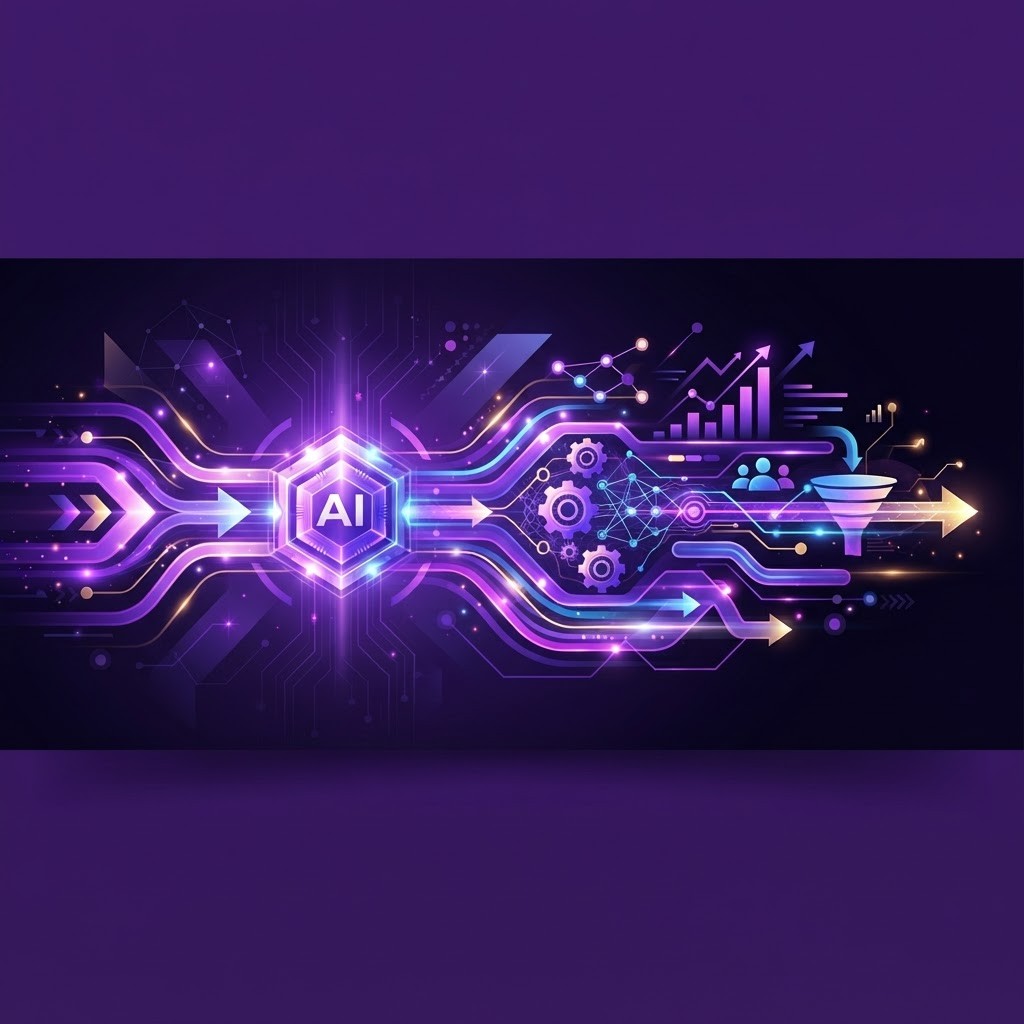
AI-driven marketing is an approach in which artificial intelligence sits at the center of marketing decision-making, guiding strategy and execution based on data rather than assumptions. Instead of using AI as an occasional tool, AI-driven organizations build their entire marketing engine around intelligent systems that collect data, generate insights, automate actions, and continuously learn. This creates a feedback loop where every campaign informs the next, and performance improves over time without constant manual intervention.
The distinction matters. Traditional marketing often relies on intuition, historical habits, and periodic analysis. AI-driven marketing flips this model by making real-time data the foundation of every decision. Algorithms decide who to target, what to say, when to say it, and how to allocate budget, all while adapting instantly to changing conditions. The result is a marketing operation that is more responsive, precise, and scalable.
How AAMAX.CO Helps With AI-Driven Marketing
Transitioning to a data-first, AI-driven model can be complex, and AAMAX.CO helps businesses make that shift smoothly. As a full-service digital marketing company working with clients worldwide, their team builds the infrastructure, strategy, and automation needed to put AI at the heart of a marketing program. They connect data sources, implement intelligent campaign systems, and align AI-driven insights with business goals. By pairing their digital marketing expertise with advanced analytics, they help brands move from reactive campaigns to proactive, self-optimizing marketing that delivers measurable growth.
How AI-Driven Marketing Works
At the foundation of AI-driven marketing is data. Every customer interaction, from a website visit to an email open to a purchase, generates signals. AI systems collect and unify this data, creating a comprehensive view of each customer. Machine learning models then analyze these patterns to predict behavior, identify opportunities, and recommend the best next action.
Once insights are generated, automation takes over execution. AI selects the optimal audience segments, personalizes messaging, adjusts ad spend, and triggers campaigns at the ideal moments. Crucially, the system measures results and feeds that performance data back into the models, allowing them to refine future decisions. This continuous learning loop is what sets AI-driven marketing apart from static, campaign-by-campaign approaches.
The Role of Data Integration
AI-driven marketing depends on connected data. When customer information is scattered across disconnected tools, AI cannot form a complete picture, and its recommendations suffer. Successful AI-driven organizations invest in integrating their data sources, from customer relationship platforms and analytics tools to advertising accounts and content systems.
This unified data foundation enables powerful capabilities. It allows AI to recognize the same customer across channels, understand their full journey, and coordinate messaging so experiences feel seamless. The quality and completeness of this data directly determine the quality of the marketing decisions the AI can make.
Personalization and Real-Time Optimization
Personalization is a hallmark of AI-driven marketing. Because the system understands each customer's preferences and behavior, it can tailor content, offers, and timing to the individual. Two visitors to the same website may see entirely different recommendations, pricing incentives, or messaging, each optimized to their unique profile.
Real-time optimization amplifies this advantage. AI continuously monitors performance and adjusts campaigns on the fly, reallocating budget to high-performing channels, pausing underperforming ads, and testing new variations automatically. This constant fine-tuning ensures marketing spend is always working as efficiently as possible, capturing gains that manual management would miss.
Benefits of an AI-Driven Approach
The advantages of AI-driven marketing are substantial. Campaigns become more efficient as budgets flow toward what works. Personalization improves customer experiences and boosts conversion rates. Predictive insights help brands anticipate needs and act before competitors. And automation frees marketing teams from repetitive tasks, allowing them to focus on strategy, creativity, and relationship building.
Perhaps most importantly, AI-driven marketing scales. As the volume of data and complexity of campaigns grow, intelligent systems handle the load without a proportional increase in staff. This scalability allows businesses to expand their reach and sophistication while maintaining efficiency.
Overcoming Common Challenges
Adopting an AI-driven model is not without obstacles. Organizations must ensure their data is clean, connected, and compliant with privacy regulations. They also need to cultivate the right skills and mindset, embracing experimentation and trusting data-informed decisions. Change management is often as important as technology, since teams must adapt their workflows and roles.
The brands that succeed treat AI as a strategic partner rather than a magic solution. They combine algorithmic precision with human oversight, ensuring that automated decisions align with brand values and long-term goals. This balance produces marketing that is both intelligent and authentic.
The Future of AI-Driven Marketing
As artificial intelligence continues to advance, the gap between AI-driven organizations and traditional marketers will widen. Those who build data-first, self-optimizing systems now will enjoy compounding advantages, learning faster and adapting more quickly than the competition. AI-driven marketing is not a temporary trend but the emerging standard for how successful brands operate.
Ultimately, AI-driven marketing represents a shift in mindset as much as technology. It is about letting data illuminate the path forward, empowering teams to make smarter decisions, and building marketing engines that improve themselves over time. For businesses ready to embrace it, the payoff is sustained, scalable growth.