
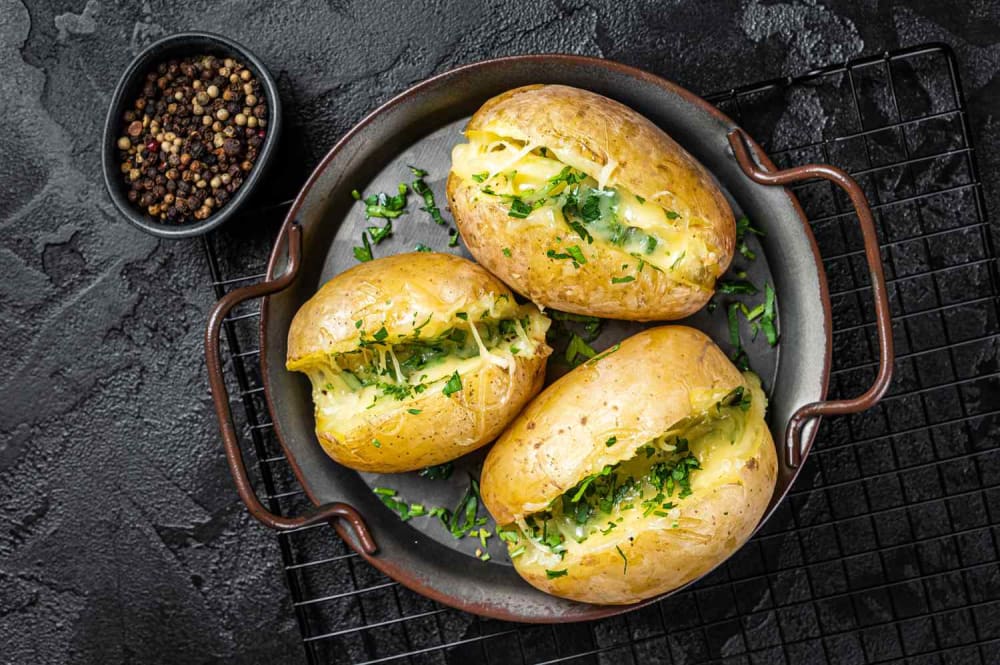
Reheating food safely is one of the most important responsibilities of food service workers. Among the many foods served in restaurants, cafeterias, catering kitchens, and institutional dining facilities, baked potatoes are particularly common. While reheating a baked potato may seem simple, food workers must follow strict food safety guidelines and use the proper equipment to ensure the potato is reheated safely, evenly, and efficiently.
Improper reheating can lead to uneven temperatures, poor texture, and even foodborne illness if harmful bacteria survive. For that reason, food safety standards such as those recommended by food safety authorities require that foods be reheated to safe internal temperatures using approved kitchen equipment.
This guide explains what equipment food workers should use to reheat a baked potato, why the equipment matters, and how to properly perform the reheating process in commercial food service environments.
Why Proper Reheating Equipment Matters
Food safety regulations emphasize that potentially hazardous foods must be reheated quickly and evenly to safe temperatures. Baked potatoes fall into this category because they are cooked foods that can support bacterial growth if stored improperly or reheated incorrectly.
Using the correct equipment ensures:
- Safe internal temperatures are reached
- Even heat distribution
- Reduced risk of foodborne illness
- Maintenance of food quality and texture
- Compliance with food safety standards
Food workers must ensure that reheated foods reach an internal temperature of 165°F (74°C) for at least 15 seconds. The equipment used plays a crucial role in achieving this requirement.
Key Food Safety Rules When Reheating Baked Potatoes
Before discussing the equipment, it is important to understand the safety guidelines food workers must follow when reheating any cooked food.
Reheat Quickly
Food should be reheated from cold storage to 165°F within two hours. Slow reheating allows bacteria to multiply.
Use Approved Commercial Equipment
Food workers should only use commercial kitchen appliances designed for reheating food safely.
Avoid Holding Equipment for Reheating
Equipment such as steam tables or warmers is designed to keep food warm, not to reheat it.
Check Internal Temperature
A food thermometer should always be used to verify that the potato has reached a safe internal temperature.
With these rules in mind, let's examine the specific equipment used to reheat baked potatoes.
Microwave Ovens
One of the most commonly used pieces of equipment for reheating baked potatoes is a microwave oven. Microwaves are widely used in commercial kitchens because they heat food quickly and efficiently.
Why Microwaves Are Effective
Microwaves work by using electromagnetic waves to heat water molecules inside the food. Because baked potatoes contain a high amount of moisture, they respond well to microwave reheating.
Advantages include:
- Rapid heating
- Convenient operation
- Energy efficiency
- Even heating when used correctly
How Food Workers Should Use a Microwave
To properly reheat a baked potato using a microwave:
- Place the baked potato on a microwave-safe plate.
- Pierce the potato skin if necessary to release steam.
- Cover the potato loosely with a microwave-safe lid or paper towel.
- Heat on high power for 1–3 minutes depending on the size.
- Rotate or flip halfway through heating.
- Check the internal temperature with a thermometer.
The potato must reach 165°F (74°C) before serving.
Best Practices
Food workers should avoid reheating multiple potatoes tightly packed together in a microwave, as this can result in uneven heating.
Conventional Ovens
Conventional ovens are another appropriate piece of equipment for reheating baked potatoes, particularly in restaurants and large food service operations.
Benefits of Using an Oven
Ovens provide dry, consistent heat that reheats baked potatoes evenly and helps maintain their crispy skin.
Advantages include:
- Even heat distribution
- Better texture compared to microwaves
- Ability to reheat multiple potatoes at once
- Suitable for high-volume kitchens
Proper Reheating Method
To reheat baked potatoes in a conventional oven:
- Preheat the oven to 350°F to 400°F (175°C to 200°C).
- Place the potatoes on a baking sheet.
- Leave space between each potato for air circulation.
- Heat for 15 to 20 minutes.
- Check the internal temperature.
Once the potato reaches 165°F, it is safe to serve.
When Ovens Are Preferred
Ovens are ideal for:
- Restaurants
- Catering services
- Hotel kitchens
- School cafeterias
These environments often require reheating large batches of baked potatoes.
Convection Ovens
Convection ovens are commonly used in commercial kitchens because they circulate hot air around the food using a fan system.
Advantages of Convection Ovens
The moving air helps heat food faster and more evenly than traditional ovens.
Key benefits include:
- Faster reheating
- Even cooking temperatures
- Improved efficiency
- Better texture retention
Reheating Process
Food workers should:
- Set the convection oven to 325°F to 375°F.
- Place potatoes on a tray with spacing between them.
- Heat for 10 to 15 minutes.
- Verify the internal temperature with a thermometer.
Convection ovens are especially useful in busy food service environments where time and consistency matter.
Rapid Cook Ovens
Rapid cook ovens combine several cooking technologies, such as convection heat, microwave energy, and infrared heat.
These appliances are increasingly used in commercial kitchens because they dramatically reduce reheating time.
Benefits
- Extremely fast reheating
- Consistent temperature control
- Compact size
- High productivity
Rapid cook ovens can reheat baked potatoes in just a few minutes while maintaining quality.
Commercial Food Warmers (Why They Should Not Be Used for Reheating)
Many food workers mistakenly believe steam tables or food warmers can reheat food. In reality, these pieces of equipment are designed only to hold food at safe temperatures, not to reheat it.
Why Warmers Are Not Safe for Reheating
Warmers heat food too slowly, which allows bacteria to grow during the reheating process.
Food safety guidelines state that reheating must be done using equipment capable of rapidly raising the food temperature.
Correct Use of Warmers
Food warmers should only be used after food has already been reheated to 165°F.
They help keep food at 135°F or higher until it is served.
Salamanders and Broilers
In some restaurant kitchens, salamanders or broilers may be used to finish reheating baked potatoes.
These high-heat appliances are typically used for browning or finishing dishes.
Advantages
- Very high temperatures
- Quick heating
- Improved texture and crispness
However, salamanders are usually used after the potato has been reheated through other methods, not as the primary reheating equipment.
The Importance of Food Thermometers
Regardless of which equipment is used, food workers must always verify the internal temperature of the baked potato.
Types of Thermometers
Common thermometers used in food service include:
- Digital probe thermometers
- Instant-read thermometers
- Thermocouple thermometers
Proper Temperature Checking
To check the temperature:
- Insert the thermometer probe into the thickest part of the potato.
- Avoid touching the baking tray or plate.
- Wait until the temperature reading stabilizes.
The potato must reach 165°F (74°C) before it can be served safely.
Common Mistakes Food Workers Should Avoid
Even experienced food workers sometimes make mistakes when reheating baked potatoes.
Understanding these errors can help prevent food safety violations.
Reheating Too Slowly
Using equipment that heats too slowly can leave food in the temperature danger zone (41°F to 135°F).
Not Checking Temperature
Assuming food is hot enough without measuring it can lead to unsafe serving conditions.
Using Holding Equipment
Steam tables and warmers should never be used as reheating devices.
Overcrowding Equipment
Placing too many potatoes in a microwave or oven can cause uneven heating.
Best Equipment for Different Food Service Environments
Different types of food establishments may rely on different reheating equipment depending on their workflow and volume.
Restaurants
Restaurants often use:
- Convection ovens
- Microwaves
- Salamanders
Cafeterias
School and workplace cafeterias frequently use:
- Conventional ovens
- Convection ovens
- Rapid cook ovens
Fast Food Operations
Quick-service kitchens often rely heavily on:
- Microwaves
- Rapid cook ovens
Catering Kitchens
Catering services typically prefer ovens because they allow large batches to be reheated simultaneously.
Maintaining Quality When Reheating Baked Potatoes
In addition to safety, food workers must also maintain the quality of the baked potato.
Preventing Dry Potatoes
To prevent dryness:
- Wrap the potato in foil when using an oven
- Add a small amount of moisture when microwaving
Preserving Crispy Skin
If crispy skin is desired, reheating in an oven or convection oven is usually the best method.
Avoiding Overheating
Overheating can cause the potato to become rubbery or tough. Workers should monitor the heating time carefully.
Cleaning and Maintaining Reheating Equipment
Food safety also requires that reheating equipment be cleaned and maintained properly.
Daily Cleaning
Equipment should be cleaned daily to remove:
- Food debris
- Grease buildup
- Bacteria
Regular Inspections
Kitchens should regularly inspect:
- Oven thermostats
- Microwave seals
- Temperature accuracy
Proper maintenance ensures consistent reheating performance and safe food preparation.
Training Food Workers on Proper Reheating Procedures
Food safety training plays an important role in ensuring baked potatoes are reheated correctly.
Key Training Topics
Training programs should cover:
- Food temperature danger zones
- Proper reheating temperatures
- Approved equipment
- Safe thermometer use
Importance of Food Safety Certification
Many food service managers require staff to complete food safety training programs to ensure compliance with health regulations.
Proper training helps reduce foodborne illness risks and improves overall kitchen operations.
Conclusion
Reheating a baked potato may appear simple, but in a professional food service environment it requires careful attention to food safety standards and proper equipment.
Food workers should use equipment capable of reheating food quickly and evenly, such as microwave ovens, conventional ovens, convection ovens, or rapid cook ovens. These appliances allow baked potatoes to reach the required internal temperature of 165°F (74°C) safely.
At the same time, workers must avoid using holding equipment like steam tables for reheating, as these devices are designed only to maintain already-heated food.
By using the correct equipment, monitoring temperatures with thermometers, and following safe reheating procedures, food workers can ensure that baked potatoes remain both delicious and safe for customers to enjoy.
Understanding these practices not only protects public health but also helps food service establishments maintain high standards of quality, safety, and professionalism.