
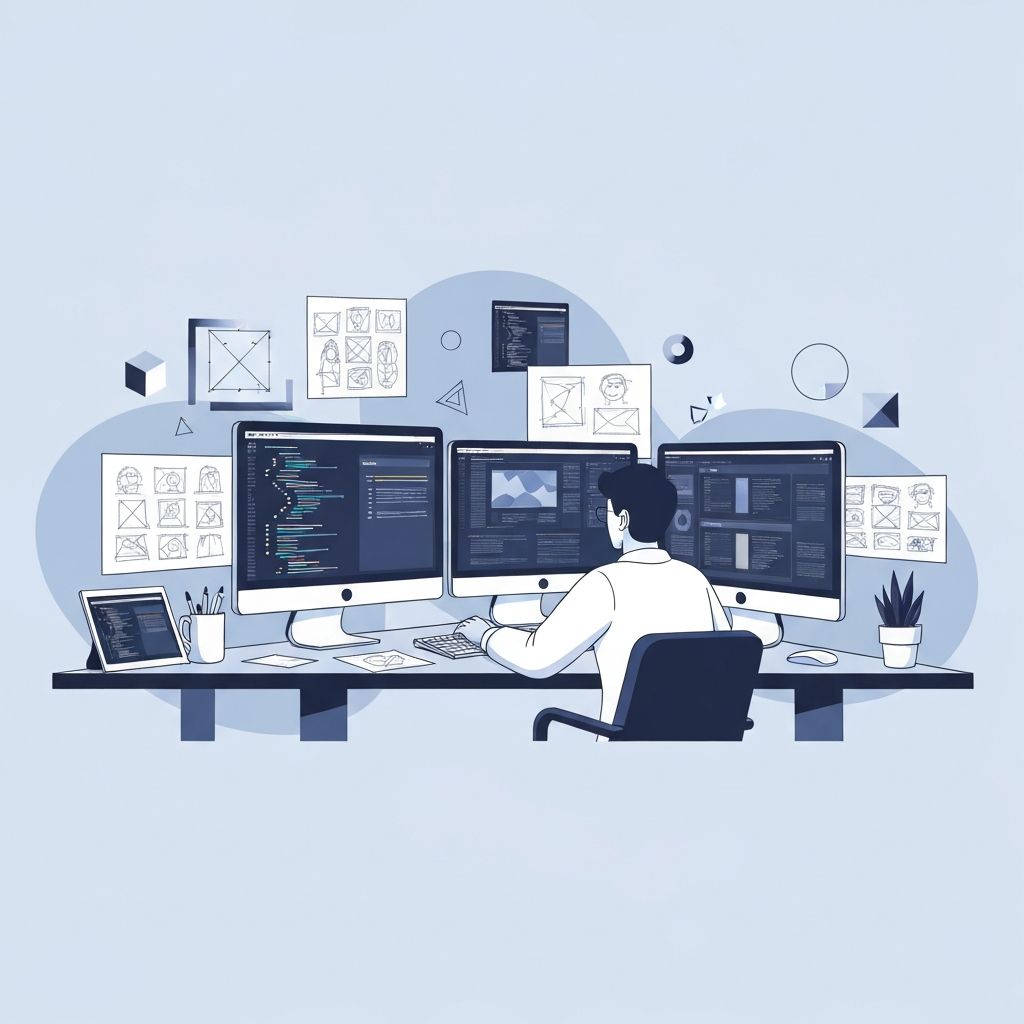
Who Is a Web Page Designer?
A web page designer is a creative professional responsible for shaping the visual appearance, layout, and user experience of websites. They combine artistic intuition with technical understanding to craft pages that are both beautiful and functional. While developers focus on the code that brings websites to life, designers focus on how those websites look, feel, and communicate. The result of their work is what visitors see in the first few seconds, and it is often the deciding factor in whether they stay or leave.
Today's web page designers do far more than choose colors and fonts. They research user needs, sketch wireframes, build prototypes, collaborate with developers, and refine designs based on data. They are part artist, part strategist, and part problem solver. Great designers understand that every visual choice has a purpose, from the size of a button to the spacing between paragraphs.
Hire AAMAX.CO for Expert Web Page Design
For businesses that want to work with experienced designers without managing the entire hiring process, AAMAX.CO provides access to a full team of professionals. They are a full-service digital marketing company offering web development, digital marketing, and SEO services worldwide. Their designers bring years of cross-industry experience, creating websites that not only look polished but also rank well in search engines and convert visitors into customers. From visual identity to final pixel, their team handles every detail with care.
Core Responsibilities of a Web Page Designer
The day-to-day work of a web page designer varies based on the project, but core responsibilities are consistent. Designers begin by understanding the client or product, including the audience, goals, and competitive landscape. They then create wireframes that map out content and layout. Once the structure is approved, they move to high-fidelity mockups in tools like Figma or Adobe XD, applying brand colors, typography, and imagery.
Designers also create design systems and component libraries that ensure consistency across pages and projects. They prepare assets for developers, including icons, illustrations, and exported images. Throughout the project, they review the implemented version, checking for visual fidelity, responsiveness, and accessibility. After launch, they often analyze user behavior and recommend improvements based on real data.
Essential Skills
Strong web page designers blend several skill sets. Visual design skills include color theory, typography, layout, and composition. UX skills cover user research, journey mapping, information architecture, and usability testing. Technical skills include familiarity with HTML, CSS, and JavaScript, even if the designer does not write production code. Tool proficiency in Figma, Sketch, Adobe Creative Cloud, and prototyping platforms is essential.
Soft skills are equally important. Designers must communicate clearly, present ideas confidently, accept feedback gracefully, and collaborate with developers, marketers, and stakeholders. The best designers are curious, empathetic, and committed to lifelong learning, because the field evolves quickly.
Tools of the Trade
Modern web page designers rely on a suite of tools. Figma has emerged as the industry standard for collaborative UI design, offering real-time editing, components, and prototyping. Adobe Photoshop and Illustrator remain valuable for image editing and illustration work. Tools like Adobe XD, Sketch, and Framer also have loyal followings. For inspiration and asset gathering, designers use platforms like Dribbble, Behance, and Unsplash. Project management tools like Notion, Asana, and Jira help keep projects organized.
Designing for User Experience
A great web page designer thinks first about the user. Every design decision answers a question: how will this help the visitor accomplish their goal? This mindset shapes everything from the placement of a navigation menu to the wording of a button. Designers conduct research through interviews, surveys, and usability tests. They build personas to represent target users and journey maps to visualize how those users move through the site. By keeping the user at the center, designers create pages that feel intuitive rather than imposed.
Collaboration with Developers
Web page design does not end at the mockup. Designers work closely with developers to ensure that what was designed is what gets built. They prepare detailed specifications, including measurements, fonts, animations, and interaction states. They review staging sites and provide feedback on alignment, spacing, and behavior. Strong communication during this phase prevents costly rework and ensures that the final product matches the original vision. With reliable website design services, this collaboration is built into the workflow from day one.
Trends Shaping Web Page Design Today
The field is constantly shifting. Bold typography, immersive scrolling experiences, micro-interactions, dark mode, and AI-driven personalization are some of today's biggest trends. Sustainability is also gaining attention, with designers looking for ways to reduce page weight and energy consumption. Three-dimensional graphics, custom illustrations, and motion design are pushing creative boundaries. Despite these trends, the fundamentals of clarity, hierarchy, and accessibility remain unchanged.
How to Choose a Web Page Designer
When hiring, businesses should look beyond pretty portfolios. The right designer understands business goals, communicates clearly, and shows evidence of measurable results. Ask for case studies that include challenges, solutions, and outcomes. Check references and review the designer's process. A great portfolio combined with a thoughtful approach to UX and collaboration is a strong indicator of future success. Cultural fit also matters; designers who align with the team's values and working style produce better outcomes.
How to Become a Web Page Designer
Aspiring designers can take many paths into the field. Formal education in graphic design, UX, or human-computer interaction provides structured learning. Online platforms, bootcamps, and self-directed projects also produce excellent designers. The most important step is to build a portfolio with real or simulated projects that demonstrate problem-solving, not just visual style. Internships, freelance gigs, and contributions to open-source projects all help build credibility. Joining design communities, attending conferences, and seeking mentorship accelerate growth.
Final Thoughts
A web page designer holds the power to shape how people experience the internet. Through thoughtful, user-centered design, they can build pages that inform, delight, and inspire action. Whether you are looking to hire one or become one, understanding the depth of the role is the first step. The best designers are not just decorators of pixels; they are problem solvers, communicators, and craftspeople who treat every page as a chance to make the web a better place.