
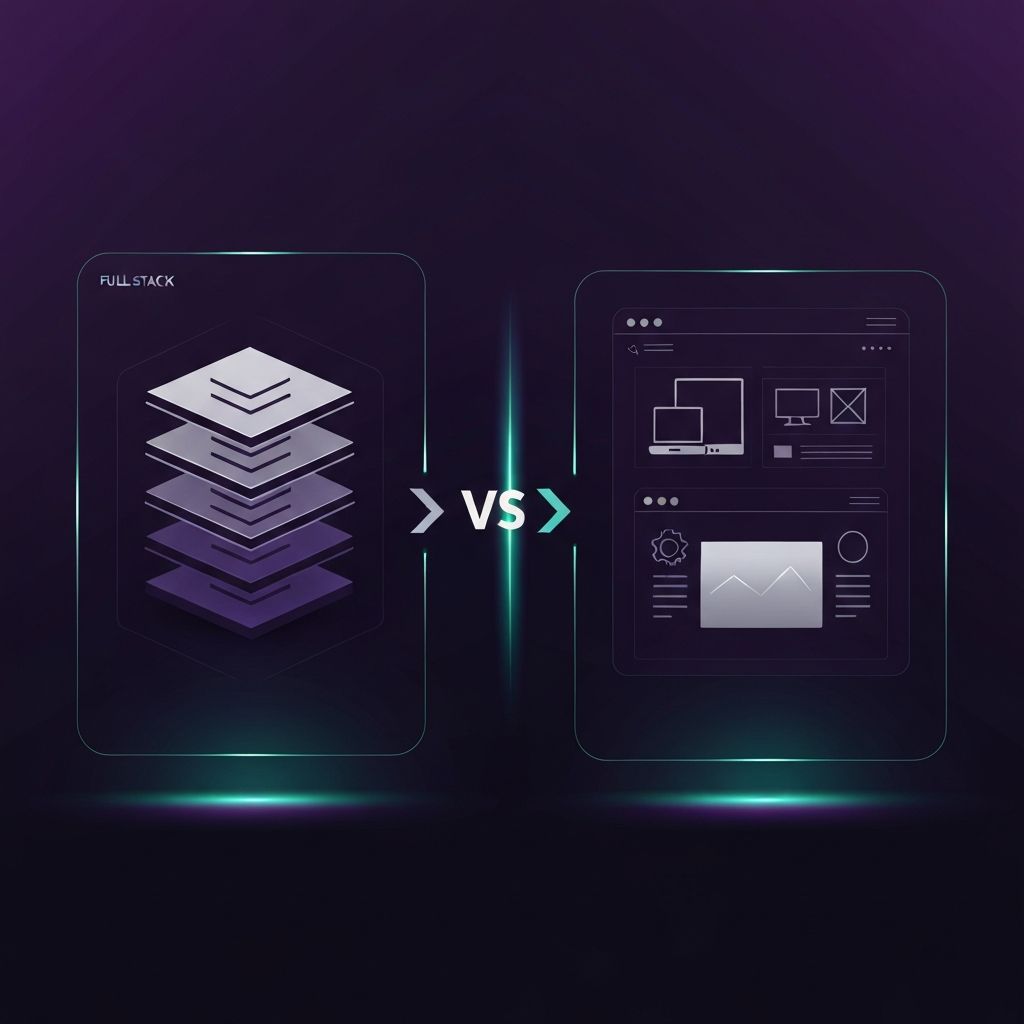
Where the Confusion Comes From
Job titles in the web industry can be frustratingly vague. The phrases web developer and front end developer often appear in the same job postings, on overlapping resumes, and in client conversations as if they meant the same thing. They do not. A web developer is a broad term that covers anyone who builds websites and web applications, often handling both front-end and back-end work. A front end developer is a narrower specialization focused specifically on what users see and interact with in the browser. Understanding the distinction helps businesses hire the right person and helps developers position their careers more clearly.
How AAMAX.CO Brings Both Disciplines Together
The best results usually come from teams that combine deep front-end expertise with solid full-stack capability. AAMAX.CO exemplifies this approach. They are a full-service digital marketing company offering web application development, website design, digital marketing, and SEO services worldwide. Their developers can deliver visually polished interfaces while also handling the back-end systems, integrations, and infrastructure that make modern web products work. That blend gives clients a single, accountable partner instead of forcing them to coordinate separate front-end and back-end vendors.
What a Web Developer Actually Does
A web developer is a generalist who can take a project from idea to live website. Their day might include configuring a server, writing API endpoints, designing a database schema, building React components, fixing CSS issues, deploying to production, and updating SEO settings. Web developers usually fall into one of three categories: front-end focused, back-end focused, or full stack. The term is broad enough that two web developers can have very different daily routines depending on their specialization. What unites them is that their work centers on delivering websites and web apps as complete products.
What a Front End Developer Actually Does
A front end developer focuses on the parts of a website or web application that run in the browser. They translate designs into pixel-perfect, responsive, accessible interfaces. They write HTML, CSS, and JavaScript, often through frameworks like React, Vue, Svelte, or Angular. They optimize for fast loading, smooth animations, accessibility, and consistent behavior across browsers and devices. They often collaborate closely with designers, advocating for the user experience while balancing technical constraints. While many front end developers can also write a bit of back-end code, their depth and value lie in the front-end stack.
Skill Comparison
A typical web developer's skill set is broad. They know HTML, CSS, and JavaScript, plus at least one back-end language such as Node.js, PHP, Python, or Ruby. They understand databases, APIs, hosting, and deployment. They can configure DNS, set up SSL certificates, and troubleshoot server logs. A front end developer's skill set is deep rather than broad. They master CSS architecture, modern JavaScript, accessibility patterns, performance optimization, design systems, animation libraries, build tooling, and the latest framework features. They are often the go-to person for tricky layout bugs, smooth interactions, or complex interactive components.
Tools and Frameworks
Web developers use a wider tool set because they cross more layers of the stack. They might work with React on the front end, Express on the back end, PostgreSQL as a database, Redis for caching, and Vercel for deployment, all in the same week. Front end developers concentrate on browser-focused tools. They typically live inside frameworks like React, Next.js, Vue, or Svelte, paired with styling solutions like Tailwind CSS, CSS Modules, or styled-components. They make heavy use of browser developer tools, accessibility scanners, performance profilers, and visual testing platforms.
Salary and Demand
Both roles are in strong demand, but salaries vary based on specialization and experience. Generalist web developers, particularly those comfortable across the stack, are highly valued by smaller companies that need one person to handle everything. Front end developers, especially those skilled in modern frameworks, accessibility, and performance, command premium salaries at larger companies and product-focused organizations where the user interface is a core differentiator. Senior front end developers can earn as much as or more than senior full-stack engineers, particularly in fields like e-commerce, fintech, and SaaS where conversion rates and user experience drive revenue.
Career Path Considerations
Choosing between these paths is largely a matter of preference. Developers who enjoy variety, problem-solving across the stack, and shipping entire features end-to-end often gravitate toward generalist web developer roles. Those who feel most alive when crafting beautiful, performant interfaces, working with designers, and obsessing over user experience tend to specialize in front-end development. Both paths can lead to senior, lead, and principal-level roles, as well as branches into design engineering, accessibility specialization, performance engineering, or even developer advocacy.
Hiring Considerations for Businesses
Choosing the right hire depends on the project. A small business launching its first website usually benefits from a generalist web developer who can handle everything from setup to deployment. A larger product company with a dedicated design team and complex user interfaces often needs specialized front end developers who can implement intricate designs flawlessly while collaborating with separate back-end teams. Many growing companies eventually need both kinds of talent, with front end specialists owning the user experience and full-stack web developers covering broader product development.
Bringing It All Together
In practice, the line between web developer and front end developer is not a hard wall. It is a spectrum of focus and specialization. A strong web developer should know enough front-end best practices to build solid interfaces, and a strong front end developer should understand enough back-end concepts to integrate APIs and reason about data flow. The titles describe where someone's primary expertise lies rather than the absolute boundary of their skills. For both businesses and developers, what matters most is matching the right depth of skill to the actual problem at hand.