
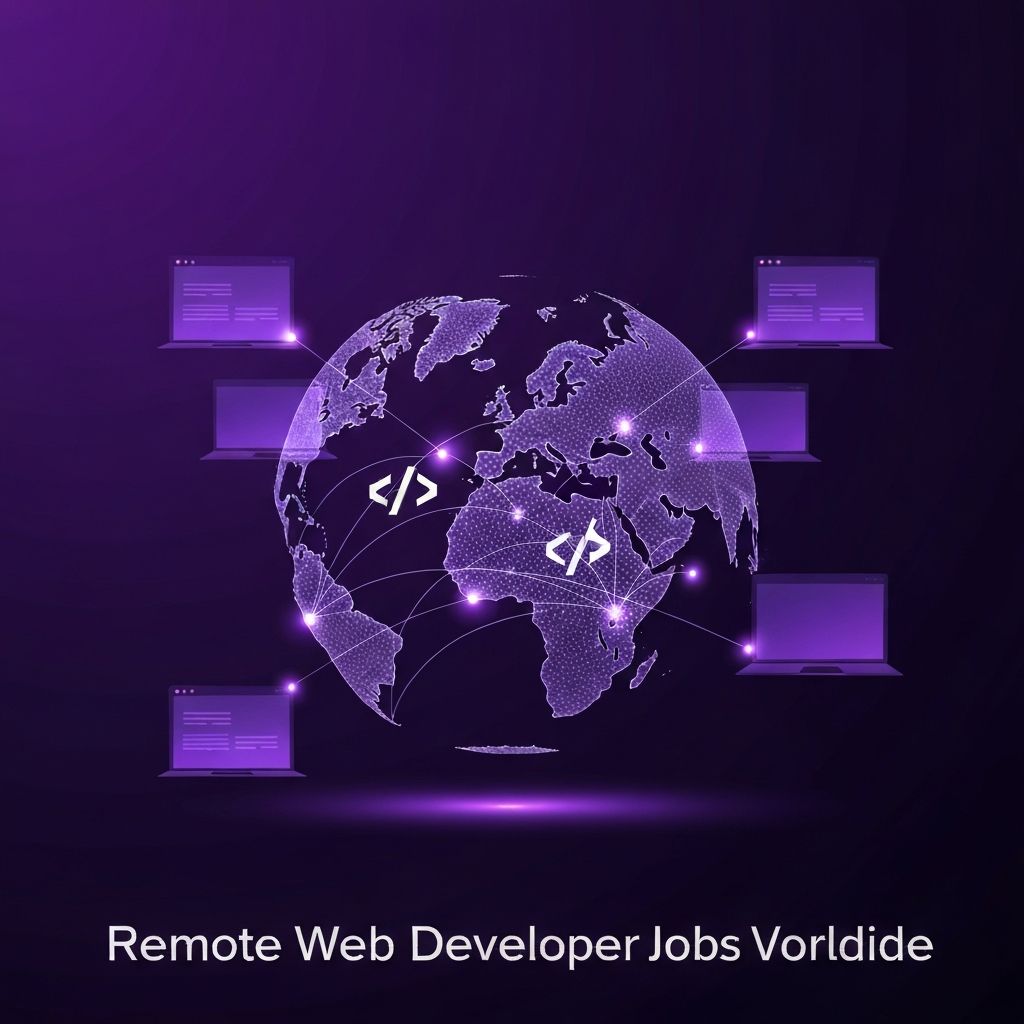
The Remote Revolution in Web Development
Remote work has reshaped web development more than almost any other field. The work is naturally suited to it. Code, documentation, design assets, and conversations all move easily across time zones, and the tools for distributed collaboration have matured dramatically. What was once a perk is now a default expectation at thousands of companies.
For developers, remote roles offer unprecedented access to opportunities. A developer in a small town can work for a company headquartered in another country and earn a salary that reflects the market for the role rather than the local cost of living. For companies, remote hiring opens up talent pools that local recruiting cannot match. The trade-off is that the remote market is more competitive precisely because it is global.
Hire AAMAX.CO for Professional Web Design and Development Services
If you are a business owner who needs a website rather than to manage a remote engineering team yourself, an agency offers all the benefits of distributed expertise without the operational overhead. AAMAX.CO is a full-service digital marketing company that delivers web development, digital marketing, and SEO services to clients globally. Their distributed team handles complex projects, including web application development, while you focus on running your business.
Where to Find Genuine Remote Roles
Not every job listed as remote is truly remote. Some are remote within a single country or time zone. Others are remote in name but require frequent travel to a headquarters. Read the location section of every listing carefully. The clearest signal of a genuine global remote role is a company that operates fully distributed and is upfront about which countries it can hire in.
Specialized remote job boards have emerged that filter out non-remote and partially remote roles automatically. They tend to have higher signal than general job boards. Direct applications to remote-first companies are also effective, since their careers pages usually list every open role transparently. Networking inside remote communities, including Slack and Discord groups for specific frameworks or specializations, often produces opportunities that never reach public job boards.
What Remote Companies Look For
Remote companies optimize for traits that matter less in office environments. Strong written communication is at the top of the list. A pull request description that explains the why and not just the what is more valuable than the same description in person, because remote teammates may read it without the chance to ask follow-up questions. Async-first thinking, the ability to anticipate questions and answer them in writing upfront, becomes a core skill.
Self-direction is the other major trait. Remote managers cannot supervise minute-by-minute work, and they do not want to. They want developers who can take a problem, break it down, ship a solution, and surface blockers proactively. Candidates who demonstrate this through stories from past work stand out immediately.
The Compensation Question
Remote compensation models vary widely. Some companies pay a single global rate for a role, regardless of where the developer lives. Others adjust pay based on local cost of living. Both approaches have rational defenses, and neither is universal. When evaluating offers, look at the total package rather than just base salary. Equity, bonuses, healthcare arrangements, equipment stipends, and learning budgets all add up.
Be aware of the tax and legal implications of remote work in your specific country. Some companies hire through employer-of-record services that handle local compliance. Others require you to operate as an independent contractor, which carries different tax responsibilities. Get clarity on this before signing.
Crafting a Remote-Ready Application
A standard resume needs adjustment for remote roles. Highlight any prior remote or distributed work explicitly, even if it was a side project or volunteer effort. Mention your time zone and your typical working hours, since this affects how much overlap you will have with the team. Include a link to written work, such as blog posts or detailed README files, that demonstrates your written communication.
In your cover letter, address the elephant in the room directly. Explain why you are effective remotely. Reference specific habits you use to stay productive, communicate clearly, and collaborate across time zones. Generic claims about being self-motivated mean nothing. Specific examples mean everything.
The Remote Interview Process
Remote interviews tend to involve more written components than in-office ones. Take-home assignments are common, often replacing one or more rounds of live coding. Treat these seriously. Submit clean, well-documented code, and include a short README explaining your decisions and trade-offs. Quality of communication on the assignment is often a deciding factor.
Expect explicit questions about how you handle async collaboration, conflict in writing, and accountability without supervision. Have specific stories ready. The candidates who advance are the ones who answer with concrete examples, not abstract values.
Thriving in a Remote Role Long Term
Getting hired remotely is the start, not the finish. The developers who grow fastest in remote roles do a few things consistently. They overcommunicate in the early months, which builds trust. They proactively schedule one-on-ones with peers and stakeholders to build relationships that would have formed naturally in an office. They invest in async-friendly artifacts, like recorded demos and detailed design documents, that increase their visibility across time zones.
They also protect their physical and mental health. Remote work blurs the line between work and life, and the developers who last in remote careers are the ones who set firm boundaries and stick to them. A walk in the morning, a real lunch break, and a clean shutdown at the end of the day are not luxuries. They are the foundation of sustained productivity.
Final Thoughts
Remote web developer jobs offer freedom, access to global opportunities, and a different rhythm of work that many developers find deeply satisfying. They also demand stronger communication, better self-management, and clearer evidence of capability than traditional roles. Build the skills, find the right companies, and remote work can become not just a job arrangement but a long-term career strategy.