
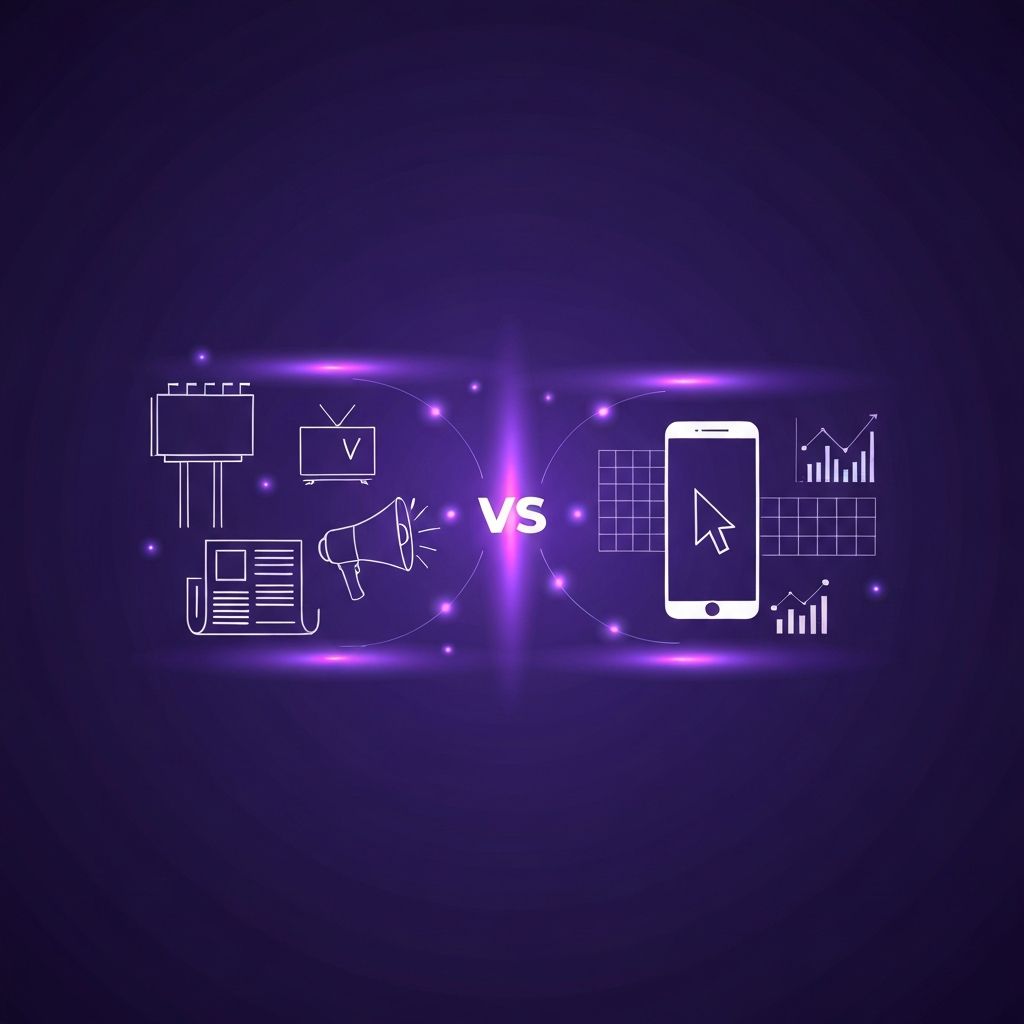
Understanding the Two Sides of Modern Marketing
Traditional marketing and digital marketing are often presented as rivals, but the truth is more nuanced. Each approach has unique strengths, real limitations, and ideal use cases. Smart organizations rarely choose one over the other. Instead, they design integrated programs that combine the credibility and reach of traditional channels with the targeting and measurability of digital. Understanding what each offers is the first step toward building that kind of balanced strategy.
Traditional marketing includes channels like television, radio, print, billboards, direct mail, and in-person events. Digital marketing includes search, social, email, display, video, content, and emerging AI-driven channels. Each plays a different role in how customers discover, evaluate, and remain loyal to brands.
Hire AAMAX.CO to Build a Balanced Marketing Mix
If you want a partner who can help you blend the best of both worlds, you can hire AAMAX.CO. They specialize in integrated programs that align traditional brand building with disciplined digital execution. Their team helps clients allocate budget thoughtfully across channels, measure performance accurately, and adapt as customer behavior shifts.
Cost and Accessibility
Traditional marketing typically requires larger upfront investments. Producing a television commercial, printing a magazine ad, or buying a billboard involves significant fixed costs before a single customer sees the message. These costs make traditional channels difficult for small businesses to access at meaningful scale.
Digital marketing, in contrast, is highly accessible. A small business can launch a paid search campaign or publish a blog post for very little money. Channels like Google ads let advertisers start with daily budgets as low as a few dollars and scale only when results justify the spend. This accessibility is why digital has become the default starting point for most modern marketing programs.
Targeting and Personalization
Targeting is one of digital marketing's biggest advantages. Advertisers can reach narrowly defined audiences based on demographics, interests, behaviors, intent signals, and location. They can also personalize messages dynamically and test variations at scale. Traditional channels rely largely on broad demographic and geographic targeting, which is improving with newer technologies but still cannot match the precision of digital.
However, broad reach has its own value. A well-placed television or radio campaign can introduce a brand to millions of people in a way that builds category-level awareness. This kind of reach is hard to replicate digitally without enormous spend.
Measurement and Attribution
Digital marketing offers detailed measurement that traditional channels struggle to match. Marketers can track impressions, clicks, conversions, customer journeys, and revenue with reasonable accuracy. This visibility allows for fast iteration and strong return on investment.
Traditional marketing measurement has historically relied on surveys, lift studies, and proxies like coupon redemption. Modern marketing mix modeling and connected TV measurement are improving the situation, but the data still tends to be slower and less granular than what digital provides. Combining the two requires thoughtful attribution and a willingness to accept some uncertainty in exchange for the brand-building benefits of traditional reach.
Trust and Credibility
Traditional marketing still carries a credibility premium for many audiences. A brand featured in a respected newspaper, a national television campaign, or a flagship event signals scale and stability in ways that digital ads cannot always replicate. This perception of credibility is especially valuable for premium brands, regulated industries, and B2B companies selling high-consideration products.
Digital channels can build credibility too, especially when paired with strong SEO services that help your brand show up in organic search results, expert-led content, and authentic reviews. Trust is increasingly built through helpful content, social proof, and visibility in answer engines.
Speed and Agility
Digital marketing is dramatically faster than traditional. A campaign can be launched in hours, optimized in days, and scaled in weeks. Traditional campaigns often require months of planning, production, and placement. This difference in speed is a major reason most growth-focused businesses lead with digital while using traditional channels for longer-term brand initiatives.
Building an Integrated Mix
The most effective programs combine the two thoughtfully. A national brand might use television and out-of-home to drive awareness, then reinforce that message through search, social, and email to convert interested prospects. A local service business might invest primarily in digital while using direct mail or community sponsorships to deepen relationships in its core service area. Social media marketing often serves as the connective tissue, turning offline impressions into online engagement and community.
Common Mistakes to Avoid
One mistake is treating traditional and digital as separate silos with separate budgets, separate teams, and separate metrics. Another is over-rotating to digital because it is easier to measure, even when traditional reach would produce stronger long-term results. A third is failing to connect offline campaigns to online destinations through clear calls to action, vanity URLs, QR codes, and trackable phone numbers.
Conclusion
The traditional vs digital debate is largely outdated. The real question is how to allocate your budget across channels in a way that maximizes both short-term performance and long-term brand equity. Done well, the combination produces results that neither approach can deliver alone, and it positions your business to compete effectively in an increasingly complex media landscape.