
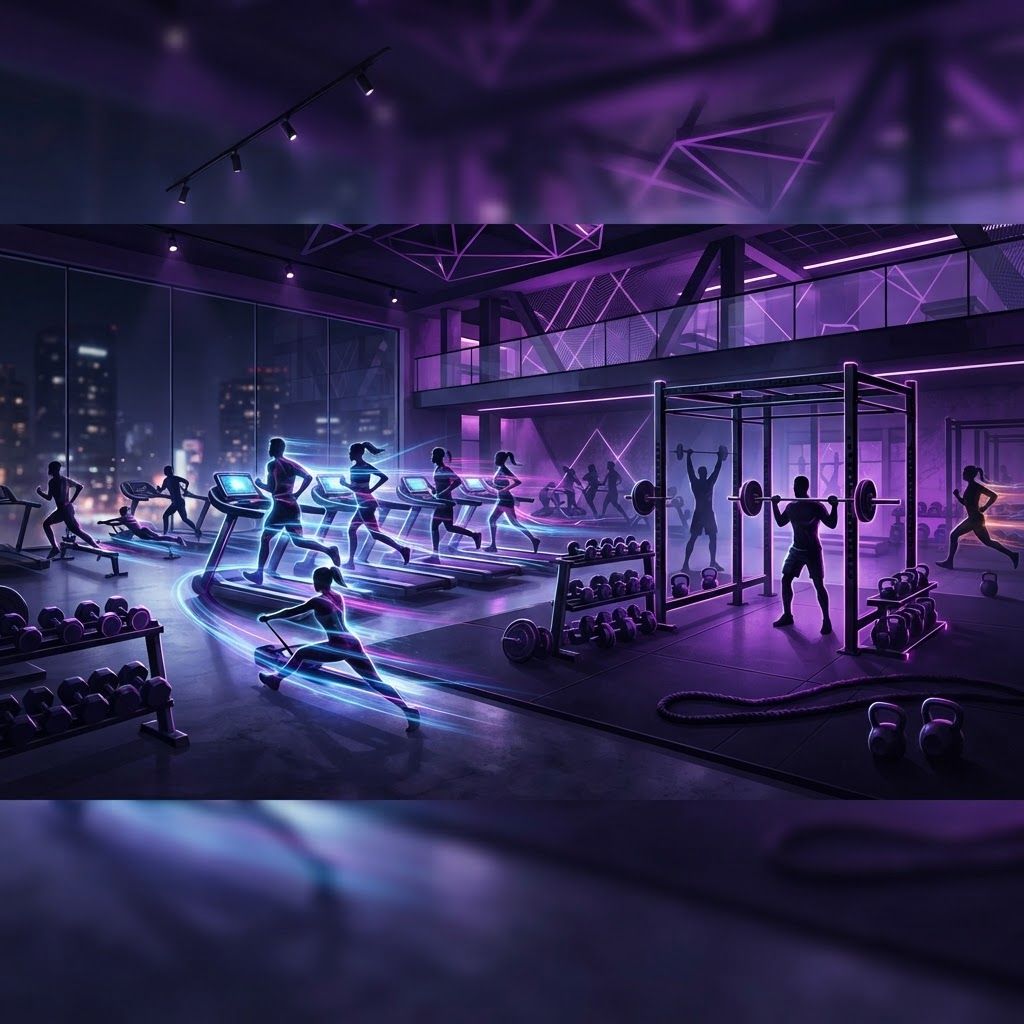
Finding a Gym You Will Actually Use
The most sophisticated training program is worthless if you never make it through the door. That simple truth explains why gym selection deserves more thought than most people give it. Location, atmosphere, equipment availability at your preferred hours, coaching quality, and community all influence attendance far more than the length of an equipment list.
Springfield offers unusual variety for a city of its size. Large athletic clubs serve families wanting pools and courts, dedicated strength facilities cater to serious lifters, boutique studios deliver structured group experiences, and community recreation centers provide affordable access for residents on tight budgets. The right choice depends less on which facility is objectively best and more on which matches how you actually want to train.
The Top 10 Fitness Centers in Springfield
1. Summit Athletic Club
Summit Athletic Club is the region's most comprehensive facility, offering extensive strength and cardio equipment, lap and leisure pools, courts, group classes, and childcare. Families and members who value breadth of amenities consistently rank it first.
2. Iron Quarry Strength and Conditioning
Iron Quarry Strength and Conditioning is built for serious barbell training, with platforms, competition equipment, and experienced coaching in powerlifting and Olympic weightlifting. The culture is supportive of beginners despite the intensity of its membership.
3. Pulse Cycling and HIIT Studio
Pulse Cycling and HIIT Studio delivers high-energy group sessions in a boutique format. Structured classes, motivating instruction, and a strong sense of community keep attendance rates unusually high.
4. Riverbend Community Recreation Center
Riverbend Community Recreation Center provides affordable membership with a pool, gymnasium, weight room, and extensive programming for youth and seniors. Its accessibility makes it one of the most important health resources in the city.
5. Stillwater Yoga and Pilates
Stillwater Yoga and Pilates offers mat and reformer Pilates alongside a full yoga schedule. Skilled instruction, careful attention to alignment, and classes appropriate for beginners through advanced practitioners distinguish the studio.
6. Northgate Functional Fitness
Northgate Functional Fitness runs coached group training built around varied functional movement. Scalable programming allows athletes of widely different abilities to train in the same session productively.
7. Cedar Park Family YMCA
Cedar Park Family YMCA combines fitness facilities with youth programs, swimming instruction, and community outreach. Financial assistance programs ensure access regardless of income.
8. Elevate Personal Training Studio
Elevate Personal Training Studio focuses exclusively on one-on-one and small group coaching in a private setting. Individualized programming and consistent accountability produce strong results for clients who struggle with self-directed training.
9. Harbor Point Aquatic Center
Harbor Point Aquatic Center specializes in swimming, with lap lanes, masters programs, lessons, and water-based exercise classes ideal for people managing joint conditions.
10. Trailhead 24 Hour Gym
Trailhead 24 Hour Gym provides round-the-clock access with solid equipment and straightforward pricing. Shift workers and early risers particularly value the flexibility.
Choosing the Right Facility
Visit during the hours you plan to train. A gym that feels spacious at midday can be unusable at six in the evening, and equipment waits are the most common reason people abandon a routine. Observe whether members re-rack weights and whether staff maintain the space, since both reflect operational standards.
Consider coaching quality if you need guidance. Certified trainers with relevant experience make an enormous difference for beginners and for anyone training around an injury. Many Springfield facilities include an introductory session, which is worth using to evaluate expertise.
Read membership terms carefully. Contract length, cancellation policies, initiation fees, and freeze options vary widely. Month-to-month arrangements cost slightly more but remove the risk of paying for months you do not use.
Trends in Fitness
Strength training has grown substantially across all demographics, particularly among women and older adults, as awareness of its role in bone density, metabolic health, and longevity has spread.
Recovery services have become standard offerings, with saunas, cold plunges, mobility areas, and massage tools increasingly available at mainstream facilities rather than only elite clubs.
Hybrid membership models combining in-person access with app-based programming have persisted, giving members structure when traveling or unable to attend.
Building a Sustainable Routine
Consistency beats intensity. Three moderate sessions completed every week for a year produce far better results than ambitious programs abandoned after a month. Choose a frequency you can maintain during busy periods, not only during motivated ones.
Progressive overload remains the core principle of strength development. Gradually increasing weight, repetitions, or difficulty drives adaptation, while repeating identical workouts indefinitely produces plateaus.
Finally, prioritize enjoyment. The residents of Springfield who maintain lifelong fitness habits are generally those who found a facility and a training style they genuinely like, which turns exercise from an obligation into part of ordinary life.
Structuring a Weekly Program
A balanced week generally includes two to three strength sessions, some form of cardiovascular work, and attention to mobility. Strength training covering the major movement patterns of pushing, pulling, squatting, hinging, and carrying provides broad functional benefit without requiring an elaborate split routine.
Cardiovascular work can be distributed across easy and hard efforts. A larger volume of comfortable, conversational activity such as walking, cycling, or swimming builds an aerobic base with minimal recovery cost, while shorter high-intensity efforts improve capacity efficiently. Combining both produces better results than relying exclusively on either.
Recovery deserves equal planning. Sleep quality influences strength gains, injury risk, and motivation more than most training variables, and inadequate rest undermines otherwise well-designed programs. Scheduling lighter weeks periodically prevents the accumulated fatigue that often precedes both plateaus and injuries.
Beginners benefit enormously from starting conservatively. The most common mistake in Springfield gyms each January is training at an unsustainable intensity for two weeks and stopping entirely by February. Beginning below your perceived capacity and adding gradually produces both better adaptation and a far higher probability of still training a year later.