
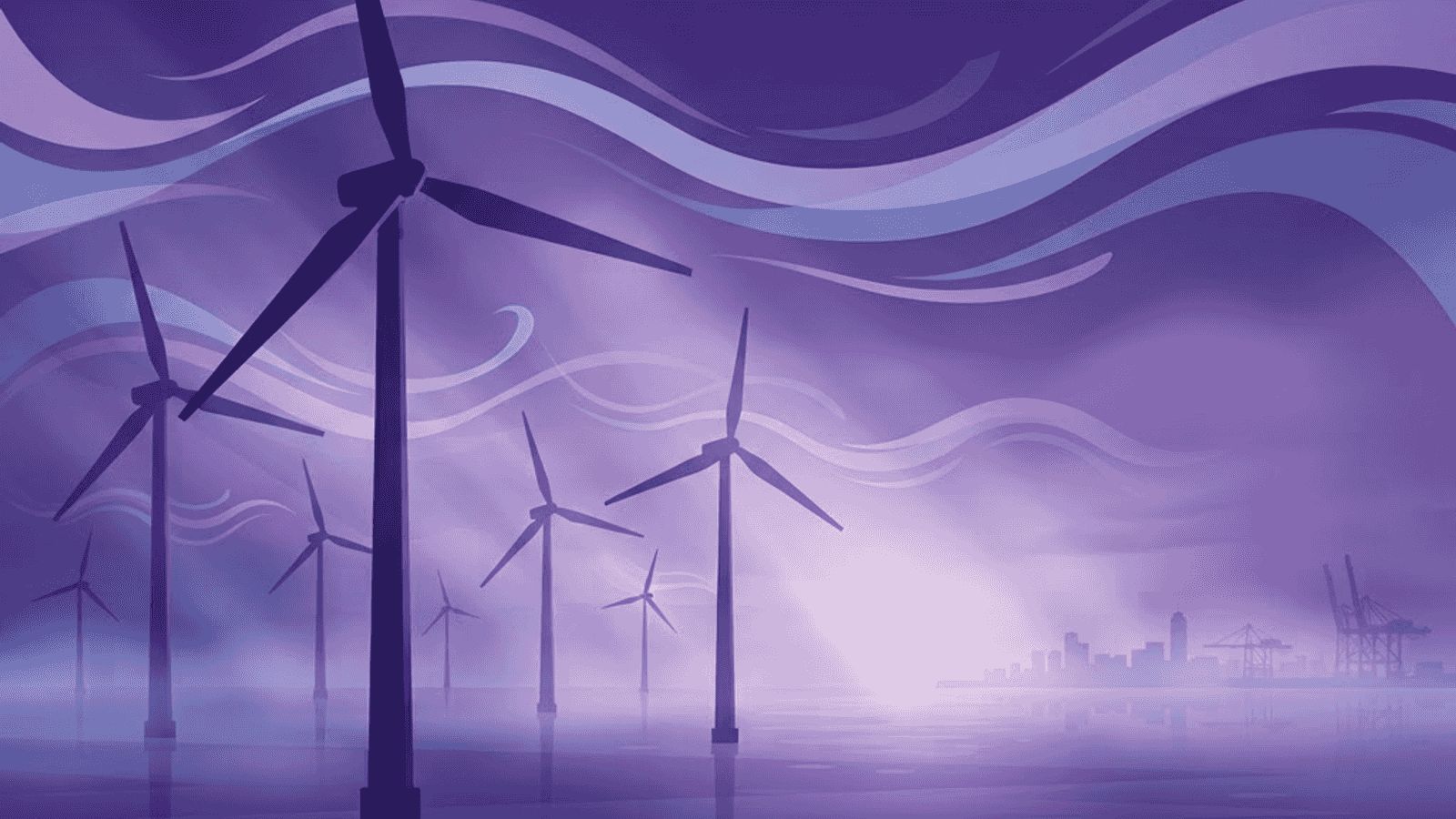
Newark and the Offshore Wind Opportunity
Wind energy in the New Jersey context means offshore wind, and offshore wind depends less on wind resource alone than on ports. Turbine components are enormous. Blades exceed the length of a football field, towers arrive in sections weighing hundreds of tons, and foundations require heavy-lift handling. Assembling and shipping these components demands deepwater berths, high load-bearing laydown areas, and unobstructed access to open water.
Newark's location within the largest port complex on the East Coast makes it strategically valuable to this industry. Even where turbines are staged from purpose-built marshalling facilities elsewhere in the state, Newark contributes warehousing, fabrication, specialized transportation, marine services, and engineering capacity. The city's industrial base and skilled trades workforce translate directly into offshore wind employment.
The Top 10 Wind Energy Companies Connected to Newark
1. Ørsted
The Danish developer is among the most experienced offshore wind operators in the world and has been a central player in New Jersey's offshore ambitions. Its involvement brings not only capital but operational discipline refined across dozens of European projects, along with supply chain and workforce development commitments in the region.
2. EDF Renewables
EDF Renewables develops onshore and offshore wind along with solar and storage, and participates in East Coast offshore ventures. Its portfolio approach means Newark-area suppliers often engage with the company across multiple technologies rather than wind alone.
3. Shell New Energies
As part of a broader energy transition strategy, Shell has taken positions in offshore wind development on the Atlantic coast. Its offshore engineering heritage from oil and gas translates well to marine construction, and it brings established relationships with the vessel and logistics contractors the industry depends on.
4. Atlantic Shores Offshore Wind
A joint venture focused specifically on New Jersey waters, Atlantic Shores has worked extensively on local permitting, environmental study, and community engagement. Its regional concentration makes it an important customer for New Jersey suppliers and a significant driver of in-state workforce programs.
5. Siemens Gamesa Renewable Energy
One of the leading turbine manufacturers for offshore applications, Siemens Gamesa supplies nacelles, blades, and generators for projects along the coast. Turbine selection shapes the entire logistics chain, so the manufacturer's requirements influence port handling, vessel choice, and installation sequencing.
6. GE Vernova
GE Vernova produces large offshore turbines and grid equipment, and its wind division competes for East Coast supply contracts. The company's grid technology business is equally relevant, since delivering offshore power to shore requires substations, cabling, and transmission upgrades.
7. Vestas
A global turbine manufacturer with extensive onshore and offshore experience, Vestas also operates a substantial service business. Long-term operations and maintenance contracts create steady technician employment and require regional logistics hubs for spare parts, an area where Newark warehousing fits naturally.
8. NextEra Energy Resources
With one of the largest wind portfolios in North America, NextEra supplies wind-generated electricity into the regional grid and pursues offshore opportunities. Its scale gives it significant influence over wholesale power markets that determine the cost of electricity reaching Newark consumers.
9. Prysmian and Subsea Cable Suppliers
Offshore wind is useless without transmission. Manufacturers of high-voltage subsea and land cables, along with the installation contractors who lay them, are essential to every project. Cable landfall, onshore routing, and substation construction generate substantial local construction activity.
10. Regional Marine, Fabrication, and Logistics Contractors
The most direct Newark participation comes from marine services companies, steel fabricators, heavy-haul transporters, riggers, and staffing firms serving offshore projects. These businesses supply the vessels, welded assemblies, secondary steel, and trained labor that turn a development plan into installed turbines.
How Offshore Wind Projects Are Built
Development begins years before construction with lease acquisition, wind resource measurement, geotechnical surveys, environmental review, and grid interconnection studies. Permitting involves federal, state, and local authorities and typically represents the longest phase of the timeline.
Construction proceeds in stages. Foundations are installed first, followed by inter-array cabling, the offshore substation, and then turbines. Specialized installation vessels perform the heavy lifting, and their limited global availability makes scheduling a critical constraint. Weather windows further compress the workable calendar, which is why staging areas near the site matter so much.
Once commissioned, projects shift into an operations phase lasting decades. Technicians travel offshore for scheduled maintenance and repairs, supported by onshore control centers, warehouses, and crew transfer vessels. This phase creates the most durable local employment.
Workforce and Supply Chain Implications
Offshore wind requires welders, electricians, crane operators, marine crew, and turbine technicians, along with engineers, project managers, and environmental specialists. Newark's community colleges, union training centers, and vocational programs have begun building curricula around these roles, and safety certification for offshore work has become a recognized credential pathway.
For local manufacturers, the opportunity often lies in secondary steel, platforms, ladders, cable protection systems, and electrical assemblies rather than turbines themselves. These components are lower profile but represent substantial recurring value and are well matched to existing regional fabrication capability.
Conclusion
Wind energy has given Newark a role in an industry the region did not previously host, building on assets the city already had: port access, industrial land, and skilled trades. The companies listed above span developers, turbine manufacturers, cable suppliers, and the local contractors who make projects physically possible. For businesses seeking entry, the practical route is qualifying as a supplier in a specific niche and investing in the safety and quality certifications offshore work demands.