
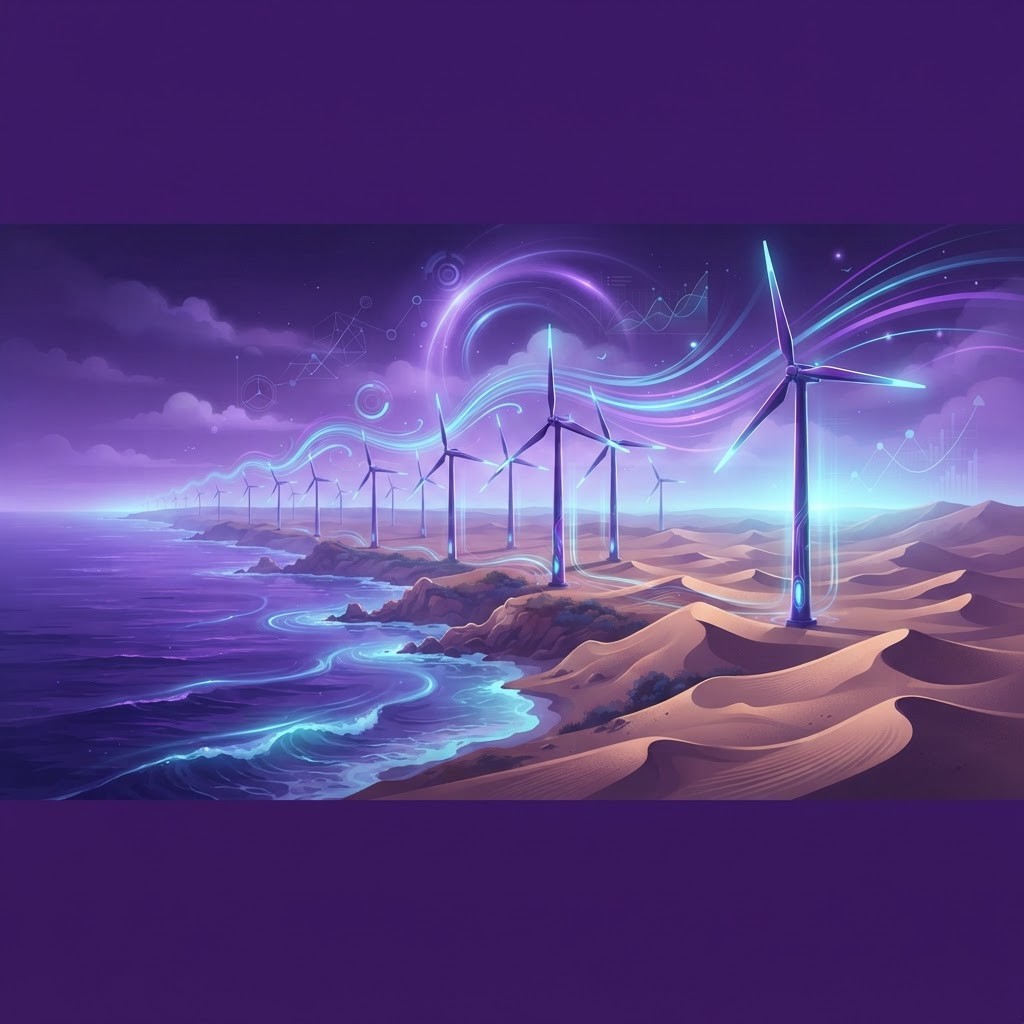
The Wind Potential of Mauritania's Coast
Stretching along the Atlantic Ocean, Mauritania's coastline benefits from strong and remarkably steady wind flows, particularly around the capital Nouakchott and the port city of Nouadhibou. These conditions make wind power a compelling complement to the country's abundant solar resource. Because wind often blows when the sun is not shining, a combined solar-and-wind approach delivers a more balanced and reliable renewable supply.
Recognizing this potential, the government and international developers have invested in wind farms that now contribute meaningfully to the national grid. The companies active in this sector bring specialized turbine technology, deep engineering knowledge, and the operational discipline required to run wind assets in a coastal desert environment.
What Makes a Strong Wind Energy Partner
Successful wind projects demand careful site assessment, robust turbine selection, and reliable long-term maintenance. The best companies excel at wind resource measurement, foundation engineering for sandy soils, and managing the corrosive effects of salty coastal air. They also bring the financial strength to fund capital-intensive projects and the technical support networks needed to keep turbines running for decades.
Top Wind Energy Companies
Société Mauritanienne d'Électricité (SOMELEC) operates and integrates wind capacity into the national grid, including the landmark wind farm near Nouakchott that helped establish wind as a viable resource in the country.
Siemens Gamesa is a global leader in wind turbine technology, supplying and servicing machines engineered to perform reliably in demanding coastal and desert conditions.
Vestas brings decades of turbine manufacturing and maintenance expertise, offering solutions optimized for high-yield, low-maintenance operation.
GE Vernova provides advanced wind turbines and grid integration technology, supporting stable delivery of variable wind power.
Nordex Group offers turbines well suited to a range of wind regimes, backed by strong service capabilities.
CWP Global incorporates large-scale wind generation into its ambitious green hydrogen plans, treating wind as a cornerstone of round-the-clock renewable supply.
Chariot Limited similarly integrates wind into its hybrid renewable and hydrogen developments, maximizing the complementary nature of wind and solar.
Vinci Energies delivers engineering and construction services that ensure wind installations are built to international standards.
Elecnor contributes turnkey wind and transmission infrastructure, strengthening the reliability of clean power across the grid.
AMEA Power pursues wind and hybrid opportunities aligned with Mauritania's renewable strategy, bringing investment and operational expertise.
How Wind Complements Solar
The real strategic value of wind in Mauritania lies in its synergy with solar. Wind speeds are often strongest in the evening and overnight, precisely when solar output falls. By combining the two, developers can deliver a smoother, more predictable renewable profile. This is especially important for green hydrogen production, which benefits from steady, low-cost electricity around the clock. Hybrid wind-solar-storage projects are therefore becoming the preferred model for large developments.
Industry Trends
Turbine sizes continue to grow, capturing more energy per installation and lowering the cost of each unit of electricity. Advanced forecasting and control systems help grid operators manage the variability of wind. There is also rising interest in pairing wind with battery storage and hydrogen electrolysis, creating integrated energy systems that can serve both domestic needs and export markets.
Benefits for the Country
Wind energy diversifies Mauritania's generation mix, reduces fuel imports, and supports industrial growth. It creates specialized jobs in construction, operation, and maintenance, and it helps the country meet its climate commitments. As a domestic, inexhaustible resource, wind strengthens energy independence and shields the economy from global price shocks.
Conclusion
Wind power is a vital pillar of Mauritania's clean energy future. The companies leading this sector combine world-class turbine technology with local operational insight to unlock the coast's powerful wind resource. As hybrid projects and green hydrogen ambitions expand, wind will play an ever more important role in powering the nation sustainably.