
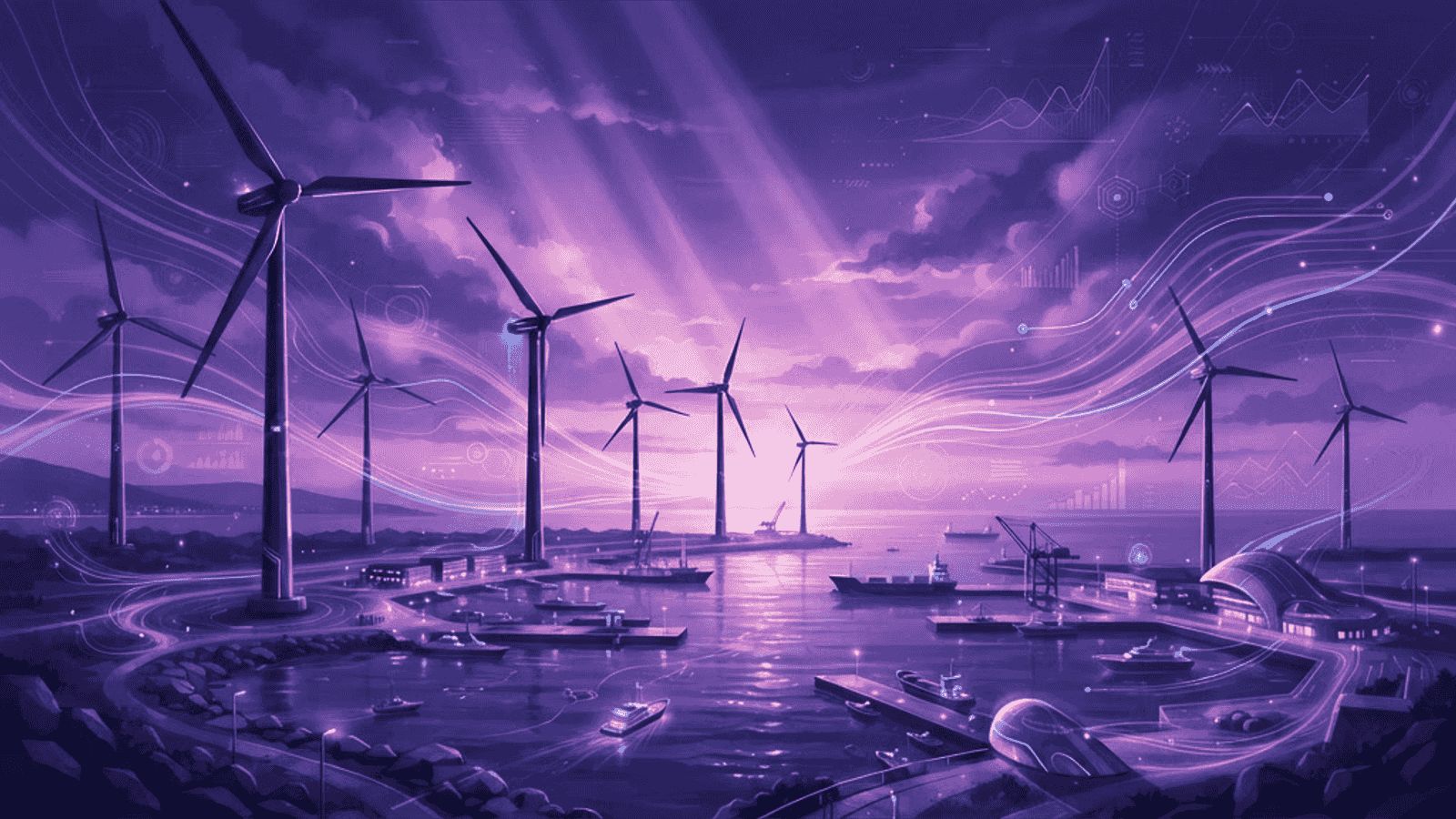
Why Long Beach Matters to the Wind Energy Industry
Long Beach occupies an unusual position in California's clean energy story. It has one of the busiest container ports in the Western Hemisphere, a century of heavy-industrial know-how inherited from shipbuilding and aerospace, and a coastline that sits directly along the corridor being studied for future floating offshore wind development. Those three ingredients rarely appear together, and they explain why so many wind-focused firms have chosen to open engineering offices, fabrication yards, and logistics operations in and around the city.
The practical advantage is heavy-lift capability. Wind turbine components are among the largest manufactured objects ever moved by road or sea. Blades exceeding one hundred metres, nacelles weighing hundreds of tonnes, and monopile foundations all require deep-water berths, wide laydown yards, and specialised cranes. Long Beach has all of it, along with a skilled union workforce accustomed to marine construction. As a result, companies here tend to be strong in the unglamorous but decisive parts of the industry: staging, marshalling, structural fabrication, and grid interconnection.
How These Companies Were Evaluated
The firms below were assessed on technical depth, project track record, safety culture, local presence, workforce development, and the ability to deliver across the full life cycle of a wind asset. Some are global engineering names with a Long Beach footprint. Others are regional specialists whose reputation rests on a narrower but deeply respected capability. Together they represent the range of expertise a developer, utility, or commercial off-taker would draw on in this market.
1. AES Clean Energy
AES has one of the largest renewable development pipelines in the United States, and its Southern California operations touch Long Beach through both utility-scale procurement and grid services. The company is known for pairing wind generation with storage so that output can be shaped to match evening demand peaks, a growing requirement in the California market. Its differentiator is portfolio scale: AES can finance, build, and operate assets, which reduces counterparty risk for buyers signing long-term power agreements.
2. Vestas American Wind Technology
Vestas is the most widely deployed turbine manufacturer in the world, and its service and sales organisation supports the California installed base from West Coast hubs including the Long Beach area. Beyond hardware, the company has built a reputation around data-driven operations and maintenance, using performance monitoring to lift capacity factors on ageing fleets. For owners of existing turbines, that aftermarket engineering capability is often more valuable than the original supply contract.
3. Siemens Gamesa Renewable Energy
Siemens Gamesa brings both onshore platforms and one of the strongest offshore turbine portfolios available anywhere. Its relevance to Long Beach is tied closely to the offshore pipeline taking shape along the California coast, where port marshalling and blade logistics will decide project schedules. The company's engineering culture is notably conservative in the best sense, with heavy emphasis on structural validation and long-duration testing before a platform reaches commercial release.
4. GE Vernova
GE Vernova combines turbine technology with grid and electrification businesses, which makes it a natural partner where wind generation must be integrated into a constrained transmission network. That is exactly the challenge in the Los Angeles basin. Its strength is systems thinking: the same organisation can supply the machine, the substation equipment, and the software that manages dispatch, reducing the number of interfaces a project owner has to coordinate.
5. Clearway Energy Group
Clearway is one of the largest independent owner-operators of renewable capacity in the country, with a substantial California presence. Its model favours long-hold ownership rather than build-and-flip development, which tends to produce better maintained assets and more stable community relationships. For municipal buyers and corporate off-takers in the Long Beach region, that longevity is a meaningful signal of reliability.
6. Burns and McDonnell
Burns and McDonnell is an employee-owned engineering, procurement, and construction firm with deep experience in transmission, substations, and renewable interconnection. Wind projects frequently stall not on turbines but on grid studies and permitting, and this is precisely where the company excels. Its Southern California teams routinely handle interconnection applications, protection coordination, and the detailed electrical design that connects a wind farm to the wider system.
7. Black and Veatch
Black and Veatch is a long-established critical infrastructure engineering firm with a strong renewables advisory practice. It is often engaged early, when a developer needs feasibility analysis, resource assessment, and owner's engineer support rather than construction labour. For Long Beach port-adjacent projects, its combined water, power, and marine infrastructure experience is unusually well matched to the local permitting environment.
8. Mortenson
Mortenson has built more wind capacity in the United States than almost any other contractor, and its expertise sits in the construction phase where cost overruns are most likely. Foundation work, crane logistics, and erection sequencing are its core competencies. Companies working through Long Beach as a staging port frequently rely on contractors of this calibre to keep tightly sequenced marine deliveries aligned with onshore assembly.
9. Aggreko
Aggreko supplies temporary power, load banks, and grid support equipment used extensively during wind farm commissioning and turbine testing. It is a support player rather than a developer, but commissioning delays are expensive, and having responsive local access to test loads and backup generation matters. Its Long Beach-area availability makes it a practical partner for both construction and outage work.
10. Southern California Edison
As the regional utility, Southern California Edison shapes nearly every wind project in the area through interconnection, procurement, and transmission planning. Its own investment programme in grid modernisation directly determines how much wind capacity the region can absorb. Any serious discussion of wind energy in Long Beach has to include the utility, because its queue timelines and upgrade schedules set the pace for everyone else.
Industry Trends Shaping the Local Market
Three trends dominate current conversations. The first is hybridisation: standalone wind is increasingly financed alongside battery storage so that generation can be delivered when the grid actually needs it. The second is repowering, where older turbines are replaced with taller, higher-capacity machines on existing sites, delivering more energy without new land use or new permits. The third is offshore readiness, which is fundamentally a port and supply chain question and one where Long Beach has a genuine structural advantage over most of the West Coast.
Choosing the Right Partner
The best fit depends on where a project sits in its life cycle. Early-stage owners typically need advisory and interconnection expertise. Projects moving into execution need proven heavy construction and marine logistics. Operating assets need service organisations with parts availability and diagnostic capability. Buyers should also weigh local workforce commitments, safety performance data, and the depth of a firm's California permitting experience, because regulatory fluency in this state is a real and often underestimated differentiator.
Final Thoughts
Long Beach is not simply a place where wind energy is consumed. It is increasingly a place where wind energy infrastructure is engineered, assembled, and shipped. The companies profiled here reflect that shift, spanning turbine technology, grid engineering, construction, and long-term asset ownership. For anyone developing, financing, or purchasing wind energy in the region, this list is a practical starting point for building a capable and credible project team.