
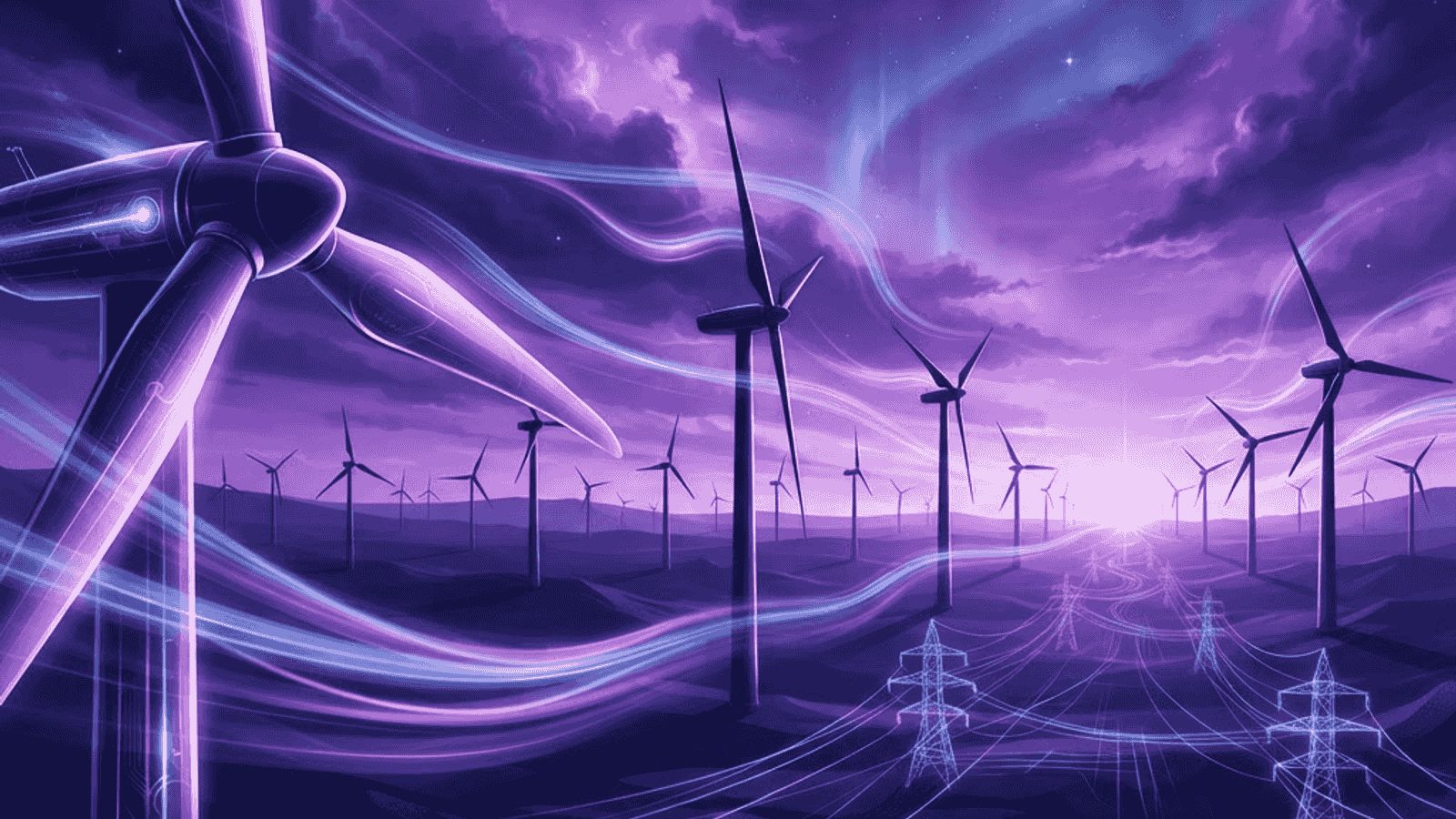
Where Greensboro Fits in the Wind Story
Greensboro is not a wind generation site. The Piedmont's average wind speeds at typical turbine heights are modest compared with the coastal plain, the Outer Banks region, and the Appalachian ridgelines, and North Carolina's ridge protection rules constrain mountain development. What Greensboro does have is the industrial and logistical capacity that wind projects depend on. Turbine components are enormous, and moving nacelles, towers, and blades requires heavy haul expertise, staging yards, and highway access, all of which the Triad provides. The region's precision machining, composites, gearbox, and electrical assembly base also aligns closely with turbine supply chains, and North Carolina's offshore wind lease areas off the coast have drawn supply chain investment inland.
The State of Wind in North Carolina
Onshore, the state's utility-scale wind capacity is anchored in the northeastern counties, where the Amazon Wind Farm US East in Pasquotank and Perquimans counties operates as the largest installation in the Southeast. Offshore, federal lease areas including Kitty Hawk and areas off Brunswick County represent the larger long-term opportunity, with gigawatt-scale potential and state targets encouraging development. Offshore projects require port infrastructure, specialized vessels, and a manufacturing supply chain, and states across the region are competing for those facilities. For Greensboro, the realistic opportunities are component fabrication, engineering services, workforce training, and logistics coordination rather than local generation.
Ten Companies Shaping Wind Energy With Triad Relevance
1. Avangrid Renewables
Developer of the Amazon Wind Farm US East and holder of the Kitty Hawk offshore lease area, making it the most significant single player in North Carolina wind development.
2. TotalEnergies offshore wind development, Carolina Long Bay
Holder of a federal lease area off the North Carolina coast, with development activity that is expected to generate substantial in-state supply chain and service demand.
3. Duke Energy Renewables
The regional utility's renewable arm participates in wind ownership and offtake across multiple states and administers the grid interconnections that determine how offshore power reaches Piedmont load centers including Greensboro.
4. GE Vernova
A major turbine manufacturer with a substantial North Carolina presence in aviation and industrial manufacturing, and a supplier network that reaches into Triad machining and composites shops.
5. Siemens Gamesa Renewable Energy
A leading offshore turbine supplier whose regional sourcing and service operations create opportunities for Southeastern component manufacturers and maintenance contractors.
6. Vestas
A global turbine manufacturer with United States operations and a supplier base that includes precision fabricators and electrical assembly firms across the Carolinas.
7. Kiewit and comparable heavy civil contractors
Heavy civil and marine construction firms building foundations, substations, and port facilities for wind projects, often staging equipment and workforce logistics through inland hubs.
8. Triad heavy haul and specialized logistics operators
Greensboro area trucking and logistics companies with permits and equipment for oversize loads, moving blades and tower sections along Interstate corridors to project and port sites.
9. Piedmont precision machining and composites manufacturers
A cluster of Guilford County suppliers producing machined components, fasteners, molded parts, and enclosures that feed turbine and balance-of-plant assemblies.
10. Guilford Technical Community College energy and advanced manufacturing programs
Training pipelines for wind technicians, industrial electricians, and composites workers, an essential part of the sector that is often overlooked in company rankings.
Challenges the Sector Faces
Wind development in North Carolina has moved unevenly. Onshore projects face siting constraints, military airspace and radar considerations in the eastern part of the state, and periodic policy uncertainty at the state level. Offshore projects contend with high capital costs, interest rate sensitivity, supply chain bottlenecks for vessels and cables, and permitting timelines measured in years. Transmission is a shared constraint, since delivering offshore generation to Piedmont demand centers requires upgrades whose planning horizon exceeds most project schedules. For suppliers in Greensboro, the practical consequence is lumpy demand, which rewards companies diversified across multiple industrial end markets rather than dependent on wind alone.
Opportunities for Greensboro Businesses
Manufacturers with tight tolerance capability, certifications for structural and marine applications, and capacity to scale should be tracking offshore procurement schedules now, because qualification processes take time. Logistics operators can differentiate through permitting expertise and specialized trailer fleets. Engineering and inspection firms will find demand in commissioning, non-destructive testing, and long-term asset management. Workforce providers and community colleges have an opening to train technicians for roles that pay well and are difficult to offshore. Local suppliers pursuing this work should focus on certification, quality systems, and relationships with tier one suppliers rather than attempting to sell directly to developers.
How to Evaluate a Wind Sector Partner
For a business considering wind work, evaluate a potential partner on demonstrated project references at comparable scale, certifications relevant to structural or marine environments, financial capacity to carry long payment cycles, and safety record. For organizations procuring renewable energy rather than manufacturing for it, remember that wind in North Carolina is generally accessed through utility programs and power purchase agreements rather than on-site generation. A Greensboro business seeking wind-sourced electricity will most likely do so contractually rather than by erecting a turbine, and the companies above are the ones building the generation that makes those contracts possible.
Outlook
The trajectory for North Carolina wind is long but real, driven by offshore lease areas that represent some of the most substantial untapped generation potential on the Atlantic coast. Greensboro's role will be industrial and logistical, and the businesses that position themselves early with the right certifications and capacity will capture the most durable share of that activity.