
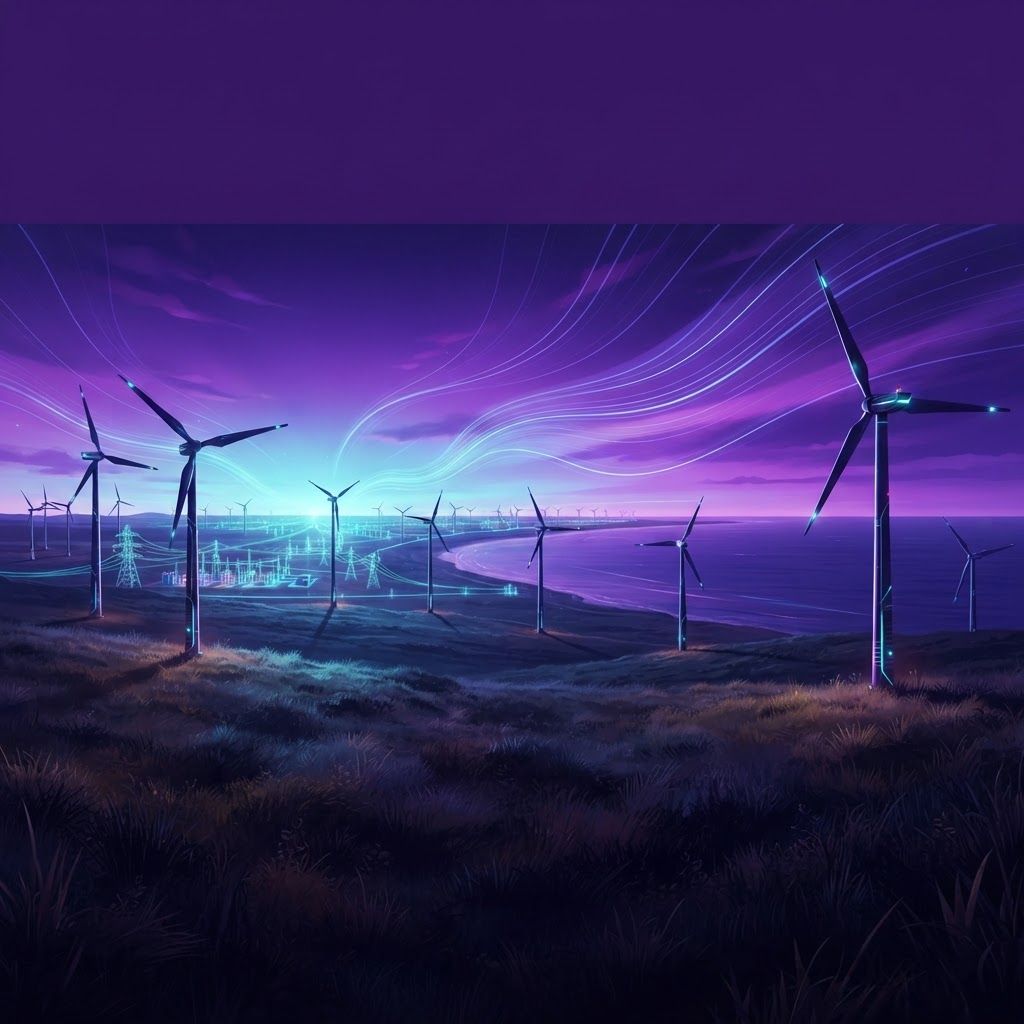
The Coastal Wind Advantage
Texas leads the nation in wind generation, but not all Texas wind is equal. The coastal wind resource near Brownsville has a characteristic that inland West Texas wind lacks: it peaks in the afternoon and evening, driven by the temperature differential between land and the Gulf of Mexico. That timing coincides with the hours when electricity demand and prices are highest, which makes coastal wind disproportionately valuable to grid operators and generators alike.
The surrounding counties host an extensive onshore fleet, with turbines spread across ranch and agricultural land from the coast inland. For landowners, these projects have become a meaningful and stable income source. For the regional economy, they have created skilled technician jobs and a substantial property tax base supporting schools and county services.
Segments of the Wind Industry Here
Onshore project development and ownership. Large independent power producers and renewable developers — companies with national and international portfolios — hold the operating wind farms across South Texas. They handle site control, permitting, interconnection, financing and long-term asset ownership, often selling output through power purchase agreements to utilities, corporations and retail electricity providers.
Construction and engineering. Building a wind farm requires civil contractors for roads and foundations, specialized crane operators for turbine erection, electrical contractors for collection systems and substations, and project managers coordinating all of it. Both national renewable construction specialists and Texas-based industrial contractors participate.
Operations and maintenance. Once a project is running, technician crews handle scheduled maintenance, blade inspection, gearbox and generator service, and troubleshooting. These are skilled, well-paid positions, and operators maintain local service centers across the region.
Component manufacturing and logistics. The Port of Brownsville has handled wind turbine components for years, and the surrounding industrial base includes steel fabrication, heavy-haul trucking and marine logistics capable of moving blades and tower sections that exceed normal transport limits.
Offshore wind preparation. The Gulf of Mexico has been identified as a future offshore wind region, and Brownsville is among the leading candidate ports for staging, assembly and component manufacturing. Deepwater access, no overhead obstructions on the channel approach, extensive acreage and existing heavy fabrication capability at the port make it an unusually strong fit. While offshore development timelines remain uncertain, the preparatory investment interest is real.
Repowering and life extension. Many early Texas wind projects are reaching the age where replacing turbines with larger, more efficient machines makes economic sense. Repowering generates construction employment and increases output from existing sites without new land use.
Economic Impact on the Region
Wind energy contributes to South Texas in several measurable ways. Landowner lease payments provide predictable annual income that complements ranching and farming revenue, which is subject to drought and commodity swings. Because turbines occupy a small fraction of a property's surface, agricultural use continues around them.
Property tax revenue from wind projects supports rural school districts and county budgets in communities with limited alternative tax base. In several South Texas counties, energy projects represent a substantial share of total valuation.
Employment spans construction phases that mobilize hundreds of workers and permanent technician roles that persist for decades. Wind technician work has become one of the most accessible paths to a skilled, well-compensated career without a four-year degree.
Workforce training has developed to match. Texas State Technical College and regional community colleges offer wind energy technology programs, and employers recruit directly from them. The University of Texas Rio Grande Valley supports engineering education and energy research that feeds the professional tier.
Challenges the Sector Faces
Transmission capacity limits how much South Texas generation can reach demand centers to the north. Congestion depresses prices in the region during high-output periods and constrains new development until additional transmission is built.
Hurricane exposure requires turbines engineered for extreme wind events, with feathering and shutdown protocols, robust foundations and insurance costs that reflect coastal risk.
Wildlife and habitat considerations are significant along the Gulf Coast, which lies on a major bird migration corridor. Responsible developers conduct extensive avian and bat studies, deploy detection and curtailment systems where appropriate, and site projects to minimize impact. This work is both an environmental obligation and a permitting necessity.
Radar and aviation coordination matters near military and civil aviation facilities, requiring analysis and sometimes mitigation.
Supply chain and policy variability affect project timing, as turbine availability, trade measures and incentive structures shift.
Community engagement determines whether projects proceed smoothly. Developers who communicate early, address concerns about viewshed, noise and road usage, and hire locally encounter far less resistance.
What Landowners and Communities Should Know
Wind lease agreements are long-term and complex. Key provisions include payment structure and escalation, the distinction between option payments during development and operating royalties, turbine placement rights, road and transmission easements, noise and setback commitments, assignment rights, and decommissioning security ensuring the land is restored at end of life.
Landowners should retain independent counsel with energy lease experience rather than relying on the developer's explanation. Neighboring landowner coordination can also improve terms, since developers need contiguous acreage.
For communities, evaluating a developer's track record on completed projects — not just proposed ones — is the most reliable indicator of how the relationship will go.
Looking Ahead
Several forces will shape wind energy in the Brownsville area over the coming years. Transmission expansion across Texas would unlock additional South Texas development. Offshore wind, if federal leasing and project economics advance, could transform the port into a manufacturing and staging hub with employment effects well beyond generation itself. Hybrid projects pairing wind with solar and battery storage are becoming standard, improving output consistency and grid value. And continued repowering will keep construction activity steady even without new greenfield sites.
Final Thoughts
Wind energy is an established industry in South Texas rather than an emerging one, with operating projects, trained workforces and a supply chain anchored by the Port of Brownsville. The region's coastal wind profile makes it genuinely valuable, and the potential offshore opportunity adds a further dimension. For landowners, workers, contractors and communities, engaging with experienced and transparent companies is the surest way to capture the benefits of that position.