
Winston-Salem as a Distribution Location
Warehousing decisions come down to geography, labor and cost, and Winston-Salem performs well on all three. The city sits on Interstate 40 with quick access to Interstates 85, 77 and 73, placing a large share of the eastern United States population within a one-day truck drive. Industrial rents and labor costs remain lower than in Charlotte, Atlanta or the Northeast, while the workforce carries generations of manufacturing and distribution experience from the region's textile, furniture and tobacco heritage.
The market has also matured. Modern speculative and build-to-suit facilities with thirty-two-foot and higher clear heights, ample dock doors, ESFR sprinkler systems and large trailer courts have been developed across Forsyth County and along regional corridors. That means growing companies can find contemporary space rather than settling for retrofitted older buildings, though well-maintained older facilities still offer excellent value for less demanding operations.
Types of Warehousing Available
Public warehousing charges by pallet position and by transaction, making it flexible and low commitment. Contract warehousing dedicates space, labor and sometimes equipment to a single client under a multi-year agreement, lowering unit cost in exchange for volume certainty. Third-party fulfillment providers add pick, pack and ship services for e-commerce. Bonded and foreign trade zone facilities defer duties on imported goods. Cold storage handles food, beverage and pharmaceutical products. Free-standing leased space suits companies that want to run their own operation. Most Winston-Salem shippers should evaluate at least two of these models before deciding.
1. National Third-Party Logistics Providers
Large third-party logistics companies operate multi-client distribution centers throughout the Southeast and can position Winston-Salem inventory inside a broader national network. Their advantages are enterprise-grade warehouse management systems, established quality and safety programs, integrated transportation buying power, and the ability to scale space up or down as volume shifts. For companies expanding beyond a single distribution point, this scalability usually outweighs any premium on storage rates.
2. Regional Public Warehouse Operators
Independent public warehouse operators rooted in the Piedmont Triad offer something the national firms often cannot: direct access to decision makers and genuine flexibility. If a customer needs a special labeling run on short notice or has to store an unusual overflow shipment for six weeks, a regional operator can typically say yes the same day. Pricing is straightforward, commitments are shorter, and relationships tend to be long-lasting.
3. E-Commerce Fulfillment Specialists
Fulfillment providers focused on direct-to-consumer orders operate very differently from pallet-in, pallet-out warehouses. Their systems are built around individual item picking, carrier rate shopping, branded packaging inserts, kitting, gift options and reverse logistics for returns. Key evaluation criteria are integration quality with major e-commerce platforms and marketplaces, order accuracy rates, and same-day cutoff times. For consumer brands in the Triad, choosing a fulfillment partner is effectively choosing part of the customer experience.
4. Cold Storage and Temperature-Controlled Facilities
Refrigerated and frozen warehousing supports the region's food manufacturing, beverage and life sciences sectors. These facilities require far more than cold air: continuous temperature monitoring with alarms, backup power, documented sanitation programs, food safety certification and validated procedures for pharmaceutical products. Because construction costs are high, cold space is scarcer and more expensive than ambient space, and capacity should be secured well in advance of seasonal peaks.
5. Bonded Warehouses and Foreign Trade Zone Operators
Companies importing goods that will be re-exported, or that want to defer duty payment until products enter domestic commerce, benefit substantially from bonded and foreign trade zone facilities. Cash flow improves because duties are deferred, and in some cases duty is avoided entirely on re-exported goods. Operators handle the customs compliance, recordkeeping and reporting that make these programs work, which is not a do-it-yourself undertaking.
6. Contract Logistics Providers Serving Manufacturing
Advanced manufacturing in the Triad has created demand for warehousing that behaves like an extension of the plant floor. Contract logistics providers manage inbound component receiving, sequencing, line-side delivery, kitting of sub-assemblies, returnable container management and finished goods staging. Performance is measured in minutes and defect rates rather than pallet positions, and the best providers embed staff directly with the manufacturer's planning team.
7. Carrier-Affiliated Warehousing
Several freight carriers operating in the region pair distribution space with transportation, allowing a single provider to store inventory and deliver it. The efficiency gain is real, since freight already flowing through a carrier's terminal network avoids an extra handling and drayage step. This model works particularly well for companies that want inventory positioned closer to Southeast customers without managing two vendor relationships.
8. On-Demand and Flexible Warehousing Platforms
Marketplace platforms match companies needing short-term space with warehouses holding excess capacity. Agreements can run for weeks rather than years, pricing is per pallet and per transaction, and onboarding is fast. This is the right tool for seasonal overflow, a product launch with uncertain demand, or a temporary need during a facility transition. It is generally not the cheapest option at steady high volume.
9. Self-Storage and Small Commercial Units
For very small businesses, e-commerce sellers and tradespeople, climate-controlled self-storage and small flex units provide an inexpensive first step. There is no minimum volume, month-to-month terms are standard, and many facilities accept deliveries. The limitations become apparent quickly at scale, as there is no material handling equipment, no inventory system and no labor, but as a starting point the low cost and low commitment are hard to beat.
10. Owner-Operated Industrial Space
Companies with predictable, substantial volume often conclude that leasing their own building and hiring their own team delivers the lowest unit cost and the greatest control. The Winston-Salem industrial market offers a spectrum from modern high-clear distribution centers to well-priced older manufacturing buildings suitable for lighter operations. The honest analysis includes racking, material handling equipment, a warehouse management system, labor recruitment and retention, insurance and management attention, all of which a third party otherwise absorbs.
How to Evaluate a Warehousing Partner
Tour the facility in person and observe housekeeping, aisle discipline, racking condition and how staff behave when unobserved. Ask for inventory accuracy, order accuracy and on-time shipping metrics over the past year, not aspirations. Confirm the warehouse management system, how it integrates with your systems, and whether you get real-time inventory visibility. Review insurance, liability limits for damage and shrinkage, and security including cameras, access control and fire protection. Understand the full fee structure: storage, receiving, picking, packing, labor rates, accessorial charges and minimums. Finally, ask about labor stability, because in a tight market a partner that cannot staff consistently will not perform consistently.
Trends Shaping the Market
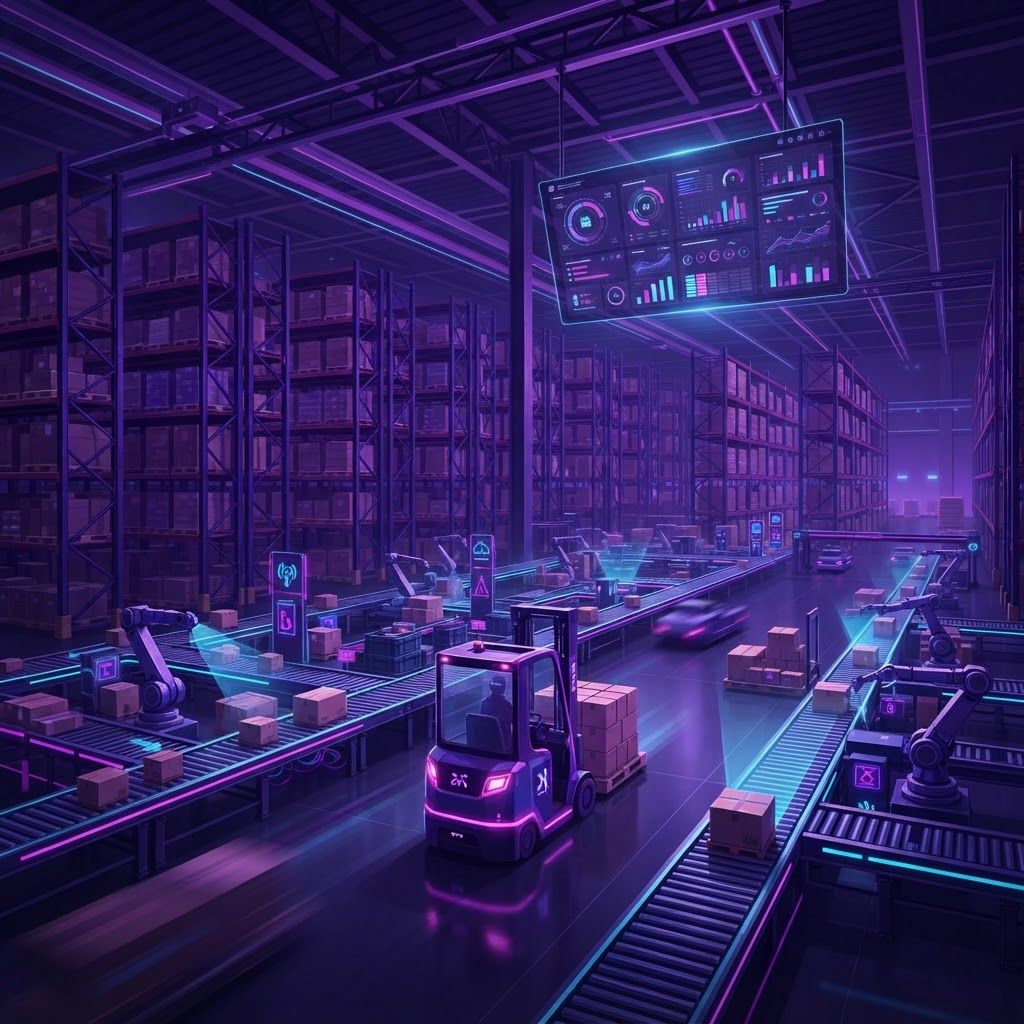
Automation is spreading beyond the largest operations, with goods-to-person systems, autonomous mobile robots and automated packaging appearing in mid-sized facilities as labor costs rise. Inventory strategy has shifted from pure just-in-time toward carrying buffer stock closer to customers, which increases regional space demand. Sustainability requirements are pushing operators toward LED lighting, solar installations, electric forklifts and waste reduction reporting. And visibility expectations continue to rise, with customers now demanding the same real-time inventory transparency from warehouses that they get from parcel carriers. Winston-Salem's combination of location, cost and workforce leaves it well positioned as these shifts continue.