
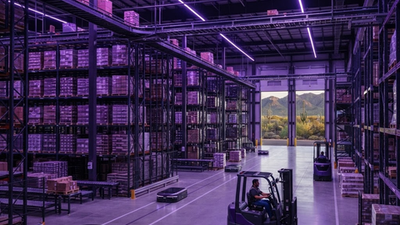
Tucson's Strategic Warehousing Advantage
Tucson's location along the Interstate 10 corridor and its proximity to the Mexican border have made it an increasingly attractive hub for warehousing and distribution. Businesses ranging from e-commerce retailers to manufacturers rely on local warehousing companies to store inventory, manage fulfillment, and streamline the flow of goods across the Southwest and into international markets. As supply chains grow more complex, the value of strategically located, well-managed warehouse space continues to climb.
The region's expanding logistics infrastructure, combined with relatively affordable industrial real estate compared to larger coastal markets, has drawn significant investment. This growth benefits local businesses by providing more options for scalable, flexible storage and distribution solutions close to home.
Core Services Provided by Warehousing Companies
Modern warehousing companies in Tucson offer far more than simple storage. Comprehensive third-party logistics providers handle inventory management, order fulfillment, pick-and-pack operations, and shipping coordination, allowing businesses to outsource their entire distribution process. This lets companies scale efficiently without the capital investment of building their own facilities.
Specialized services further distinguish the market. Climate-controlled warehousing protects temperature-sensitive goods from the desert heat, while cross-docking accelerates the movement of freight from inbound to outbound transport. Bonded warehousing and customs-related services support businesses engaged in cross-border trade, a natural fit given Tucson's border proximity.
Leading Warehousing Providers in the Region
National logistics firms and third-party logistics providers maintain significant operations in Tucson, offering the technology, capacity, and expertise to serve large-scale distribution needs. These companies bring sophisticated warehouse management systems and integration capabilities that appeal to growing e-commerce and manufacturing clients.
Regional and locally owned warehousing companies complement these larger players with flexible terms, personalized service, and deep knowledge of the local market. For small and mid-sized businesses, these providers often deliver the responsiveness and adaptability needed to navigate seasonal demand and evolving requirements.
Technology Transforming Warehousing
Automation and data-driven systems are revolutionizing the warehousing industry. Barcode and RFID tracking, warehouse management software, and automated storage and retrieval systems have dramatically improved accuracy and efficiency. These technologies reduce errors, speed up order processing, and give businesses real-time visibility into their inventory.
The rise of e-commerce has accelerated the adoption of these innovations, as customers demand faster fulfillment and precise tracking. Sustainability initiatives, including solar-powered facilities that take advantage of Tucson's abundant sunshine and energy-efficient warehouse design, are also becoming increasingly common across the region.
Choosing the Right Warehousing Partner
Selecting a warehousing company requires careful evaluation of your specific needs, including storage capacity, location, service offerings, and scalability. Businesses should consider whether they need specialized handling, such as climate control or bonded storage, and confirm that the provider's technology integrates with their existing systems.
Reputation, reliability, and flexibility should guide the decision, especially for companies with fluctuating or growing demand. By partnering with a capable warehousing provider, Tucson businesses can optimize their supply chains, reduce costs, and position themselves for sustained growth in a competitive marketplace.