
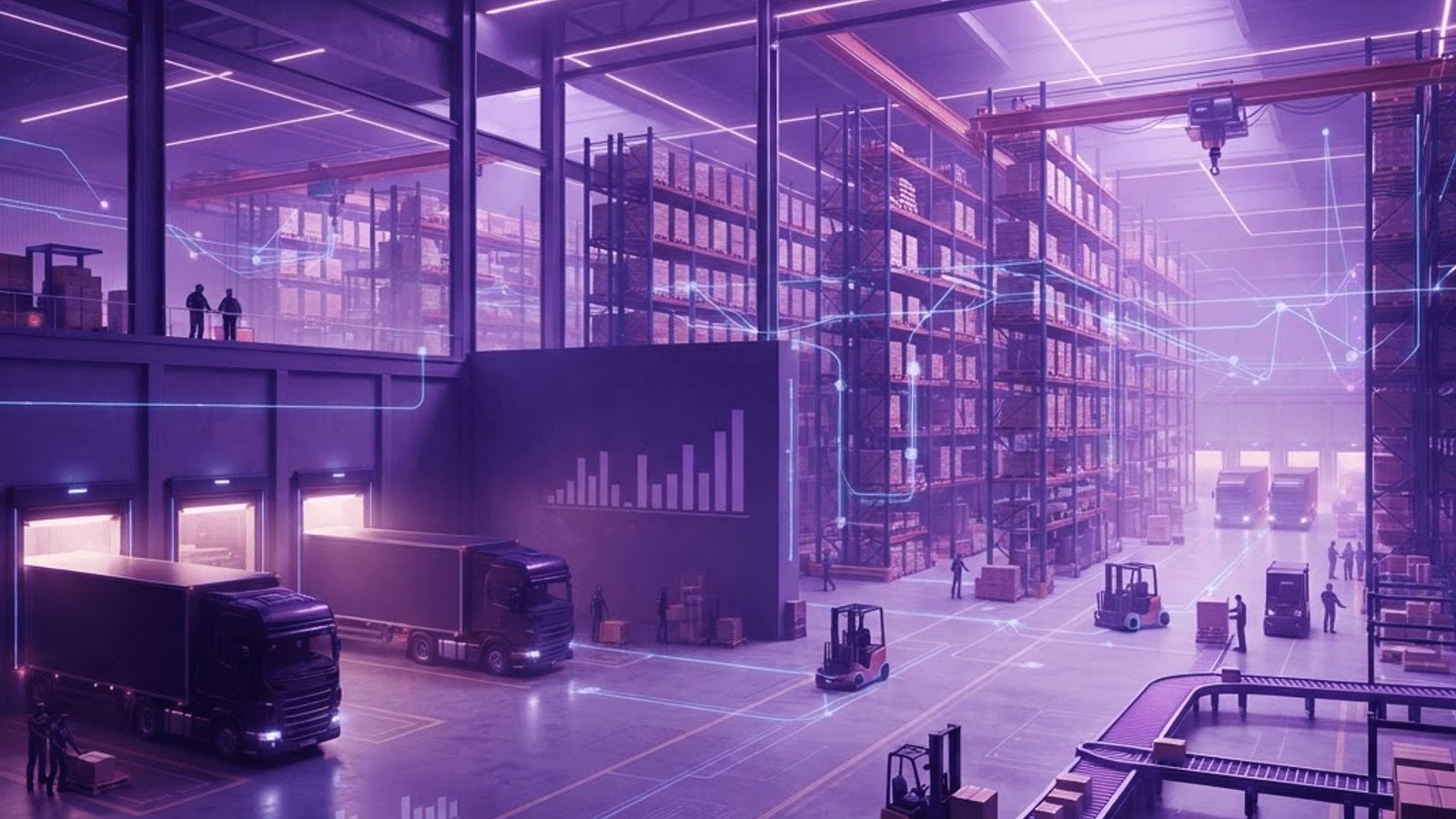
Why Santa Clarita Has Become a Warehousing Powerhouse
Santa Clarita sits at a rare intersection of geography and infrastructure. Positioned along the Interstate 5 corridor, roughly 35 miles north of downtown Los Angeles and within a comfortable drive of the ports of Los Angeles and Long Beach, the city offers something increasingly scarce in Southern California: usable industrial land with genuine highway access. Business parks in Valencia, the Needham Ranch development near Newhall, and the industrial pockets along Soledad Canyon Road have absorbed a decade of demand from ecommerce brands, aerospace suppliers, medical device manufacturers, and film production companies that all need reliable, climate-appropriate storage close to the metro core.
The result is a warehousing market with real depth. Companies operating here are not simply renting out empty square footage. Many now offer integrated third-party logistics (3PL) services, order fulfillment, kitting and assembly, returns processing, temperature-controlled storage, and freight brokerage under one roof. For local businesses, that means the difference between managing five vendors and managing one.
What Separates a Good Warehouse Partner From a Great One
Before reviewing specific providers, it helps to understand the criteria that actually matter. Square footage is the least interesting number on a proposal. Ceiling clearance determines how much vertical racking you can install, and modern facilities in the Santa Clarita Valley commonly offer 28 to 36 feet of clear height. Dock door ratios matter enormously for throughput. A building with one dock per 20,000 square feet will bottleneck during peak season no matter how large it is.
Beyond the physical building, evaluate inventory technology. A warehouse management system that provides real-time visibility, cycle counting, lot and expiration tracking, and clean integrations with platforms like Shopify, Amazon Seller Central, NetSuite, or QuickBooks will save you far more money than a slightly lower per-pallet rate. Ask about inventory accuracy rates, on-time shipping percentages, and how errors are credited. Finally, confirm insurance limits, security infrastructure, sprinkler classification, and whether the facility carries any certifications relevant to your industry, such as FDA registration for consumables or ITAR compliance for aerospace and defense parts.
The Top 10 Warehousing Companies Serving Santa Clarita
1. Valencia Logistics Group. Widely regarded as one of the most capable full-service operators in the valley, Valencia Logistics Group combines large-format pallet storage with a mature fulfillment operation. Its strength is scalability: brands that arrive with a few hundred pallets can grow into dedicated space without changing providers. Real-time client dashboards and same-day cutoff times for outbound ecommerce orders make it a favorite among consumer product companies.
2. Santa Clarita Distribution Center. A long-standing local presence focused on straightforward, high-volume storage and cross-docking. The operation is known for disciplined dock scheduling and consistent turnaround on inbound container unloading, which is exactly what importers moving freight from the ports need. Flexible month-to-month terms appeal to businesses with unpredictable seasonality.
3. Needham Ranch Industrial Storage. Operating out of the newer industrial corridor near Newhall, this provider benefits from modern construction: tall clear heights, ESFR sprinkler systems, ample trailer parking, and efficient LED-lit interiors. It is a strong option for companies that need durable, well-built space and value energy efficiency in their occupancy costs.
4. Golden State Fulfillment. Built specifically for direct-to-consumer brands, Golden State Fulfillment handles pick-and-pack, custom packaging inserts, subscription box assembly, and returns triage. Its reputation rests on order accuracy and its willingness to accommodate branded unboxing experiences, something generic warehouses often refuse.
5. Newhall Freight and Warehousing. This operator pairs storage with in-house trucking and LTL consolidation, making it especially useful for manufacturers that ship regionally across Southern California and the Central Valley. Combining warehousing and transportation with a single provider reduces handoffs and simplifies claims when something goes wrong.
6. Soledad Canyon Cold Storage. Temperature-controlled capacity is the scarcest resource in the region, and this facility fills it with refrigerated and frozen space suitable for food producers, beverage brands, nutraceuticals, and certain cosmetic lines. Documented temperature logging and food-safety protocols make it a credible partner for regulated products.
7. Castaic Commerce Warehousing. Serving the northern edge of the valley, this provider is popular with construction suppliers, equipment distributors, and businesses handling oversized or irregular freight. Yard space and outdoor storage options set it apart from providers restricted to racked interior space only.
8. Bouquet Canyon Storage Solutions. A mid-sized operator that has carved out a niche serving small and mid-market businesses that feel ignored by national 3PLs. Owners frequently praise its responsiveness and the fact that a real person answers questions about a specific pallet within minutes rather than days.
9. Santa Clarita Studio Logistics. With film and television production woven into the local economy, specialized storage for set pieces, props, wardrobe, and production equipment is a genuine business category. This provider understands short-notice retrieval, secure handling of high-value items, and the unusual scheduling rhythms of production work.
10. SCV Ecommerce Warehouse. Focused squarely on online sellers, this operation offers marketplace prep services including FBA labeling, polybagging, bundling, and compliance checks that prevent costly rejections at Amazon fulfillment centers. Transparent per-unit pricing makes forecasting easier for growing sellers.
Trends Shaping Warehousing in the Santa Clarita Valley
Three shifts are reshaping local warehousing. First, automation is arriving at mid-market scale. Conveyor-assisted picking, mobile barcode systems, and automated dimensioning equipment that once required enterprise budgets are now appearing in facilities of 100,000 square feet or less. Second, sustainability has moved from marketing to economics. Solar arrays on large rooftops, EV charging for last-mile fleets, and Title 24 compliant lighting reduce operating costs while satisfying customers who audit their supply chains for emissions. Third, tenants increasingly want flexible contracts. The rigid five-year industrial lease is giving way to blended models where a company commits to a base amount of space and buys overflow capacity seasonally.
How to Choose the Right Fit
Start by mapping your own numbers honestly: pallet count, unit velocity, SKU count, peak-to-trough ratio, and required delivery speed. Tour at least three facilities in person, and go during a busy afternoon rather than a quiet morning so you see the operation under load. Ask to see the dock area, the returns station, and the racking condition. Request references from two current clients of similar size to yours. Then compare total landed cost rather than headline rates, including receiving fees, storage, pick fees, packaging, and accessorial charges.
Santa Clarita's warehousing market rewards businesses that do this homework. The city offers modern buildings, experienced operators, and proximity to one of the largest consumer markets in the country. Choosing a partner whose capabilities genuinely match your growth curve is one of the highest-leverage operational decisions a local business can make.