
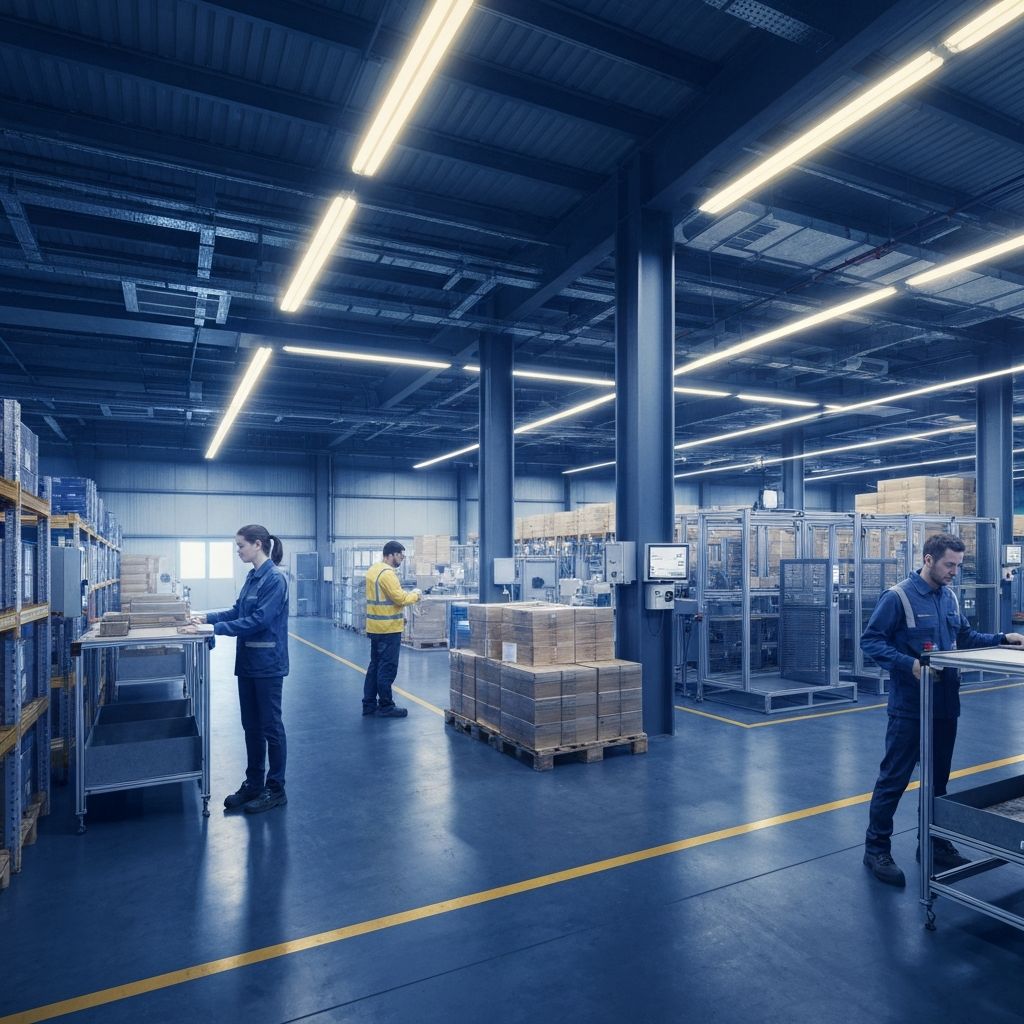
Warehousing in the Russian Economy
Warehousing is among the fastest-growing logistics segments in Russia, driven by record e-commerce growth and shifting trade flows toward Asia. Class A warehouses—featuring high ceilings, modern racking, climate control, and fire safety—have multiplied around Moscow, Saint Petersburg, Yekaterinburg, and Novosibirsk. Demand for last-mile fulfillment centers has reshaped industrial real estate near major cities.
Today's leading warehousing companies offer far more than storage. They provide pick-and-pack, value-added services, returns processing, customs bonded warehouses, and integration with major marketplaces.
The Top 10 Warehousing Companies
1. FM Logistic Russia is a global 3PL leader with multiple Class A facilities across Russia, serving FMCG, retail, and pharma clients with automated solutions.
2. Itella Russia specializes in contract logistics, e-commerce fulfillment, and value-added services with a strong network around Moscow and Saint Petersburg.
3. Major Cargo Service offers customs warehousing and bonded storage tailored to importers and international trade operators.
4. Ozon Logistics operates one of Russia's largest fulfillment networks, supporting both Ozon's marketplace and third-party sellers with hyperscale automation.
5. Wildberries Logistics runs massive sortation centers nationwide, providing fulfillment for the country's biggest online retailer and external partners.
6. PEK Logistics combines freight transport with warehousing in dozens of Russian cities, offering consolidated regional distribution.
7. STS Logistics provides contract logistics, customs services, and multi-temperature warehousing for industrial and retail clients.
8. Tablogix serves international brands with premium warehousing, kitting, and quality control near Moscow.
9. NLK (National Logistic Company) manages large Class A complexes and offers tailored 3PL solutions for retail, automotive, and electronics sectors.
10. Business Lines (Delovye Linii) complements its freight operations with extensive warehouse capacity across Russia and the CIS.
Trends Reshaping Russian Warehousing
Automation is accelerating fast. Marketplaces and 3PLs are deploying conveyor sorters, robotic shuttles, and AI-driven inventory systems to handle exploding parcel volumes. Build-to-suit construction is on the rise as occupiers commission custom-built facilities rather than waiting for speculative space.
Geographic diversification is another trend. Once concentrated around Moscow, modern warehousing is now expanding into the Volga, Urals, and Siberia to serve regional consumers more efficiently. Cold-chain warehousing is also growing rapidly to support pharmaceuticals, food delivery, and frozen retail.
Choosing the Right Provider
Selecting a warehousing partner depends on volume, SKU complexity, service-level requirements, and geographic reach. E-commerce sellers benefit from marketplace-integrated providers like Ozon and Wildberries, while industrial brands often prefer global 3PLs such as FM Logistic or Itella for scalability and reporting transparency.
Always tour the facility, audit security and fire systems, and review WMS capabilities before signing a contract. SLAs around order accuracy, inventory cycle counts, and returns turnaround are critical performance indicators.
Costs and Contract Models
Russian warehousing pricing is typically structured per pallet per month for storage, with separate fees for handling, picking, packing, and value-added services. Long-term contracts of three to five years secure better rates and dedicated space, while flexible pay-as-you-go fulfillment suits growing online sellers.
Conclusion
Russia's warehousing landscape is transforming into a high-tech, marketplace-driven ecosystem. The companies featured here lead in scale, automation, and reliability, supporting both domestic and international supply chains. Partnering with the right provider unlocks faster delivery, lower costs, and stronger customer experiences in one of the world's largest consumer markets.