
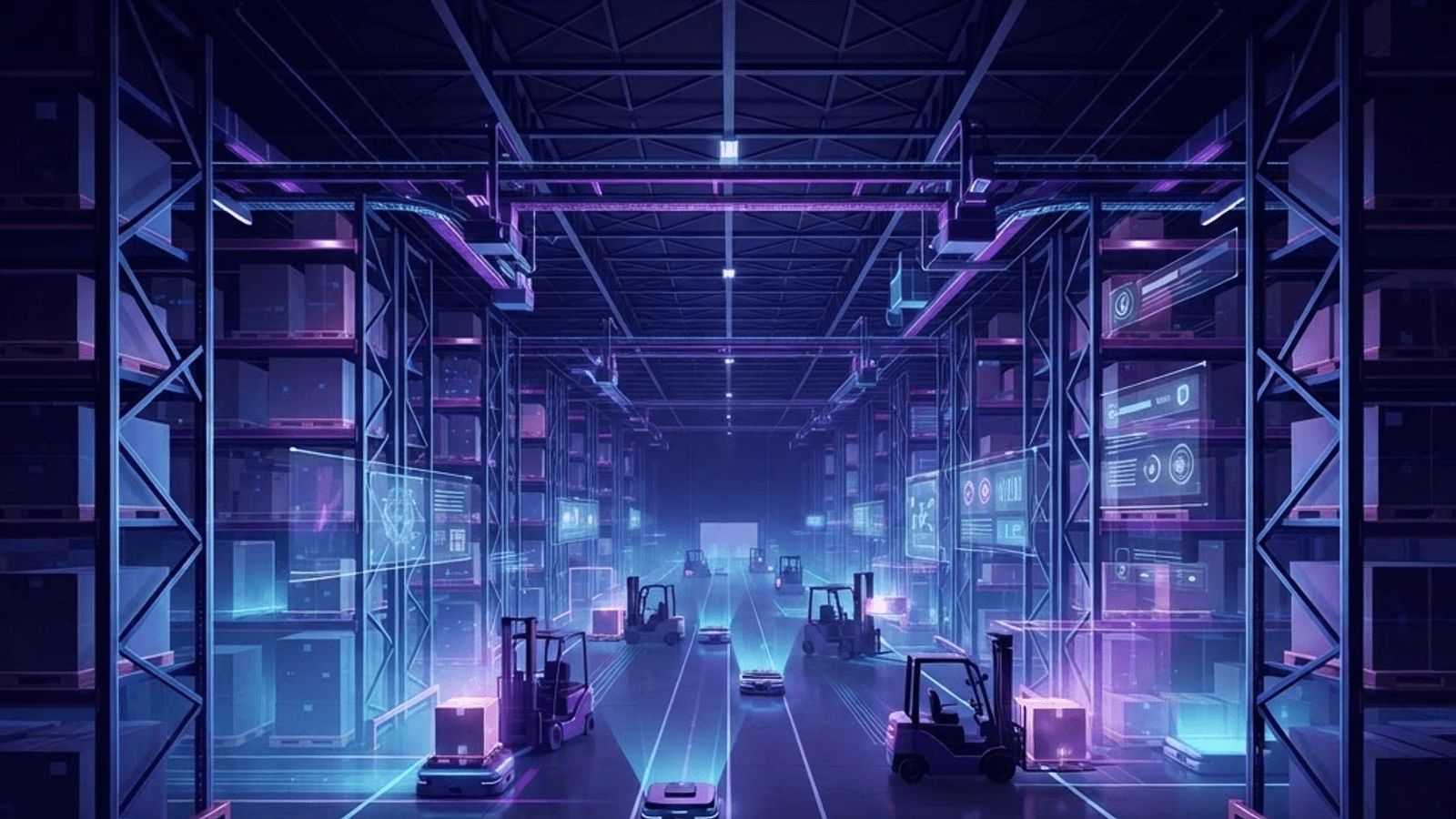
Warehousing as Strategic Infrastructure
Warehousing in Paradise has changed character. What was once a question of finding covered square metres near the port has become a decision about automation, inventory accuracy, labour availability and proximity to customers. E-commerce has been the main driver: fulfilling individual orders requires entirely different infrastructure from receiving pallets and shipping them out unchanged.
The market now offers several distinct models. Public warehouses rent space on demand with shared labour and systems. Contract warehouses dedicate space and staff to a single client. Bonded facilities hold imported goods before duty is paid. Cold stores handle temperature-controlled products. Fulfilment centres pick individual items for direct shipment to consumers. Each has a different cost structure and suits a different business.
Ten Warehousing Providers in Paradise
Paradise Warehousing Group operates the largest multi-client facilities in the industrial belt, with high-bay racking, a modern warehouse management system and flexible space contracts.
Azure Storage Solutions provides on-demand pallet storage with no long-term commitment, which suits seasonal businesses and companies with volatile inventory levels.
Summit Bonded Warehousing holds customs bonded status, allowing importers to defer duty until goods leave the facility and to re-export without paying it at all.
Harbour Cold Storage runs chilled and frozen facilities with continuous monitoring, redundant refrigeration and food safety certification.
Meridian Fulfilment Centres focuses on e-commerce, with item-level picking, packing stations, carrier integration and late dispatch cut-offs.
Stellar Automated Warehousing operates goods-to-person robotics and automated storage systems, delivering high throughput and accuracy in a compact footprint.
Coastal Industrial Storage serves manufacturers with bulk raw material storage, outdoor yard space and heavy handling equipment.
Nova Secure Vaults handles high-value goods with enhanced security, restricted access zones, continuous monitoring and full audit trails.
GreenStore Facilities competes on sustainability, with rooftop solar, LED lighting on motion control, rainwater harvesting and electric material handling equipment.
Apex Cross-Dock Services completes the list with cross-docking operations that transfer goods between inbound and outbound vehicles with minimal storage, cutting both cost and handling time.
What to Evaluate in a Facility
Location determines transport cost, and transport almost always exceeds storage in a total cost calculation. A facility slightly more expensive per square metre but closer to your customers or to the port frequently produces a lower overall cost. Assess road access, congestion at peak times and proximity to rail or port terminals.
Physical specification matters. Clear height determines how much you can store vertically. Floor loading capacity limits racking configuration. Dock door count and type affect how many vehicles can be handled simultaneously. Column spacing influences layout efficiency. These details are difficult to change later and should be checked against your actual pallet profile.
Systems capability is now the leading differentiator. A warehouse management system with real-time inventory visibility, barcode or RFID scanning at every touch, batch and expiry tracking, and an interface that connects to your own order platform will reduce errors far more than additional staff. Ask to see the client portal rather than accepting a description of it.
Cost Structures and Contracts
Warehousing is charged in several ways, and comparing providers requires normalising them. Space may be priced per pallet position, per square metre or per cubic metre. Handling is usually charged separately per inbound and outbound movement. Value-added services such as labelling, kitting and repacking carry their own rates. A provider with low storage rates and high handling charges may be expensive for a fast-moving product and cheap for a slow one.
Read the commitment terms carefully. Minimum volume guarantees protect the provider and expose the client if demand falls. Peak season surcharges are common and should be quantified before signing. Exit provisions determine how quickly and at what cost you can move inventory elsewhere.
Automation, Labour and Safety
Automation adoption in Paradise is accelerating, driven as much by labour availability as by cost. Automated storage and retrieval, conveyor sortation, pick-to-light systems and autonomous mobile robots all improve accuracy and throughput, though they require volume to justify the capital. For most mid-sized businesses, using a provider that has already made the investment is more sensible than building it.
Safety performance is a useful proxy for overall management quality. Facilities with clear pedestrian segregation, disciplined forklift operation, racking inspection records and well-maintained equipment tend to be well run in every other respect too.
Planning for Peak and for Growth
Capacity planning is where warehousing decisions most often go wrong. Businesses size facilities around average demand and then struggle through peak, or lock into space sized for peak and carry the cost of empty racking for ten months of the year. The more resilient approach in Paradise is a hybrid: a core contracted footprint sized close to steady-state demand, supplemented by on-demand overflow space during seasonal spikes.
Growth planning deserves the same discipline. A facility that fits comfortably today will feel constrained once volumes rise by half, and relocating a warehouse operation is disruptive and expensive. Ask providers explicitly what expansion room exists within the building and across their wider network, and confirm how quickly additional space and labour can be released to you. Providers with several sites around Paradise can usually accommodate growth without a move, which is a significant advantage over a single-site operator, however good that site may be.
Choosing a Warehousing Partner
Define your requirements quantitatively: pallet or unit volumes, order profile, SKU count, seasonality, temperature needs and growth projection. Visit shortlisted facilities in person and observe operations during a busy period rather than a scheduled tour. Check references from clients of similar size. The right warehousing partner in Paradise will not simply store goods but will improve inventory accuracy, shorten order cycle times and give you the flexibility to grow without a capital project.