
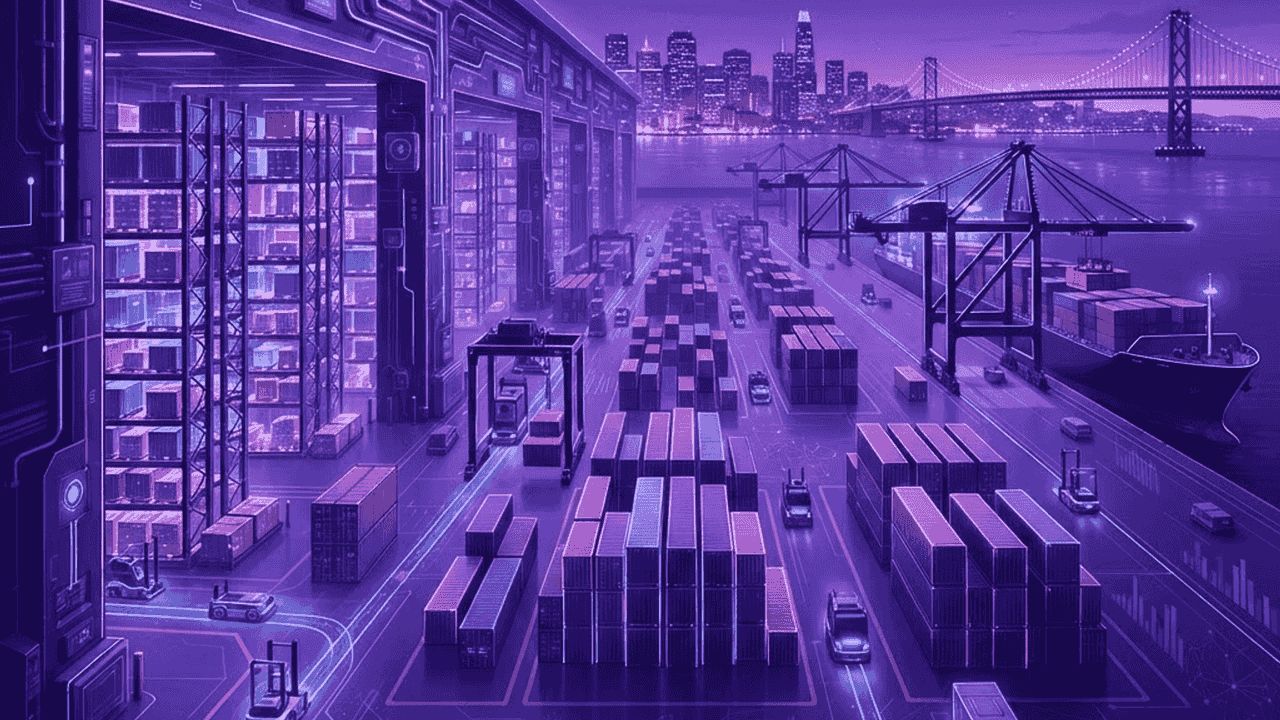
Why Oakland Is a Strategic Warehousing Hub
Few American cities offer the logistics geometry that Oakland does. The Port of Oakland handles a substantial share of Northern California's containerized imports and is the primary export gateway for the Central Valley's agricultural output. Interstates 880, 580 and 80 converge within minutes of the marine terminals, transcontinental rail runs directly through the city, and Oakland International Airport sits a short drive from the industrial districts of West Oakland and San Leandro. For a shipper, that combination means a container can be discharged, drayed, deconsolidated and loaded onto an outbound truck without ever leaving a tight geographic radius.
That efficiency is exactly why warehousing space in Oakland commands a premium and why choosing the right provider matters so much. Industrial vacancy across the East Bay has stayed historically tight, so the difference between a well-run facility and a mediocre one is rarely square footage alone. It is throughput, labor stability, systems maturity and the ability to flex during peak season.
What Separates a Great Warehousing Partner
Before reviewing specific companies, it helps to know what to measure. Strong providers publish clear performance metrics: inventory accuracy above 99.5 percent, same-day receiving, dock-to-stock cycle times measured in hours rather than days, and order accuracy that holds under volume spikes. They operate a modern warehouse management system that can integrate with your ERP or ecommerce platform through APIs rather than spreadsheets. They carry appropriate certifications for the cargo they handle, whether that is food-grade sanitation, bonded status, hazmat handling or Customs-Trade Partnership Against Terrorism participation.
Equally important is transparency on cost structure. Warehousing pricing typically blends storage charges, handling in and out, value-added services and account management fees. Providers who explain that structure plainly, and who allow you to scale between dedicated and shared space, tend to be far easier to work with over a multi-year relationship.
The Top 10 Best Warehousing Companies in Oakland
1. NFI Industries
NFI operates one of the largest third-party logistics footprints in the country and maintains significant East Bay capacity focused on port-adjacent distribution. Shippers choose NFI for its combination of drayage, transloading and contract warehousing under a single contract, which removes handoff friction between the terminal and the warehouse. Its technology stack and engineering group are genuine differentiators for companies redesigning a network rather than simply renting space.
2. GEODIS
GEODIS brings global freight forwarding depth to its Northern California warehousing operations, making it a natural fit for importers that need customs expertise alongside storage. The company is known for disciplined process documentation, strong omnichannel fulfillment capability and the ability to stand up new client programs quickly. Retail and consumer brands with both wholesale and direct-to-consumer channels often find its multi-channel model appealing.
3. DHL Supply Chain
DHL Supply Chain is the benchmark many shippers use for operational rigor. Its Bay Area facilities lean heavily on automation, robotics pilots and standardized continuous-improvement methodology, which translates into predictable service levels. The scale is best suited to mid-sized and enterprise volumes, and the reporting depth is among the most detailed available in the market.
4. Ryder Supply Chain Solutions
Ryder pairs warehousing with dedicated transportation and fleet management, which is a meaningful advantage for manufacturers running inbound-heavy operations. Its Oakland-area presence supports both distribution and light assembly work, and its e-fulfillment network gives smaller brands access to enterprise-grade infrastructure without committing to a full building.
5. Lineage Logistics
For temperature-controlled cargo, Lineage is one of the most important names in the region. Cold storage near the Port of Oakland is genuinely scarce, and Lineage's blast freezing, refrigerated staging and export documentation support make it a default choice for produce, protein, dairy and beverage exporters moving through Northern California.
6. Americold
Americold is the other pillar of Bay Area cold chain warehousing and competes strongly on food safety systems and retail-ready order assembly. Its facilities are built around high-velocity grocery and foodservice replenishment, with sanitation programs and traceability controls that stand up well to audits.
7. Prologis
Prologis is primarily an industrial real estate owner rather than an operator, but it belongs on any Oakland warehousing list because it controls a large share of the modern high-clearance space in the corridor. Companies planning to run their own operation typically start here, and Prologis Essentials has expanded into racking, equipment and energy solutions that shorten facility startup timelines.
8. Shippers Transport Express
Deeply rooted in port operations, Shippers Transport Express specializes in drayage, container yard services and transloading close to the marine terminals. It is the kind of partner that solves the hardest and least glamorous part of the chain: getting boxes off the terminal quickly and cleanly during congestion, then converting ocean containers to domestic trailers.
9. Total Distribution Services
Total Distribution Services has built a reputation for flexibility with mid-market importers and regional distributors. Clients frequently cite responsive account management, willingness to accommodate irregular freight, and pragmatic value-added work such as kitting, relabeling, palletizing and retail compliance packaging.
10. Bay Area Logistics Group
Serving smaller shippers and growing consumer brands, Bay Area Logistics Group focuses on shared warehousing with straightforward pricing and short contract terms. For companies shipping a few hundred to a few thousand orders per month, that low barrier to entry is often more valuable than enterprise automation they would not yet use.
Trends Shaping Oakland Warehousing
Three forces are reshaping the local market. The first is automation at a sensible scale: rather than fully automated fulfillment centers, most Oakland operators are adopting goods-to-person picking, autonomous mobile robots and automated dimensioning to offset persistent labor costs. The second is sustainability. California regulations on drayage emissions and building energy performance are pushing warehouses toward rooftop solar, battery storage and electric yard equipment, and shippers increasingly ask for emissions data as part of the bid process.
The third is inventory strategy. After years of volatility, many brands now hold buffer stock closer to demand rather than centralizing in a single national node. Oakland benefits directly from that shift because it can serve Northern California, the Pacific Northwest and the Mountain West from one location.
How to Choose the Right Fit
Start by defining your freight profile honestly: order volume, SKU count, seasonality, unit economics and service promise. A brand shipping pallets to retailers needs a very different partner than one shipping parcels to consumers. Next, tour facilities in person and pay attention to housekeeping, dock congestion, staff tenure and how supervisors talk about problems. Ask for references from clients of similar size, not just the largest logo on the wall.
Finally, negotiate for visibility. Contractual commitments on inventory accuracy, on-time shipping and cycle counting frequency give you leverage and, more importantly, early warning when performance drifts. The best Oakland warehousing relationships are built on shared data rather than monthly invoices.
Final Thoughts
Oakland rewards shippers who treat warehousing as a strategic decision rather than a commodity purchase. Whether you need port-adjacent transloading, refrigerated export staging or a simple shared-space fulfillment program, the providers above represent the strongest options available in the market today. Match capability to your actual operating profile, verify performance with data, and the city's geography will do the rest of the work for you.