
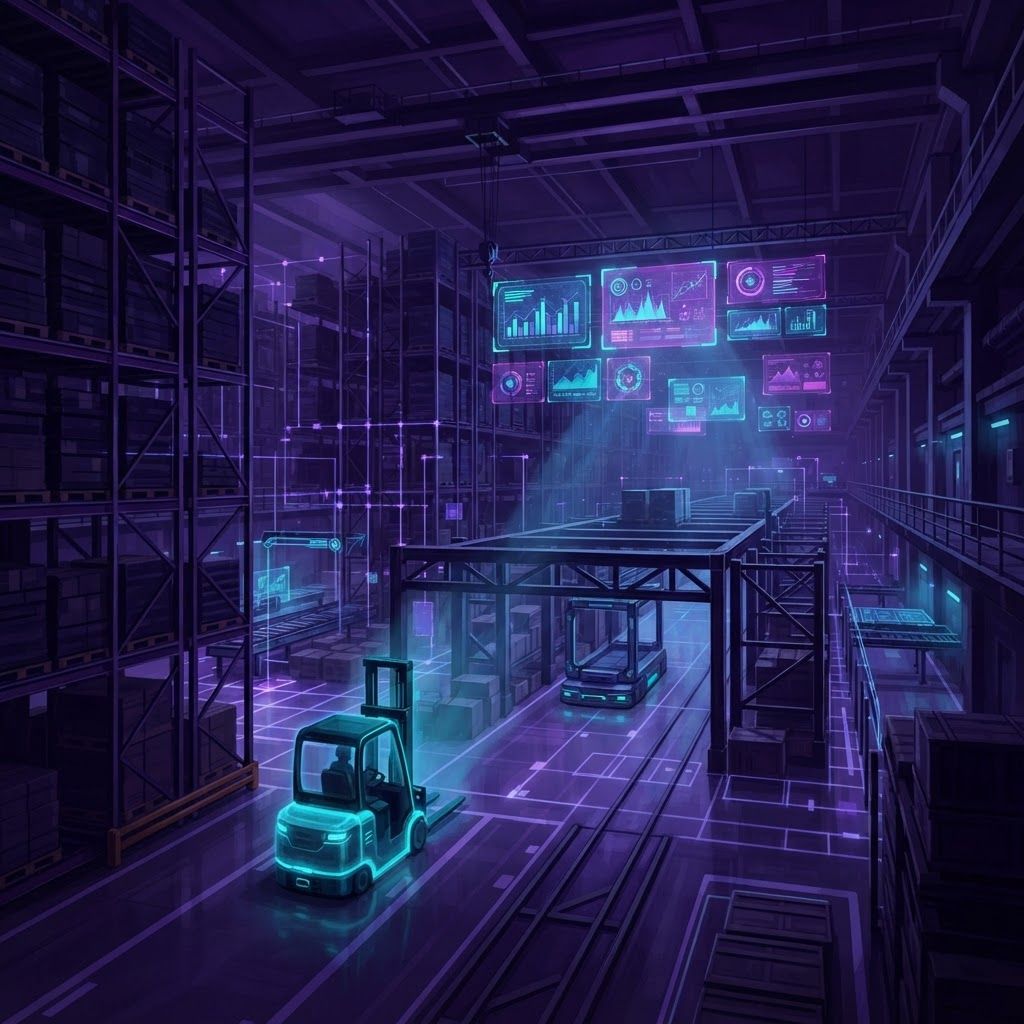
Storage as Strategic Infrastructure
Warehousing in Modesto is not a passive business of parking pallets. The region produces enormous seasonal volumes of nuts, dairy, tomatoes, poultry, wine and processed foods, most of which is harvested or manufactured in concentrated windows and sold across the whole year. Bridging that gap requires storage capacity, and often temperature controlled capacity with rigorous food safety standards.
The city's location supports the role. Proximity to Highway 99, Interstate 5, rail lines and Bay Area ports means Modesto warehouses serve as staging points for both domestic distribution and export consolidation. For many food businesses, warehouse capability directly determines how much they can produce and where they can sell.
Ten Warehousing Companies Serving Modesto
1. Valley Warehousing and Distribution
A large scale public warehouse offering ambient and temperature controlled space, inventory management, order picking and outbound shipping coordination. Strong food safety programme and warehouse management systems that provide clients real time inventory visibility.
2. Central Valley Cold Storage
A refrigerated and frozen storage specialist with blast freezing capacity, multi temperature zones and continuous temperature monitoring. Widely used by dairy, poultry and frozen prepared food producers with strict cold chain audit requirements.
3. Stanislaus Logistics Warehousing
Combines storage with value added services including labelling, repacking, kitting, palletising and quality inspection. Useful for importers and manufacturers who need product prepared for retail rather than simply stored.
4. Almond Belt Storage Facilities
Purpose built for nut and dried fruit storage, with controlled humidity, pest management programmes and export container loading capability. A key seasonal partner for growers and processors.
5. Harvest Fulfilment Warehouse
An ecommerce oriented warehouse handling pick and pack, direct to consumer shipping, subscription fulfilment and returns. Popular with specialty food brands and wineries selling online.
6. Golden State Bonded Warehouse
Offers bonded and foreign trade zone style storage for imported goods, deferring duty until product enters domestic commerce. Valuable for importers managing cash flow and re export activity.
7. Riverbank Industrial Storage
Large ambient warehouse space for packaging, equipment, building materials and non perishable goods, with flexible short term contracts that suit seasonal overflow needs.
8. Sierra Bulk Storage Solutions
Specialises in bulk commodity storage including grain, feed and dry bulk ingredients, with appropriate handling equipment, silos and load out facilities.
9. Pacifica Contract Warehousing
Provides dedicated contract warehouse space where a client effectively leases capacity and labour with committed service levels, suited to companies with large and predictable volumes.
10. Modesto Records and Document Storage
A specialist in business records archiving, secure document storage, retrieval services and certified destruction. Serves legal, medical, financial and government clients with compliance driven retention needs.
Public, Contract or Dedicated Space
Public warehousing charges by pallet position and handling, with no long term commitment. It suits variable or seasonal volumes and businesses that want to avoid fixed costs. Contract warehousing commits to a defined space and service level over a longer term, delivering lower unit costs for predictable volume. Dedicated facilities, where a company leases and operates its own building, make sense only at substantial scale where control outweighs flexibility.
Most growing Modesto food businesses start with public warehousing, move to contract arrangements as volumes stabilise, and consider dedicated space only when throughput justifies the management burden.
What to Inspect Before Signing
Visit the facility. A warehouse reveals its quality quickly: housekeeping standards, temperature discipline in cold rooms, pest control documentation, racking condition, dock congestion and how confidently supervisors answer detailed questions all indicate operational health.
For food storage, verify third party food safety certification and audit history. Ask about temperature logging, alarm escalation procedures and backup power for refrigerated space, because a cold storage power failure without generator support can destroy inventory. Check insurance coverage on stored goods and whether you need separate coverage.
Examine the systems. A modern warehouse management system with client visibility, barcode scanning and integration into your own systems dramatically reduces inventory errors and reconciliation work. Providers still running on spreadsheets should be treated cautiously.
Finally, understand pricing structure fully. Storage rates, inbound and outbound handling, pallet rework, order picking fees, minimum charges and accessorial services all contribute to real cost. Two providers with identical storage rates can differ substantially on total invoice.
Trends in Warehousing
Automation is spreading, with conveyor sortation, pick to light systems, automated storage retrieval and increasingly robotics appearing in larger regional facilities. The payoff is throughput and accuracy rather than pure labour savings.
Energy management has become a serious focus for cold storage operators, since refrigeration in Valley summer heat is expensive. Solar installations, high efficiency refrigeration, improved insulation and thermal energy strategies are now common investments that also support client sustainability reporting.
Data integration is the leading competitive differentiator. Clients expect application programming interface connectivity, real time inventory dashboards and automated order confirmation. Meanwhile flexible short term capacity has grown into a distinct product, letting businesses absorb seasonal spikes without annual commitments.
Final Thoughts
Warehousing underpins much of Modesto's food economy, and choosing well has direct consequences for product quality, order accuracy and working capital. The ten providers above span cold storage, bulk commodities, ecommerce fulfilment, bonded storage, value added services and records archiving. Visit facilities in person, verify food safety and power resilience, insist on modern inventory systems, and model total cost rather than headline storage rates. Get those right and your warehouse becomes a growth enabler rather than a bottleneck.