
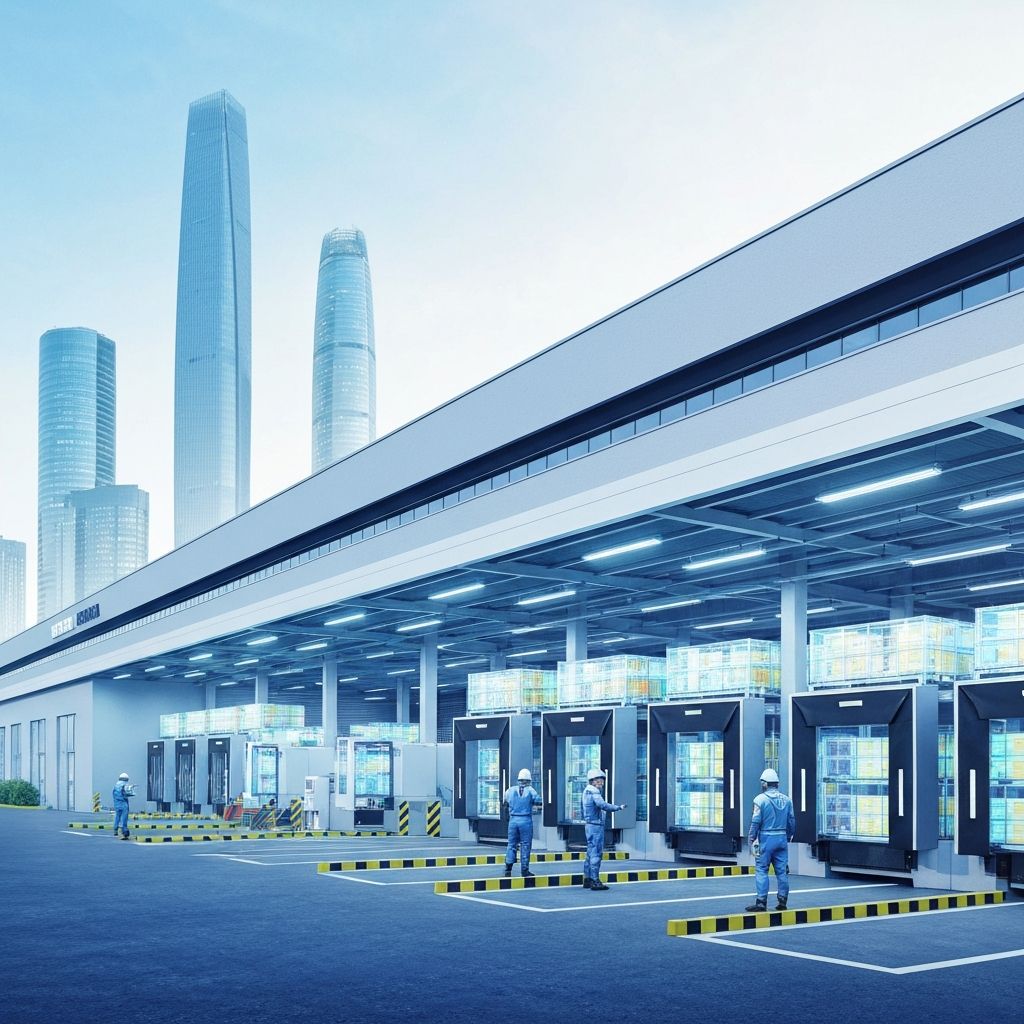
The Growing Importance of Warehousing in India
Warehousing has emerged as one of the most strategic pillars of India's logistics and supply chain ecosystem. With the rapid expansion of e-commerce, the rise of organized retail, growing manufacturing activity, and the implementation of GST that simplified interstate movement, the warehousing industry has transformed dramatically. What was once a fragmented network of small, unorganized godowns is now a sophisticated ecosystem of large, technology-enabled, multi-modal logistics parks.
Modern warehouses in India are no longer just storage facilities. They are integrated hubs offering inventory management, value-added services, automation, cold storage, cross-docking, and seamless connectivity to ports, highways, and railways. Choosing the right warehousing partner can significantly improve operational efficiency, customer experience, and cost competitiveness for businesses.
Top 10 Warehousing Companies in India
1. DHL Supply Chain India – A global leader in contract logistics, DHL Supply Chain provides world-class warehousing services with advanced technology, automation, and industry-specific solutions for retail, automotive, pharma, and consumer goods.
2. Mahindra Logistics – Mahindra Logistics offers multi-client and dedicated warehousing facilities across India, supported by integrated transportation, technology platforms, and value-added services tailored to specific industries.
3. DTDC Express (Supply Chain Solutions) – DTDC offers fulfillment and warehousing solutions for e-commerce and enterprise customers, supported by its strong pan-India distribution network.
4. Future Supply Chain Solutions – With large modern warehouses and distribution centers across the country, Future Supply Chain provides integrated logistics and warehousing for retail, FMCG, and apparel sectors.
5. TVS Supply Chain Solutions – Known for its expertise in automotive and industrial logistics, TVS Supply Chain offers warehousing, in-plant logistics, and value-added services for complex supply chains.
6. Allcargo Logistics – Allcargo runs a network of logistics parks and container freight stations, offering bonded warehousing, cross-docking, and contract logistics services across India.
7. Safexpress – Safexpress operates a large number of logistics parks across India and provides express distribution and supply chain warehousing for sectors like apparel, healthcare, and electronics.
8. Gati-KWE / Gati – Now part of the Allcargo Group, Gati offers warehousing along with express distribution, providing integrated solutions for B2B and B2C movement.
9. Stellar Value Chain Solutions – A specialist in modern, large-format warehouses, Stellar provides multi-user logistics parks with advanced technology, automation, and a strong focus on consumer goods and e-commerce.
10. Snowman Logistics – A leading temperature-controlled warehousing company, Snowman Logistics offers cold chain solutions for pharmaceuticals, food, dairy, and quick service restaurant supply chains.
Trends Driving the Warehousing Boom
The Indian warehousing industry is being transformed by several powerful trends. The rise of grade-A warehouses with high clear heights, fire safety, dock levelers, and automation has set new standards for quality. Cold chain warehousing is growing rapidly to support pharmaceuticals, dairy, frozen foods, and quick commerce. Multi-modal logistics parks near ports, airports, and dedicated freight corridors are becoming preferred locations.
E-commerce has driven demand for fulfillment centers closer to consumption hubs, especially in tier-2 and tier-3 cities, to enable faster deliveries. Robotics, conveyor systems, warehouse management systems, and AI-powered slotting are becoming common features in modern facilities. Sustainability is also a growing priority, with solar rooftops, energy-efficient lighting, and water conservation measures being integrated into new builds.
Industries Benefiting from Modern Warehousing
Almost every major industry in India benefits from advanced warehousing services. E-commerce companies rely on fulfillment centers and dark stores to power fast deliveries. Retailers use distribution centers to manage seasonal stock and replenishment. FMCG and consumer durable companies depend on regional warehouses to serve diverse markets efficiently.
Pharmaceutical and healthcare companies need GDP-compliant temperature-controlled facilities to maintain product integrity. Automotive players require highly organized in-plant and aftermarket warehouses to ensure parts availability. Agricultural value chains use specialized cold storage and grain handling facilities to reduce wastage and stabilize supply.
Choosing the Right Warehousing Partner
Selecting the right warehousing company depends on a careful evaluation of several factors. Location is critical, with proximity to consumption hubs, ports, and highways significantly affecting transit time and cost. The quality of infrastructure, including height, flooring, racking systems, fire safety, and sanitation, directly impacts product safety and storage efficiency.
Equally important is the technology stack, including warehouse management systems, real-time inventory visibility, integration with enterprise systems, and reporting capabilities. Specialized requirements such as cold storage, hazardous goods handling, bonded warehousing, or kitting and labeling services should also be matched with provider expertise. Service-level agreements, scalability, and the provider's reputation for compliance and safety are essential considerations.
The Future of Warehousing in India
The future of warehousing in India looks extremely promising. Continued investment from institutional investors, expansion of dedicated freight corridors, growth of multi-modal logistics parks under PM Gati Shakti, and increasing demand from e-commerce and manufacturing will sustain strong growth. Automation, robotics, AI-powered demand forecasting, and IoT-driven monitoring will further enhance efficiency.
Dark stores, micro-fulfillment centers, and quick commerce hubs will continue to push warehousing closer to the consumer, while large-format hubs will serve as primary distribution backbones. Sustainable, green warehouses powered by renewable energy will become the new standard, aligning with both environmental goals and rising customer expectations.
Conclusion
The top warehousing companies in India together form the backbone of a modern, efficient, and resilient supply chain. By offering advanced infrastructure, industry-specific expertise, and technology-driven services, they enable businesses to deliver better products faster and more reliably to customers. Whether the requirement is high-volume e-commerce fulfillment, temperature-controlled pharma storage, or integrated multi-industry logistics, India's warehousing leaders provide the foundation on which the country's commerce continues to grow.