
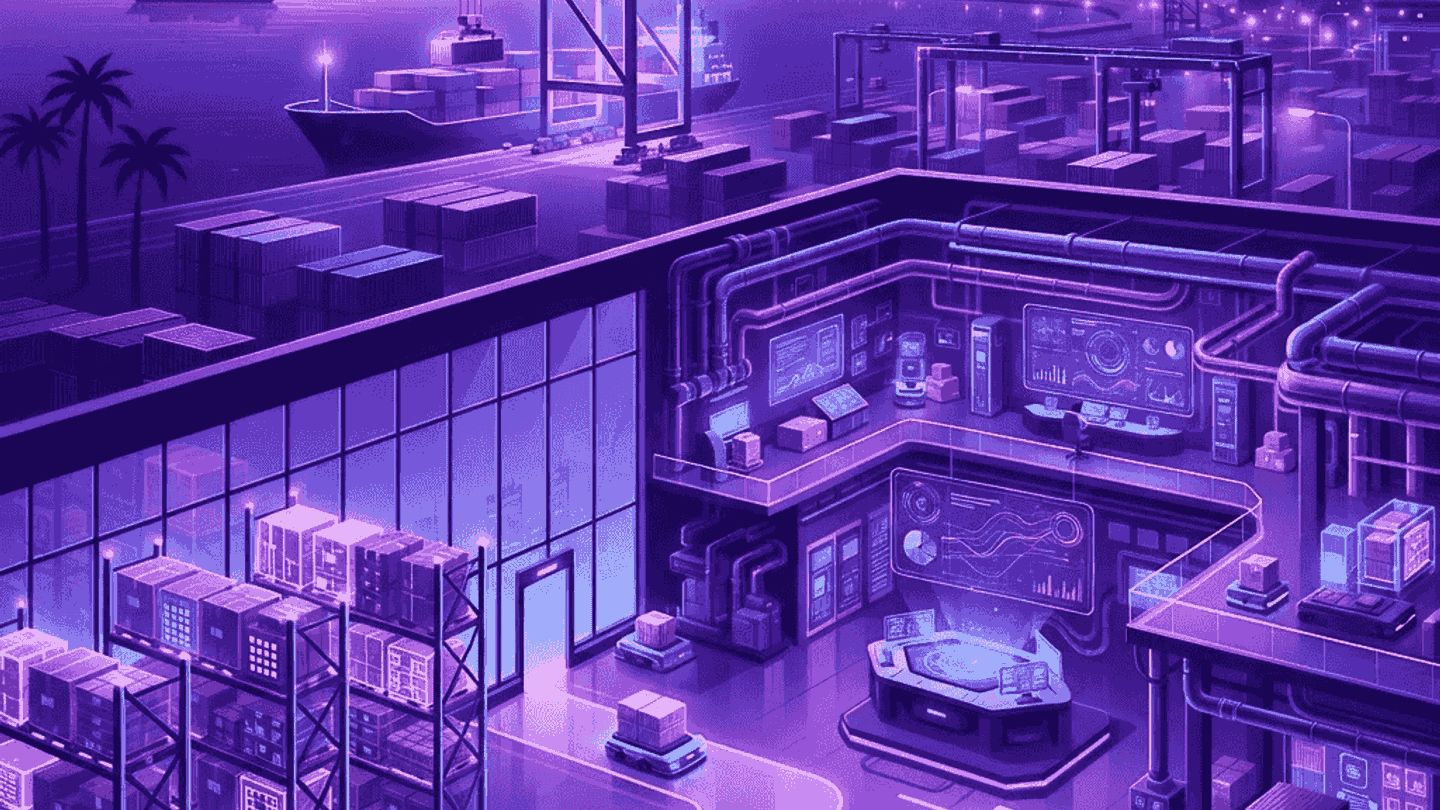
The Strategic Weight of Warehousing in Hawaii
In most markets, warehousing is a cost center to be minimized. On Oahu it is closer to insurance. Because the overwhelming majority of goods consumed in Hawaii arrive by ocean container, and because sailing schedules mean replenishment cycles are measured in weeks rather than days, inventory held on the island is what separates a business that can serve customers from one that cannot. A stockout in Honolulu is not a two-day problem; it can be a two-week problem.
This dynamic collides with a hard constraint: industrial land on Oahu is severely limited. The concentration of warehouse capacity in Sand Island, Iwilei, Mapunapuna, Kalihi, Campbell Industrial Park, and the Kapolei area exists because those are among the few areas zoned and configured for it. The result is persistently low vacancy and lease rates well above continental averages. Warehousing decisions on Oahu therefore carry more strategic consequence than they do almost anywhere else in the country.
Types of Warehousing Available on Oahu
Understanding the categories clarifies the options. Public warehousing offers shared space on a pay-for-what-you-use basis, ideal for variable volume. Contract warehousing dedicates space and labor under a longer agreement, providing predictability and customization. Third-party logistics providers layer fulfillment services on top of storage, handling pick, pack, labeling, and outbound shipping. Bonded and foreign trade zone facilities allow imported goods to be held with duties deferred, which improves cash flow for importers. Cold storage handles temperature-controlled food, floral, and pharmaceutical products, and it is the scarcest and most expensive category on the island.
The Top 10 Warehousing Companies Serving Honolulu
1. Matson Logistics. Building on Matson's dominant ocean position, its logistics arm connects container arrival directly to warehousing and distribution, which reduces the number of parties handling freight. For businesses importing steady volume from the mainland, the ability to coordinate sailing, terminal release, and storage under a single relationship shortens cycle times and simplifies accountability.
2. DHX Dependable Hawaiian Express. A long-standing Hawaii freight consolidator with warehousing and distribution capability across the islands. Its core strength is less-than-container-load consolidation: smaller shippers gain access to container economics by sharing space, which lowers landed cost substantially compared with air freight while still delivering predictable schedules.
3. Hawaii Transfer Company. An established local provider offering warehousing, drayage, and distribution services on Oahu. Its differentiator is operational familiarity with Honolulu port procedures and local delivery constraints, which reduces the friction that mainland-headquartered providers often encounter with island-specific requirements.
4. Approved Freight Forwarders. Focused on Hawaii and Pacific trade lanes, this provider pairs forwarding with warehousing and distribution. For businesses shipping into Hawaii from multiple mainland origins, its consolidation capability and single-point coordination simplify what would otherwise be a fragmented inbound flow.
5. Pasha Hawaii linked warehousing partners. As a significant ocean carrier in the Hawaii trade, Pasha's service is paired with warehousing partners who handle deconsolidation and storage. The combination is particularly relevant for automotive, rolling stock, and project cargo that require specialized handling on arrival.
6. Cold storage and refrigerated warehousing providers. Temperature-controlled facilities on Oahu serve grocery distributors, restaurants, floral importers, and healthcare. Given how much of Hawaii's food supply is imported, refrigerated capacity is disproportionately important, and providers in this category compete on temperature integrity documentation, backup power, and rapid cross-dock capability rather than on price alone.
7. Third-party fulfillment providers for e-commerce. A growing tier of Oahu 3PLs stores inventory for local and mainland e-commerce sellers and fulfills orders across Hawaii. Their value is speed to Hawaii customers: holding inventory locally converts a week-long mainland ship time into next-day or two-day island delivery, which materially improves conversion for sellers targeting Hawaii buyers.
8. Self-storage and small-business commercial storage operators. For small businesses, contractors, and retailers with modest volume, commercial self-storage across Honolulu provides flexible month-to-month space without a warehouse lease. Drive-up access units, climate-controlled options, and short commitments make this category the practical entry point before graduating to true warehousing.
9. Bonded warehouse and foreign trade zone operators. Honolulu's foreign trade zone designation enables importers to store goods with duty deferral until they enter domestic commerce. For businesses importing from Asia in volume, the cash-flow benefit and the flexibility to re-export without paying duties can be significant, and operators in this category specialize in the compliance documentation involved.
10. Military and government contract logistics providers. Oahu's substantial defense presence supports warehousing operations built around government contracting requirements, including specific security protocols, inventory accuracy standards, and reporting obligations. These providers are structured around compliance depth, and their standards often exceed commercial norms.
Trends Reshaping Honolulu Warehousing
Automation is arriving even at island scale. Warehouse management systems with barcode and RFID tracking, once reserved for large operators, are now common among mid-sized Oahu facilities because inventory accuracy carries such high stakes when replenishment is slow. Vertical utilization is another response to land scarcity, with operators investing in taller racking and narrow-aisle equipment to extract more capacity from existing footprints.
Sustainability is increasingly practical rather than aspirational. Rooftop solar performs exceptionally well on Oahu given electricity costs and solar resource, and many facilities have moved to LED lighting and electric material handling equipment for straightforward financial reasons. Finally, resilience planning has become standard: hurricane preparedness, elevated storage in flood-prone areas, and backup power are now evaluated as core requirements rather than optional features.
Selecting a Warehousing Partner
Focus on a handful of decisive factors. Location relative to the Honolulu waterfront affects drayage cost on every inbound container, and proximity is worth paying for. Inventory accuracy performance, expressed as a measured rate rather than a claim, predicts how much safety stock you must carry. Systems integration matters, because a warehouse that cannot exchange data with your order platform will create manual work indefinitely. Scalability protects you during seasonal peaks. And insurance terms deserve careful reading, since standard warehouse liability is typically limited and may fall well short of inventory replacement value. Businesses that evaluate on these dimensions rather than on square-foot rate alone consistently end up with lower total cost.