
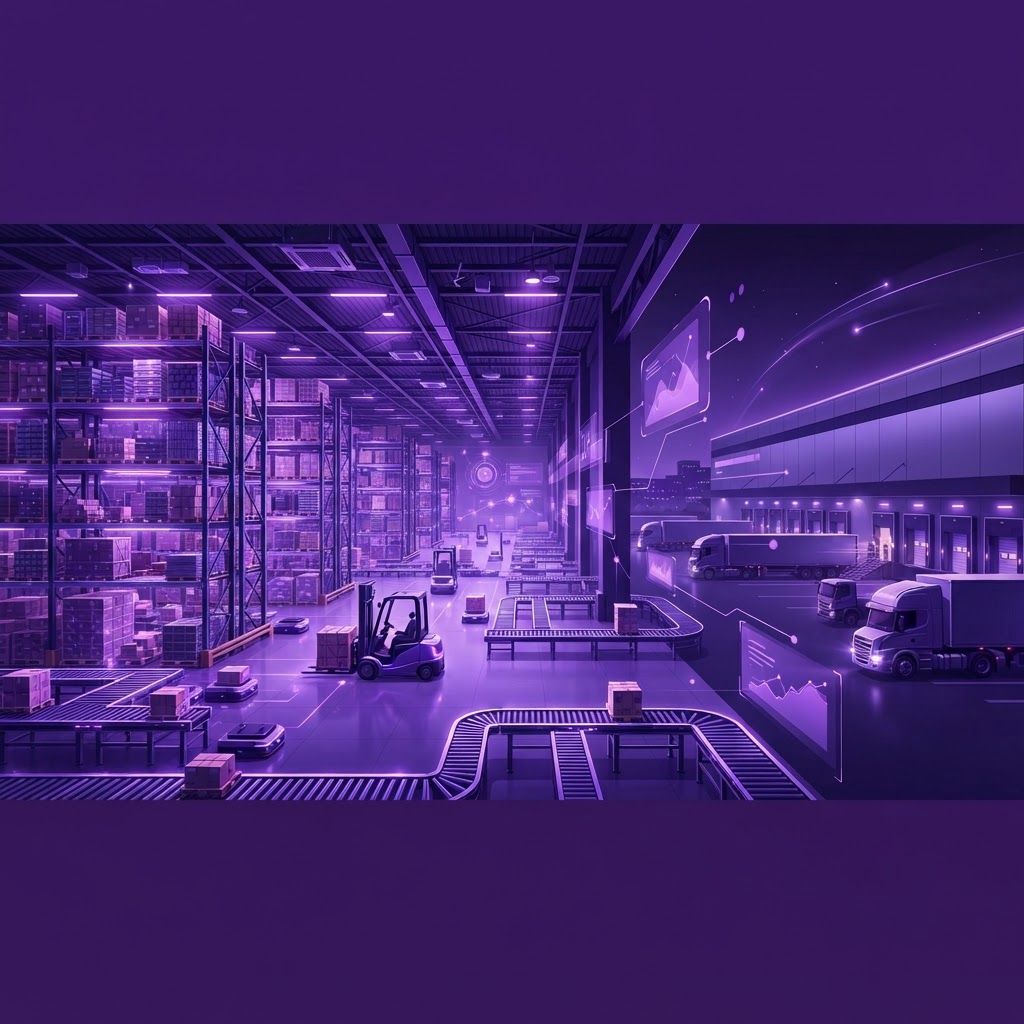
Why Fontana Became a Warehousing Powerhouse
Few American cities are as closely identified with warehousing as Fontana. The reasons are structural rather than accidental. Roughly forty percent of all containerized imports entering the United States arrive through the San Pedro Bay ports, and those containers must be deconsolidated somewhere with land, labor, and highway access. Fontana sits at the convergence of the I-10, I-15, and SR-210, roughly sixty miles inland, with rail intermodal facilities nearby and historically available industrial acreage. That combination made it a natural inland port.
The result is one of the largest concentrations of distribution space on the continent. Facilities range from older mid-century buildings with modest clear heights to modern cross-dock centers exceeding a million square feet with thirty-six-foot clear heights, ESFR sprinkler systems, and dozens of dock doors. For any company importing goods into the western United States, a Fontana warehouse position is a serious competitive advantage in transit time and drayage cost.
The Ten Best Warehousing Companies Serving Fontana
1. Prologis. The largest industrial real estate owner and developer globally, Prologis holds a substantial Inland Empire portfolio and is often the benchmark for institutional-quality logistics space. Its buildings emphasize modern specifications, energy efficiency including rooftop solar readiness, and locations optimized for drayage. For tenants needing large-format, long-term space with a sophisticated landlord, Prologis is the default consideration.
2. Duke Realty. Now part of the Prologis platform, the Duke Realty development legacy remains highly visible across Fontana in the form of well-located, high-specification bulk distribution buildings. These assets are known for efficient column spacing and truck court depth, both of which materially affect how quickly a facility can turn trailers.
3. Ryder System. Ryder combines warehousing with transportation management and dedicated fleet services, which is valuable for shippers who want a single accountable partner across storage and movement. Its Inland Empire operations support e-commerce fulfillment, retail replenishment, and reverse logistics, and its engineering group is well regarded for network design work.
4. NFI Industries. NFI is a major North American third-party logistics provider with significant Southern California warehousing capacity and deep port drayage expertise. Its strength is integrated port-to-shelf execution, including transloading ocean containers into domestic trailers, a service in constant demand in Fontana.
5. GEODIS. GEODIS brings global freight forwarding and contract logistics capability, making it a strong fit for importers who need customs coordination, international transport, and domestic distribution managed together. Its warehouse management technology and value-added services such as kitting and labeling are well developed.
6. DHL Supply Chain. The contract logistics arm of Deutsche Post DHL operates large-scale warehousing throughout the region with a strong emphasis on automation and standardized operating processes. Companies scaling rapidly often choose DHL specifically because its playbooks and systems transfer cleanly across sites and geographies.
7. XPO Logistics. XPO's presence in the market centers on less-than-truckload freight and specialized handling, complemented by warehousing and last-mile capability for heavy goods such as furniture and appliances. For distributors shipping bulky items to consumers, that combination is difficult to replicate elsewhere.
8. Americold Logistics. Cold storage is a distinct discipline, and Americold is the leading specialist in temperature-controlled warehousing in North America. With Southern California's agricultural output and enormous food distribution demand, refrigerated and frozen capacity in the Inland Empire is consistently tight. Americold offers blast freezing, multi-temperature zones, and food safety compliance infrastructure that general warehouses cannot match.
9. Lineage Logistics. Lineage is the other dominant cold chain operator and is notable for heavy investment in automation and energy efficiency within refrigerated facilities. Its network density in California supports both inbound agricultural consolidation and outbound retail distribution, and its temperature monitoring and traceability systems are strong.
10. Kenco Logistic Services. Kenco is a mid-sized, employee-focused third-party logistics provider that competes on flexibility and account attention rather than raw scale. For growing brands that would be a small account at a global provider, Kenco often delivers more responsive service and more willingness to customize processes.
Trends Reshaping Fontana Warehousing
Automation adoption has accelerated sharply. Goods-to-person systems, autonomous mobile robots, automated storage and retrieval, and robotic palletizing are increasingly standard in new Inland Empire operations. The driver is partly throughput and partly labor economics, since warehouse wage competition in Fontana is intense.
Regulatory pressure is a defining local factor. Air quality rules governing warehouse indirect sources require large facilities to take emission-reduction actions, pushing operators toward zero-emission yard equipment, electric truck charging infrastructure, and on-site solar. Tenants should expect these obligations to influence both building specifications and occupancy costs.
Space economics have also shifted. After years of historically low vacancy and steep rent growth, the market has normalized somewhat, giving tenants more negotiating room than during the peak. Even so, well-located modern buildings with strong truck courts remain competitive, and lead times for large blocks of space are still long.
How to Evaluate a Warehousing Partner
Start with physical fit. Clear height determines how much of your cubic space is usable, and a thirty-two-foot building may store dramatically more per square foot than a twenty-four-foot one. Dock door count and trailer parking determine throughput. Sprinkler classification determines what commodities you can legally store. These specifications constrain operations far more than rent per square foot does.
Then assess technology. Ask which warehouse management system the provider uses, what integration methods it supports, and how order and inventory data will flow into your systems. A provider without real-time inventory visibility will create downstream problems no amount of operational goodwill can fix.
Examine labor stability. In a market as competitive as Fontana, turnover directly affects accuracy and productivity. Ask about staffing model, retention, cross-training, and peak season ramp plans. Providers that rely entirely on temporary labor during fourth-quarter peaks often struggle with quality.
Finally, understand the commercial structure. Third-party logistics pricing typically combines storage charges, handling fees, and value-added service rates, and the blend can vary enormously depending on inventory velocity. Model your actual volume profile against a proposed rate card before signing, and clarify liability limits and insurance requirements.
Final Thoughts
Fontana's warehousing market is deep enough to serve nearly any requirement, from institutional big-box space to specialized cold chain and flexible third-party logistics. The best choice depends on inventory characteristics, growth trajectory, and how much operational control you want to retain. Prioritize building specification and systems integration over headline rent, and factor regional environmental compliance into any long-term commitment.