
Why Warehousing Thrives in Chesapeake
Warehousing is a location business, and Chesapeake has the location. Sitting minutes from marine terminals, on top of interstate and rail access, with substantial industrial land available at costs far below the Northeast corridor, the city has attracted continuous distribution center development. Companies importing goods through Hampton Roads can move a container to a Chesapeake warehouse within an hour of discharge, then serve customers across the Mid-Atlantic and Southeast within one or two days of transit.
The result is a diverse warehousing market. Alongside massive modern distribution centers, the city hosts smaller multi-tenant facilities, temperature-controlled space, bonded storage, container yards and specialized industrial storage. That range means a startup needing fifty pallet positions and a national retailer needing half a million square feet can both find suitable options.
Types of Warehousing to Consider
Public warehousing rents space and labor on a shared basis, billed by pallet position or square foot plus handling charges. It requires no long-term commitment, making it ideal for seasonal or uncertain volumes. Contract warehousing dedicates space, staff and sometimes equipment to a single client under a multi-year agreement, offering lower unit costs and customized processes.
Fulfillment warehousing focuses on individual order picking for e-commerce, requiring different layout, labor and systems than pallet-in, pallet-out distribution. Cold storage maintains refrigerated or frozen conditions for food, beverage and pharmaceutical goods. Bonded warehousing allows imported goods to be stored before duty payment, which improves cash flow for importers. Container and yard storage handles chassis, trailers and full containers awaiting processing. Distribution centers combine storage with cross-docking and outbound transportation management.
The Top 10 Warehousing Companies in Chesapeake
1. Chesapeake Warehousing Group is a leading provider with substantial square footage, modern racking and warehouse management technology that gives clients real-time inventory visibility.
2. Harbor Point Distribution Centers specializes in import-driven operations, offering container devanning, transload and pallet distribution close to terminal gates.
3. Dominion Storage Solutions serves mid-sized businesses with flexible public warehousing and month-to-month terms that accommodate volume swings.
4. Atlantic Fulfillment Warehouse focuses on e-commerce order fulfillment with pick, pack and ship operations designed for parcel-level throughput.
5. Southgate Cold Storage provides refrigerated and frozen space with monitored temperature control and documented food safety practices.
6. Great Bridge Industrial Storage handles heavy and oversized industrial goods, including materials requiring floor storage rather than racking.
7. Tidewater Bonded Warehousing offers customs-bonded storage that lets importers defer duties until goods enter commerce.
8. Elizabeth River Container Yard manages container and chassis storage with gate systems built for high-volume truck traffic.
9. Battlefield Contract Logistics builds dedicated operations for clients needing customized workflows, sequencing or value-added processing.
10. Deep Creek Warehouse Company completes the list as a locally owned facility recognized for responsiveness and willingness to accommodate smaller accounts.
Trends in Modern Warehousing
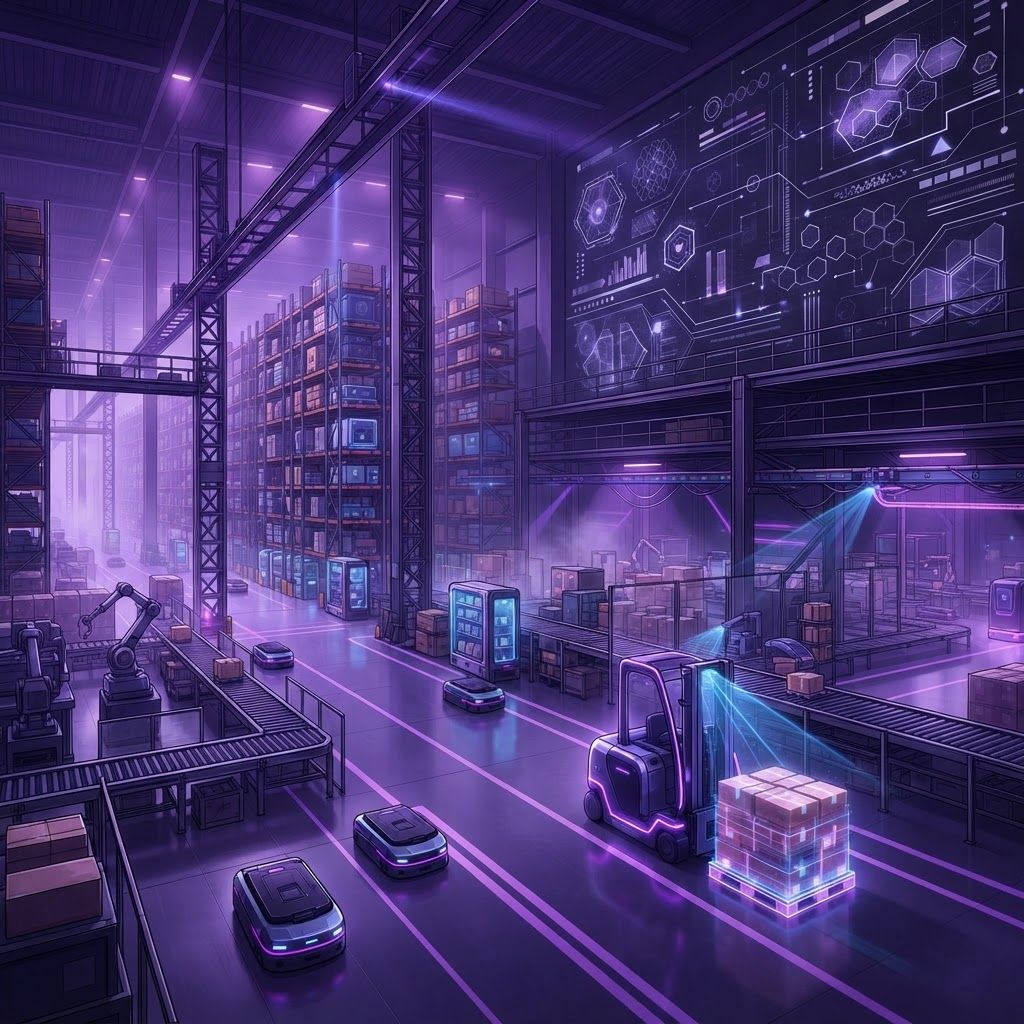
Automation adoption has become incremental and practical rather than futuristic. Chesapeake operators are investing in conveyor and sortation upgrades, mobile robotics for picking assistance, automated labeling and warehouse execution software that sequences work intelligently. These targeted improvements raise productivity without the capital risk of full automation.
Building specifications have changed. Newer facilities feature higher clear heights, more dock doors per square foot, larger trailer courts, LED lighting, ESFR sprinkler systems and heavier floor loading. These features directly affect operational efficiency, and tenants increasingly evaluate them alongside rent.
Inventory strategy has shifted toward resilience. After years of lean inventory doctrine, many companies now carry buffer stock, which has increased demand for flexible short-term space. Sustainability is influencing decisions as well, with solar installations, electric material handling equipment and packaging reduction programs becoming common. Labor availability remains the most persistent constraint, making operators with strong retention and training programs notably more reliable.
How to Select a Warehouse Partner
Begin with your physical requirements: pallet positions or square footage needed, seasonality, inbound and outbound volumes, unit dimensions, and whether you need racking, floor space or temperature control. Then examine location relative to your customers and your inbound freight source, since drayage and outbound transportation costs frequently exceed storage costs.
Scrutinize the pricing model. Storage may be billed by pallet, by square foot or by cubic volume, and handling charges, receiving fees, order fulfillment fees and accessorials add up. Ask for a sample invoice based on your projected volumes rather than a rate sheet alone.
Evaluate systems integration seriously. If a warehouse cannot connect to your commerce platform or enterprise system, you will pay for the gap in manual labor and errors. Ask about inventory accuracy performance and how discrepancies are resolved.
Visit the facility. Aisle organization, dock congestion, safety signage, equipment condition and employee demeanor communicate operational discipline better than any presentation. In a market with as many options as Chesapeake, taking the time to compare facilities directly is the most reliable path to a partner that will still fit your needs three years from now.