
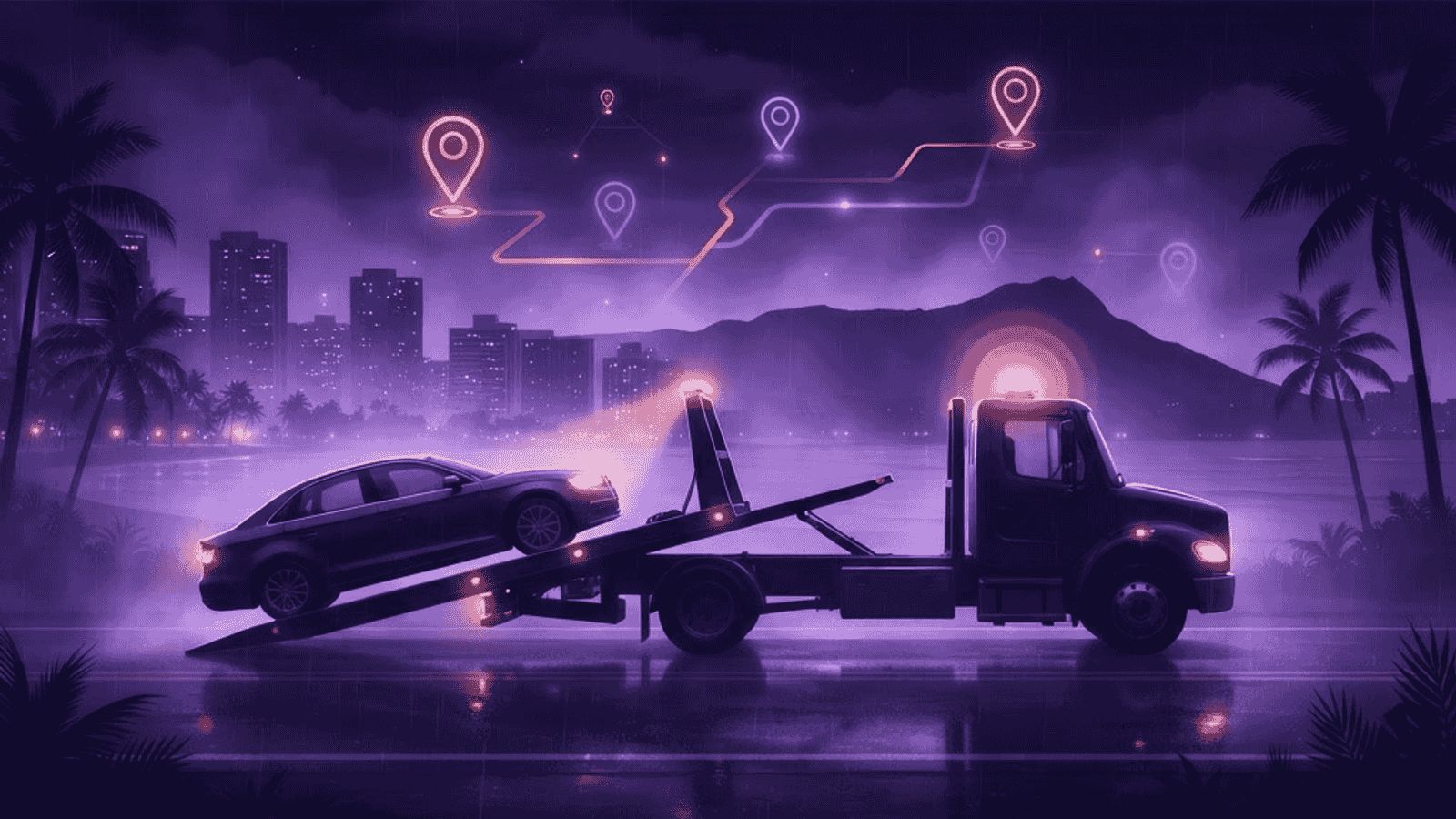
Towing on Oahu: A Distinct Operating Environment
Towing in Honolulu presents challenges that mainland operators rarely face. The island's road network funnels enormous traffic volume through a small number of corridors, so a single disabled vehicle on the H-1 can generate island-wide congestion within minutes. Response speed therefore matters not only to the stranded driver but to thousands of others.
Geography adds complexity. Narrow residential streets in older neighborhoods like Kaimuki and Manoa limit truck access. Steep grades on routes toward Tantalus and the Pali demand capable equipment and experienced operators. Multi-level parking structures throughout downtown and Waikiki have height restrictions that eliminate conventional tow trucks entirely, requiring low-clearance equipment. And coastal roads mean recovery operations sometimes occur in soft sand or standing salt water.
The result is that equipment variety and operator skill matter more here than raw fleet size. The right provider for a lowered sports car in a Waikiki garage is not the right provider for a box truck stuck on a windward hillside.
The Top 10 Towing Services in Honolulu
1. Alii Towing
Alii Towing operates a mixed fleet covering light and medium duty work with round-the-clock dispatch. Its strength is coverage breadth across Oahu, which shortens response times regardless of where a breakdown occurs. Flatbed availability is particularly relevant for all-wheel-drive and low-clearance vehicles that cannot safely be towed with a conventional wheel lift.
2. Aloha Towing and Recovery
This operator handles accident recovery and more complex extraction work in addition to routine towing. Recovery is a genuinely different skill from transport, requiring rigging knowledge, winch technique, and scene safety judgment. Providers with real recovery capability prevent secondary damage during difficult retrievals.
3. 808 Towing
808 Towing emphasizes rapid dispatch and clear communication, providing arrival estimates and updates rather than leaving customers waiting without information. For a driver stranded on a shoulder in traffic, knowing when help will arrive materially reduces stress and improves safety decisions.
4. Honolulu Towing Service
A long-established operator, Honolulu Towing Service maintains relationships with local repair shops, dealerships, and insurers, which streamlines the handoff after a tow. Having a provider that can coordinate directly with your chosen shop removes a logistical step at a moment when the vehicle owner is already dealing with disruption.
5. Pacific Towing Hawaii
Pacific Towing focuses on heavy-duty work, serving commercial trucks, buses, construction equipment, and large recreational vehicles. Heavy recovery requires substantially different equipment and certified operators, and the number of providers genuinely capable of it on Oahu is limited, making these operators important to the island's commercial economy.
6. Island Wide Towing
As the name suggests, this operator emphasizes coverage across the entire island including the North Shore and windward communities where response times from town-based providers can be long. For drivers whose routines take them outside urban Honolulu, a provider with genuine geographic reach is worth identifying in advance.
7. Bulls Eye Towing
Bulls Eye handles both consumer roadside calls and private property management work, including authorized removal of improperly parked vehicles from commercial lots and condominium properties. That second category is a significant part of the local towing economy given Honolulu's chronic parking scarcity.
8. Ohana Towing
Ohana Towing serves the light-duty market with an emphasis on customer care during stressful situations. Small operators often differentiate through the human element, and drivers who explain the process clearly, handle vehicles carefully, and treat customers respectfully generate durable loyalty in a service most people use only rarely.
9. Kalihi Towing
Based centrally with quick access to the H-1 corridor and industrial areas, Kalihi Towing offers advantageous positioning for the routes where breakdowns are most frequent. Location genuinely affects response time on an island where traffic can turn a five-mile trip into a forty-minute drive.
10. Rapid Recovery Honolulu
Rounding out the list, Rapid Recovery specializes in motorcycle transport and low-clearance vehicles, using appropriate tie-down systems and equipment that prevent the damage a general-purpose truck can cause. Given Honolulu's large motorcycle and scooter population, this specialization fills a real need.
What to Do When You Need a Tow
Safety comes first. Move the vehicle onto a shoulder or off the roadway entirely if it is still drivable, activate hazard lights, and in most highway situations remain inside the vehicle with seatbelts fastened rather than standing beside traffic. On the H-1, exiting a vehicle on the left shoulder is particularly dangerous.
When you call, provide precise location information. Nearest exit number, cross street, and direction of travel help far more than a general neighborhood name. Describe the vehicle accurately, including whether it is all-wheel drive, lowered, or in a height-restricted structure, so the dispatcher sends appropriate equipment the first time.
Ask about pricing structure before authorizing service. Towing charges typically include a hookup fee plus a per-mile rate, with surcharges for after-hours calls, winching, or specialized equipment. Confirm whether your insurance policy, credit card, vehicle warranty, or a motor club membership covers the cost, and understand whether you pay directly and seek reimbursement or the provider bills the carrier.
Choosing a Provider in Advance
Save a number before you need it. Verify the operator is properly licensed and insured, confirm they carry adequate coverage for damage during transport, and ask what equipment types they operate. If you drive a lowered vehicle, an all-wheel-drive crossover, an electric vehicle, or a motorcycle, confirm suitability specifically. Electric vehicles in particular generally require flatbed transport, since towing with driven wheels on the ground can damage the drivetrain.
Industry Trends
Electric vehicle adoption is driving fleet investment in flatbed capacity and training on high-voltage safety at accident scenes. Digital dispatch platforms now provide customers with live truck tracking, replacing vague verbal estimates with real information. And roadside assistance is expanding beyond towing into on-site services such as battery replacement, tire changes, lockout assistance, and mobile charging, resolving many calls without transport at all.
Final Thoughts
The best towing service in Honolulu is the one that arrives promptly with the right equipment and treats both you and your vehicle carefully. Identify a licensed provider suited to your specific vehicle now, save the number, understand what your insurance covers, and you will convert a potential roadside crisis into a manageable inconvenience.