
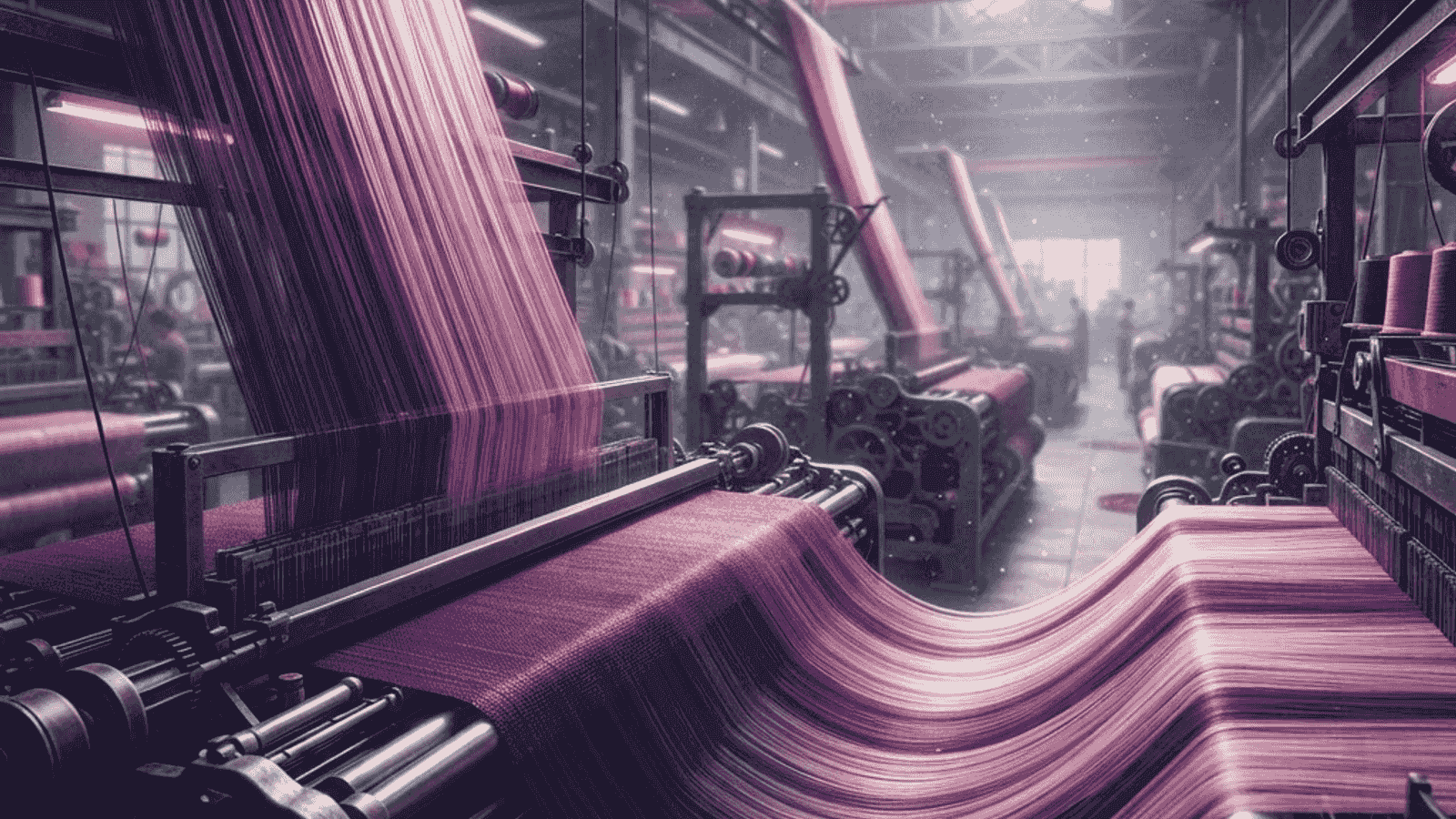
Why Textiles Still Thrive Near Long Beach
The conventional story is that American textile manufacturing disappeared decades ago. The reality in Southern California is considerably more interesting. The Los Angeles and Long Beach corridor retains one of the largest concentrations of cut-and-sew, knitting, dyeing, and finishing capacity in the country, sustained by a combination of fast-turn fashion demand, technical and performance fabric niches, and a port complex that handles an enormous share of the nation's textile imports.
Long Beach specifically benefits from proximity to that port. Yarn, greige goods, trims, and finished garments all move through the harbour, and manufacturers located nearby can compress lead times dramatically compared with overseas alternatives. When a brand needs a reorder in three weeks rather than three months, geography becomes a competitive weapon. That speed advantage, combined with growing interest in domestic and traceable supply chains, has kept the regional industry viable.
Evaluation Criteria
The manufacturers below were assessed on production capability, quality control systems, material expertise, sustainability practices, minimum order flexibility, and reputation among brands and buyers. The list spans knitters, dyers, technical textile producers, and full-package apparel manufacturers, reflecting the breadth of the local supply chain.
1. Milliken and Company
Milliken is one of the most research-intensive textile companies in the world, with a portfolio spanning performance fabrics, protective materials, and specialty finishes. Its distribution and technical support reach the Southern California market serving industrial, workwear, and interior applications. The differentiator is materials science depth: Milliken holds an extensive patent portfolio and often solves problems that commodity mills cannot approach.
2. Unifi
Unifi is best known for recycled performance yarns produced from post-consumer plastic bottles, and its products appear in a large share of sustainably marketed apparel. For brands manufacturing in the Los Angeles and Long Beach area, Unifi yarn provides a verifiable recycled content story with traceability documentation. That verification capability, rather than the recycled claim alone, is what serious buyers value.
3. Glen Raven
Glen Raven specialises in performance textiles for marine, awning, and outdoor furniture applications, a natural fit for a coastal market like Long Beach with its substantial boating community and year-round outdoor living. Its fabrics are engineered for ultraviolet resistance, colourfastness, and saltwater exposure. The company's strength is durability engineering validated through long-term outdoor testing rather than laboratory approximation.
4. Hanes Companies
Hanes Companies operates as a major textile distributor and converter serving industrial, geotextile, and construction markets alongside traditional fabric supply. Its relevance to Long Beach lies in industrial and infrastructure applications, including erosion control and containment materials used in port and civil projects. Broad inventory and regional distribution make it a dependable source when schedules are tight.
5. Buhler Quality Yarns
Buhler Quality Yarns produces fine-count combed cotton and blended yarns used in premium knitwear and next-to-skin garments. Southern California brands targeting the elevated basics segment frequently specify this class of yarn because hand feel is a primary purchase driver. Its differentiator is consistency: fine-count spinning demands tight process control, and reliability in that range is uncommon.
6. Contempora Fabrics
Contempora Fabrics is a circular knitter producing performance and fashion knits with capabilities in specialty finishing. Knit fabrics dominate the activewear and casualwear categories that define much of the Los Angeles apparel market, and domestic knitting capacity is a genuine bottleneck. Its ability to run development yardage quickly makes it valuable during product development cycles.
7. Beverly Knits
Beverly Knits offers vertically coordinated knitting with strong technical fabric development and works extensively with brands requiring engineered stretch and recovery. For Long Beach-area apparel producers, the appeal is a single partner managing yarn sourcing through finished fabric, which reduces the coordination burden on small brand teams that lack dedicated sourcing staff.
8. American and Efird
American and Efird, widely known as A and E, is one of the largest industrial thread and technical yarn manufacturers globally. Thread is easy to overlook and disproportionately responsible for garment failures. The company's strength is application engineering, matching thread construction to specific seam performance requirements in everything from swimwear to protective apparel, with technical support available to regional sewing operations.
9. Culp Home Fashions
Culp is a leading producer of mattress fabrics and upholstery textiles, categories with meaningful demand across Southern California's furniture and bedding manufacturers. Fire-retardant performance and durability standards in these applications are stringent, and Culp's compliance expertise is a substantial differentiator when selling into regulated home furnishing markets.
10. Standard Textile
Standard Textile serves healthcare and hospitality markets with engineered institutional textiles, including surgical fabrics, patient bedding, and hotel linens. Long Beach has a significant hospital network, a growing hotel sector, and a large convention business, all of which consume these products continuously. The company's advantage is lifecycle performance, designing textiles to survive hundreds of industrial laundry cycles rather than domestic washing.
Industry Trends Reshaping Local Production
Several developments are changing how textiles are made in this region. Water and chemical management in dyeing is under intense regulatory scrutiny, pushing investment toward low-water dyeing and closed-loop treatment. Traceability requirements are tightening, with buyers increasingly demanding documented fibre origin. Digital printing continues to displace conventional screen printing for short runs, reducing waste and enabling smaller minimums. Automation in cutting and spreading is improving domestic cost competitiveness, and near-shoring interest has strengthened as brands reassess long, fragile supply chains.
Choosing a Textile Manufacturing Partner
Brands should begin with honest volume expectations, since minimum order quantities vary enormously and a mismatch wastes everyone's time. Request physical samples and test reports rather than relying on specification sheets alone, particularly for stretch recovery, shrinkage, and colourfastness. Confirm which processes happen in house versus through subcontractors, because subcontracted dyeing or finishing introduces schedule risk. Finally, evaluate development responsiveness, as the willingness to iterate on a fabric during sampling often predicts how a supplier behaves during production problems.
Final Thoughts
Textile manufacturing in and around Long Beach persists because it offers something overseas production cannot: speed, proximity, and accountability. The companies profiled here cover yarn, knitting, technical performance fabrics, industrial thread, and institutional textiles, representing the real breadth of capability available in this market. For brands building supply chains that must respond quickly and withstand scrutiny, this region deserves serious consideration.