
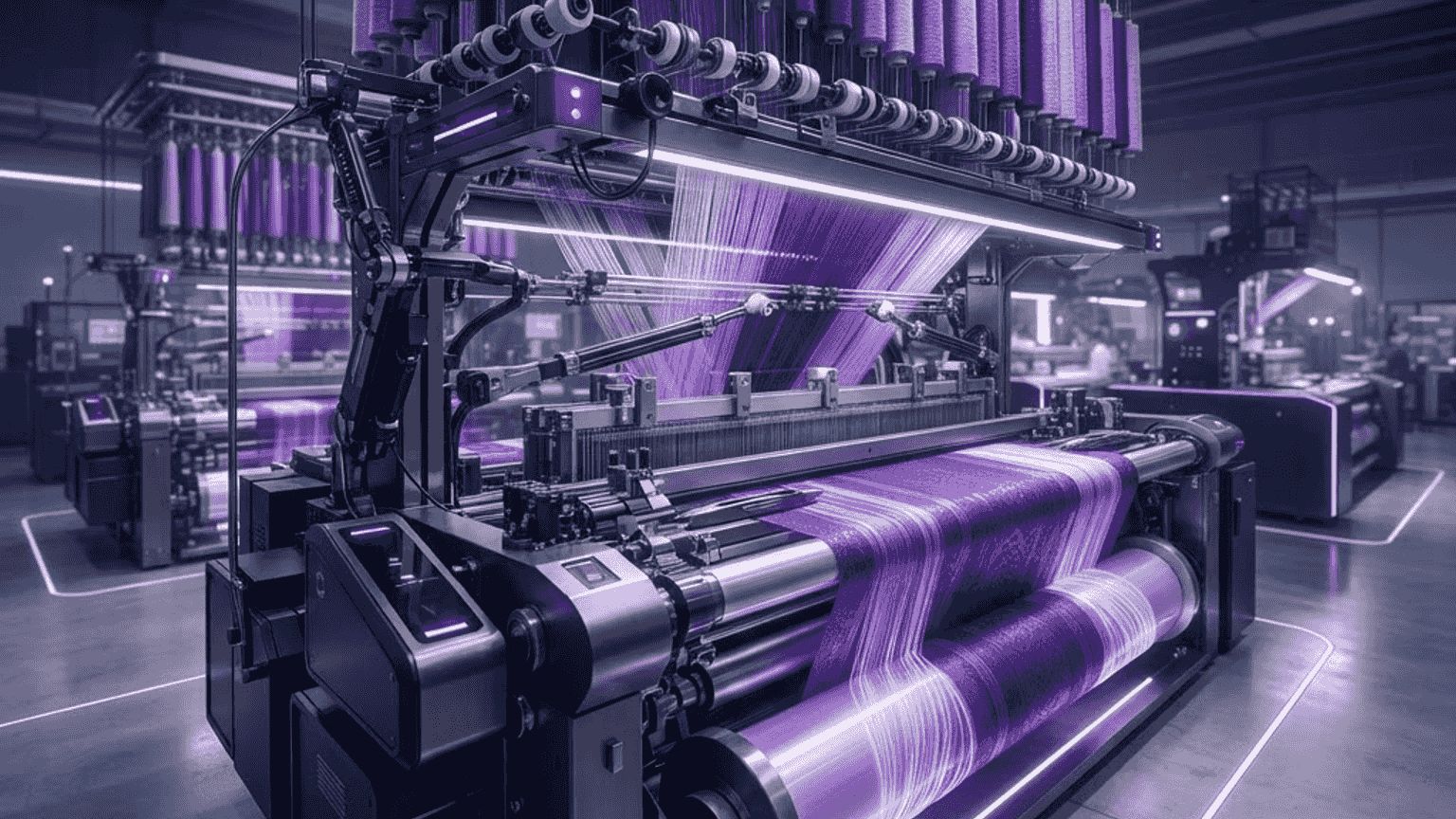
Textile Manufacturing in Henderson Today
Henderson's textile industry does not resemble the mass-production mills of textile history, and that is precisely its strength. The city's manufacturers occupy specialized niches shaped by regional demand: hospitality linens and uniforms for a nearby tourism economy of enormous scale, technical and industrial fabrics for construction and shade applications suited to intense desert sun, promotional and event textiles for a busy conference calendar, and small-batch apparel production for emerging brands that cannot meet overseas minimums.
This specialization has produced a manufacturing base that competes on responsiveness, flexibility, and quality control rather than on the lowest possible unit cost. A Henderson manufacturer can often turn a sample in days and a production run in weeks, with the client able to visit the floor and inspect work in progress. For brands burned by long overseas lead times, opaque subcontracting, and quality inconsistency, that proximity has become a decisive advantage.
Industry Trends Worth Understanding
Performance and technical textiles represent the fastest-growing segment locally. Moisture management, ultraviolet resistance, antimicrobial finishes, and flame retardancy all command premium pricing, and the desert climate creates natural demand for shade fabrics, awnings, and heat-resistant industrial textiles.
Sustainability has moved from aspiration to specification. Recycled polyester content, water reduction in dyeing and finishing, chemical management programs, and traceable fiber sourcing now appear in purchase requirements from hospitality groups and corporate buyers. Manufacturers that can document their inputs and processes win contracts that those relying on assurances alone do not.
Automation is quietly reshaping economics. Computerized cutting, automated spreading, digital textile printing, and single-needle automation have narrowed the labor cost gap enough that domestic production is viable for many product categories where it previously was not. Digital printing in particular has made short runs and heavy customization commercially sensible.
The Top 10 Best Textile Manufacturers in Henderson
1. Silver Loom Textile Works
Silver Loom Textile Works is among the most versatile manufacturers in the area, producing woven and knit fabrics alongside finished goods for hospitality and corporate clients. The company's in-house dyeing and finishing capability allows tight control over color consistency, a persistent pain point for buyers ordering across multiple production runs. Its quality documentation and inspection protocols meet the standards demanded by large institutional purchasers.
2. Desert Thread Manufacturing
Desert Thread Manufacturing specializes in cut-and-sew contract production for apparel and accessory brands, with genuinely low minimums that make it accessible to growing labels. The company provides pattern making, grading, sampling, and small-batch production under one roof, shortening development cycles considerably. Founders frequently praise its patience in guiding first-time manufacturers through technical packages.
3. Black Mountain Industrial Fabrics
Black Mountain Industrial Fabrics produces technical textiles for construction, agriculture, and outdoor applications, including shade cloth, geotextiles, and reinforced coated fabrics. Its products are engineered for the ultraviolet exposure and temperature extremes of the Southwest, and the firm can supply test data supporting durability claims. Contractors value its ability to fabricate to custom dimensions quickly.
4. Anthem Uniform and Linen Group
Anthem Uniform and Linen Group manufactures uniforms, workwear, and commercial linens for hospitality, healthcare, and service businesses. The company handles embroidery, heat transfer, and garment decoration internally, and it manages size-run logistics for large staff rosters with unusual competence. Its repeat business among multi-property operators speaks to consistency across reorders.
5. Cardinal Knitting Mills
Cardinal Knitting Mills focuses on circular and flat knit fabric production, including performance blends with moisture-wicking and stretch properties. The mill works closely with brands on fabric development rather than simply selling from a stock range, which appeals to companies seeking a distinctive hand feel or construction. Its technicians are known for solving shrinkage and dimensional stability problems that frustrate less experienced suppliers.
6. Redrock Digital Textile Printing
Redrock Digital Textile Printing offers dye-sublimation and direct-to-fabric digital printing for signage, event graphics, soft furnishings, and custom apparel. Because setup costs are minimal, the company can economically produce single pieces or thousands, and color matching is handled with calibrated profiling rather than guesswork. Event producers rely on its rapid turnaround during compressed schedules.
7. Sunset Valley Home Textiles
Sunset Valley Home Textiles manufactures curtains, upholstery fabrics, cushions, and bedding for residential and commercial interiors. The company works extensively with interior designers on custom specifications, including flame-retardant treatments required for public spaces. Its finishing quality on visible seams and edges is regularly cited by designers as a differentiator.
8. Copper Canyon Nonwovens
Copper Canyon Nonwovens produces nonwoven materials used in filtration, insulation, wipes, and protective products. The firm's technical staff engage seriously with performance requirements such as filtration efficiency, tensile strength, and thermal resistance. Industrial buyers value having a regional source that reduces both lead time and freight exposure.
9. Vista Verde Sustainable Textiles
Vista Verde Sustainable Textiles builds its production around recycled and lower-impact fibers, water-reducing dye processes, and transparent supply chain documentation. The company can supply the material traceability data that corporate sustainability programs increasingly require. It also offers take-back and recycling arrangements for end-of-life textiles, closing a loop most manufacturers ignore.
10. Horizon Point Sewing and Fabrication
Horizon Point Sewing and Fabrication handles heavy-duty industrial sewing, including tarps, covers, bags, safety products, and custom canvas fabrication. The shop excels at complex assemblies requiring reinforced stress points and specialized hardware. Its engineering-minded approach to prototyping helps clients refine a design before committing to volume.
How to Vet a Textile Manufacturing Partner
Begin with a factory visit if at all possible. Observing housekeeping, machine condition, work-in-progress organization, and how operators handle defects reveals more in an hour than months of email correspondence. Ask what proportion of work is performed in-house versus subcontracted, and where any outside work goes.
Prepare a proper technical package. Vague specifications produce disappointing samples, and the resulting revision cycles cost far more than the time spent documenting requirements clearly. Define fabric construction, weight, fiber content, colorway with a physical standard, tolerances, trim details, and finishing expectations before requesting a quote.
Clarify minimum order quantities, sampling costs, lead times for both sample and bulk stages, and payment terms in writing. Ask how the manufacturer handles a run that fails inspection and who bears the cost. Reputable partners answer that question directly, because they have answered it before.
Final Thoughts
Henderson's textile manufacturers offer something increasingly valuable: proximity, flexibility, and accountability. Whether the requirement is a technical shade fabric engineered for desert sun, a hospitality linen program spanning thousands of rooms, or a first production run for a young apparel label, the capability exists locally. Specify carefully, visit the floor, and build the relationship deliberately, and the resulting supply chain will be far more resilient than a cheaper but distant alternative.