
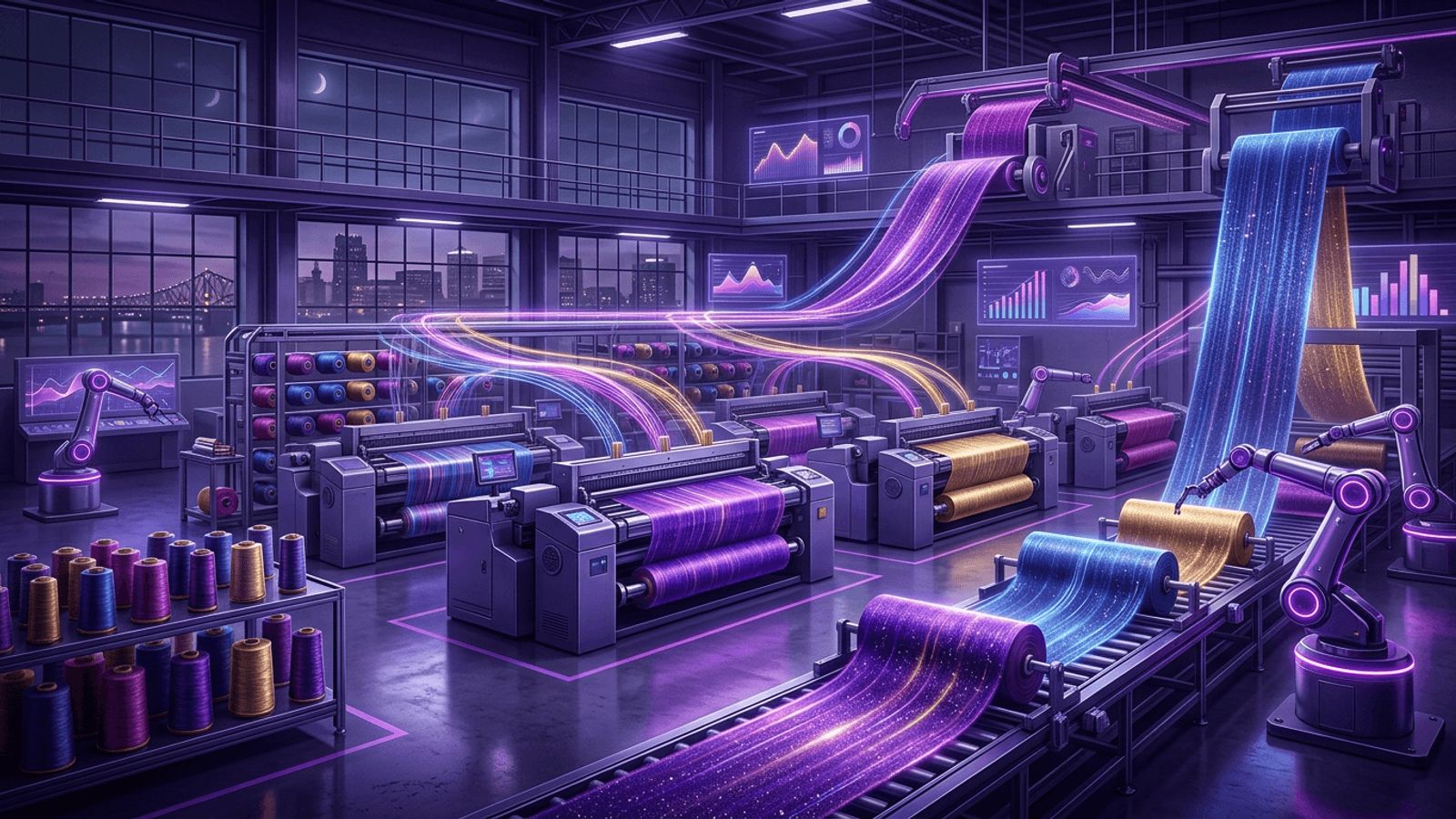
Textiles in the Evansville Economy
When people think of Evansville manufacturing, plastics, automotive, and food production usually come to mind first. Yet textiles and fabric-based products also play an important role in the regional economy. Evansville-area companies produce nonwoven materials used in hygiene and medical products, engineered fabrics for industrial applications, and finished goods such as tents, awnings, and covers. Uniform and textile service companies also support thousands of local employers in healthcare, food processing, and manufacturing.
Modern textile manufacturing is highly technical, relying on advanced polymers, automated production lines, and strict quality standards. The region's expertise in plastics and materials science has created a natural foundation for these specialized products.
Segments of the Textile Industry
The textile sector includes nonwovens made from polymer fibers, woven and knitted fabrics, coated and laminated materials, finished textile products, and textile rental and service operations. Each segment serves different markets, from consumer goods and healthcare to construction, agriculture, and recreation.
The Top 10 Textile Manufacturers and Suppliers Serving Evansville
1. Magnera
Magnera was formed through the combination of Berry Global's health, hygiene, and specialties nonwovens business with Glatfelter. With deep roots in the Evansville materials ecosystem, Magnera produces engineered nonwoven materials used in hygiene products, wipes, medical supplies, and industrial applications around the world.
2. Berry Global
Berry Global, long headquartered in Evansville, is a global leader in plastic packaging and engineered materials. Its expertise in polymers, films, and specialty materials has historically extended into nonwoven and fabric-like products, and it remains one of the region's most influential manufacturers.
3. Anchor Industries
Anchor Industries is an Evansville manufacturer known for event tents, commercial awnings, pool covers, and custom fabric structures. Its products are used at weddings, festivals, sporting events, and commercial sites nationwide, and the company has a long legacy of skilled craftsmanship in heavy-duty textiles.
4. Cintas
Cintas is a leading provider of uniforms, workwear, mats, towels, and facility services. Its Evansville-area operations support restaurants, healthcare providers, manufacturers, and offices with uniform rental and textile services that keep employees safe and professional.
5. UniFirst
UniFirst designs and services workwear, protective clothing, and facility products. Evansville employers in industrial and food processing environments rely on its uniform programs for safety, compliance, and brand consistency.
6. Vestis
Vestis, formerly part of Aramark's uniform services business, provides uniforms, workplace supplies, and textile services to businesses of all sizes. Its route-based service model supports hospitals, plants, and hospitality businesses across the Tri-State.
7. Freudenberg Performance Materials
Freudenberg Performance Materials is a global producer of technical textiles and nonwovens used in automotive interiors, filtration, building materials, and apparel. Its materials are found in many products made and assembled in the Midwest, including vehicles built in Southern Indiana.
8. Milliken & Company
Milliken is a diversified manufacturer known for textiles, specialty chemicals, and floor coverings. Its performance fabrics, protective textiles, and commercial carpet are used in offices, healthcare facilities, and industrial settings throughout the region.
9. Glen Raven
Glen Raven produces performance fabrics, including the well-known Sunbrella brand used in awnings, outdoor furniture, and marine applications. Evansville fabricators and businesses that build shade structures and outdoor products often rely on Glen Raven materials.
10. Unifi
Unifi manufactures recycled and synthetic yarns, including REPREVE fibers made from recycled plastic bottles. Its sustainable materials are used by apparel and home furnishing brands and reflect growing demand for recycled content in textiles.
Trends Shaping Textile Manufacturing
Sustainability is driving major change, with manufacturers investing in recycled fibers, reduced water and energy use, and recyclable product designs. Automation and digital quality control are improving efficiency. Demand for medical and hygiene nonwovens remains strong, and technical textiles for filtration, automotive, and construction continue to grow.
Why Evansville Is Well Positioned
Evansville's deep expertise in polymer science, a skilled manufacturing workforce, and central location with access to river, rail, and interstate transportation make it an attractive location for materials and textile production. Collaboration between manufacturers and local educational institutions helps train technicians and engineers for advanced production roles.
Careers in Textiles and Materials
The textile and materials sector offers careers in production, maintenance, quality assurance, engineering, research and development, and logistics. Many roles provide on-the-job training and pathways to advancement. Ivy Tech and the University of Southern Indiana offer programs that align with skills needed in advanced manufacturing environments.
Frequently Asked Questions
What are nonwoven textiles?
Nonwovens are fabrics made by bonding fibers together through heat, chemical, or mechanical processes rather than weaving or knitting. They are used in diapers, wipes, medical gowns, filters, and construction materials, and they are a significant specialty within Evansville's materials industry.
Are textile jobs in Evansville highly technical?
Yes. Modern textile and nonwoven production uses automated lines, advanced polymers, and precise quality controls. Roles often require mechanical aptitude, troubleshooting skills, and comfort with digital controls, and employers frequently provide training.
Final Thoughts
Evansville's textile landscape combines global nonwoven leaders, skilled local fabricators, and essential uniform service providers. Together, these companies demonstrate how traditional industries evolve through innovation, supporting jobs and supplying materials used in everyday products around the world.