
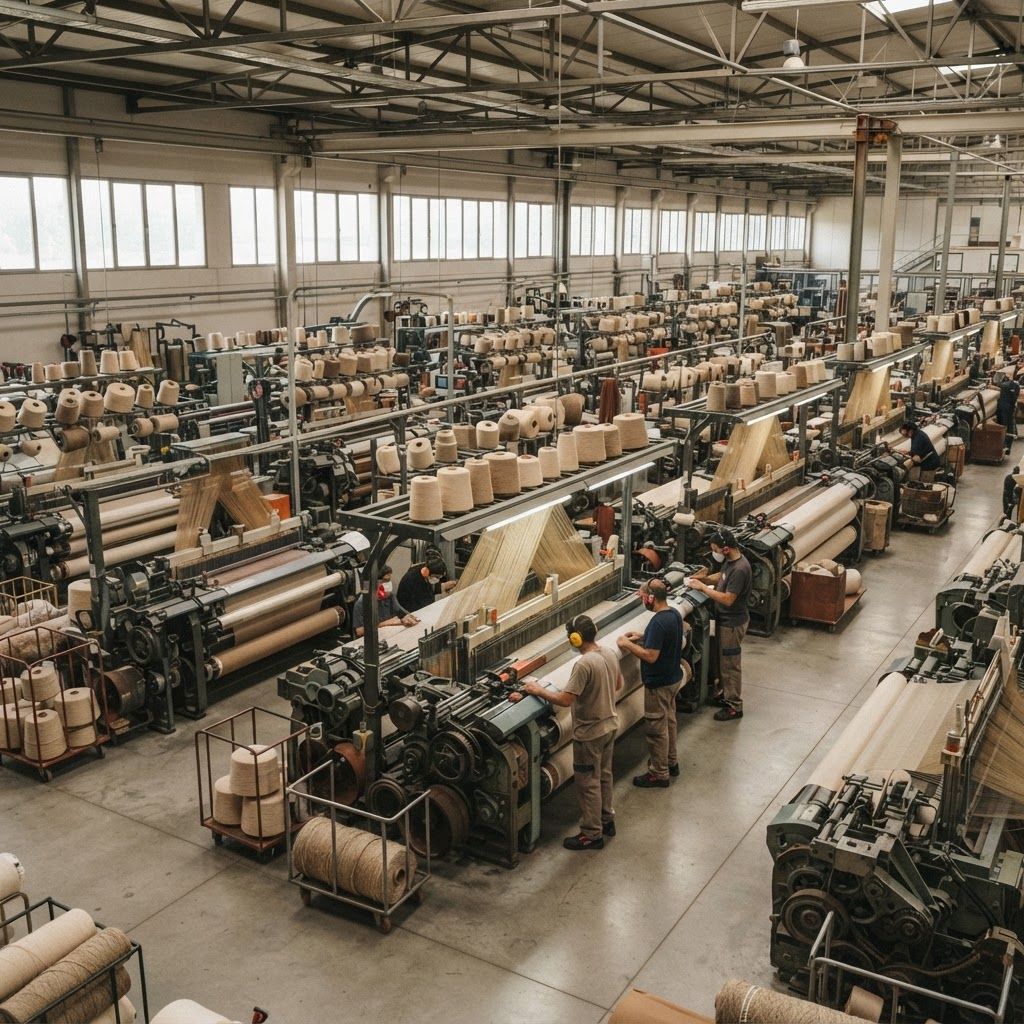
Boise City's Quietly Capable Textile Industry
Textile manufacturing in Boise City does not look like the mill towns of the Northeast or the mega-factories of Asia. Instead, it has evolved into a network of specialized, agile producers serving distinct niches: technical fabrics for the outdoor recreation industry, cut-and-sew operations for emerging apparel brands, industrial textiles for agriculture and construction, and craft-scale mills producing yarn and woven goods for regional designers.
This structure is a direct product of geography and culture. The Treasure Valley sits within a day's drive of world-class mountain, river, and desert recreation, which has nurtured a cluster of outdoor gear brands that need nearby prototyping and small-batch production. Idaho's agricultural economy generates steady demand for covers, liners, bags, and protective textiles. And a growing creative community has built appetite for domestically produced, traceable materials. Together these forces support manufacturers who compete on speed, flexibility, and quality rather than on volume alone.
What Distinguishes a Strong Textile Manufacturer
Buyers evaluating textile partners should look past machine lists. The most capable manufacturers employ experienced pattern makers and technical designers who can turn a rough concept into a production-ready specification. They maintain documented quality systems with inspection points at cutting, sewing, and finishing. They can source compliant materials and provide documentation on fiber content, flammability, and chemical restrictions where required. And they communicate honestly about lead times rather than promising dates they cannot hold.
Minimum order quantities are the other decisive factor. A manufacturer willing to run one hundred fifty units teaches a young brand very different lessons than one requiring five thousand. The best local producers are explicit about where their economics work.
Top 10 Best Textile Manufacturers in Boise City
1. Treasure Valley Textile Works
A full-service cut-and-sew operation, Treasure Valley Textile Works handles pattern development, grading, marker making, cutting, and assembly under one roof. The company is known for taking on technical apparel with complex seam construction and for its willingness to run development samples alongside production. Clients appreciate detailed technical packages and consistent stitch quality across runs.
2. Snake River Fabric Mills
Snake River Fabric Mills produces woven and knit fabrics for regional brands and industrial customers, with capability in blended natural and synthetic constructions. Its differentiators include in-house lab testing for tensile strength and colorfastness, careful dye lot management, and the ability to develop custom constructions rather than only selling stock goods.
3. Foothills Outdoor Manufacturing
Serving the outdoor recreation sector, Foothills Outdoor Manufacturing specializes in laminated and coated technical fabrics assembled into packs, shells, and soft goods. The team works with waterproof-breathable membranes, seam sealing, and high-tenacity webbing. Brands value the shop's prototyping speed, which allows several design iterations before committing to tooling and production.
4. Capital City Custom Apparel
Capital City Custom Apparel produces branded uniforms, corporate apparel, and team wear with embroidery, screen printing, and heat transfer decoration. Its reputation is built on reliable turnaround for repeat orders, accurate color matching to brand standards, and a garment library broad enough to suit both hospitality and heavy industry.
5. Gem State Industrial Textiles
This manufacturer focuses on non-apparel sewn goods: equipment covers, agricultural tarps, filtration media, insulation jackets, and protective sleeving. Products are engineered for abrasion resistance and ultraviolet stability, and the shop routinely fabricates from customer drawings. Contractors and farm operations rely on its rapid repair and replacement service.
6. Sawtooth Knitting Company
Sawtooth Knitting Company operates circular and flat knitting machinery to produce base layers, technical socks, beanies, and seamless garments. Strengths include yarn expertise across merino, recycled synthetics, and blends, plus the capacity to knit to shape and reduce cutting waste. The company is frequently cited for consistent gauge and fit accuracy.
7. Riverbend Upholstery Fabrics
Supplying furniture makers, hospitality projects, and commercial interiors, Riverbend Upholstery Fabrics converts and finishes heavy-duty textiles to contract-grade standards. Services include backing application, stain-resistant finishing, and cut-to-order yardage. Designers value its inventory depth and rapid sampling for specification work.
8. Boise Technical Weaving
Boise Technical Weaving manufactures narrow fabrics such as webbing, straps, binding tape, and elastic used across outdoor gear, safety equipment, and medical devices. The company documents break strength testing for load-bearing applications and supports custom widths, weaves, and colors at moderate minimums, making it a valuable development partner.
9. Northwest Sustainable Fibers
Focused on traceable and lower-impact materials, Northwest Sustainable Fibers processes organic cotton, hemp, wool, and recycled content into fabric and finished goods. Its differentiators are chain-of-custody documentation, water-conscious finishing practices, and transparency about material origins, which appeals to brands making credible environmental claims.
10. Sagebrush Sewn Goods
Sagebrush Sewn Goods is a small-batch contract manufacturer built specifically for startups and specialty brands. Low minimums, hands-on production management, and patient guidance through the first production run make it a common entry point for new labels. Many clients graduate to larger runs while keeping development work in the shop.
Trends Shaping Textile Manufacturing Locally
Three trends dominate current conversations. First, reshoring interest continues as brands weigh freight volatility and inventory risk against unit cost, favoring nearby producers for replenishment and premium lines. Second, material innovation is accelerating, with recycled synthetics, bio-based membranes, and mono-material designs that improve recyclability moving from novelty to requirement. Third, automation in cutting, spreading, and inspection is improving throughput without displacing the skilled sewing labor that remains both the bottleneck and the craft of the industry.
How to Choose the Right Textile Partner
Begin with a complete technical package, even a rough one, because vague briefs produce vague quotes. Visit the facility if possible and watch a line running. Ask which products the shop makes most often and request samples from those categories rather than only from the portfolio's showpieces. Clarify minimums, lead times, fabric sourcing responsibility, and how defects and shortages are handled. Confirm capacity for growth so a successful launch does not immediately outstrip your partner. Finally, expect to pay for development work, since shops that give it away rarely do it well.
Final Thoughts
Boise City's textile manufacturers offer something increasingly rare: proximity, flexibility, and genuine technical competence in the same package. Whether the need is a run of technical shells, a pallet of agricultural covers, or a first batch of a new apparel line, there is likely a local producer sized correctly for the job. Clear specifications and honest conversations about volume will get you to the right one faster than any list.