
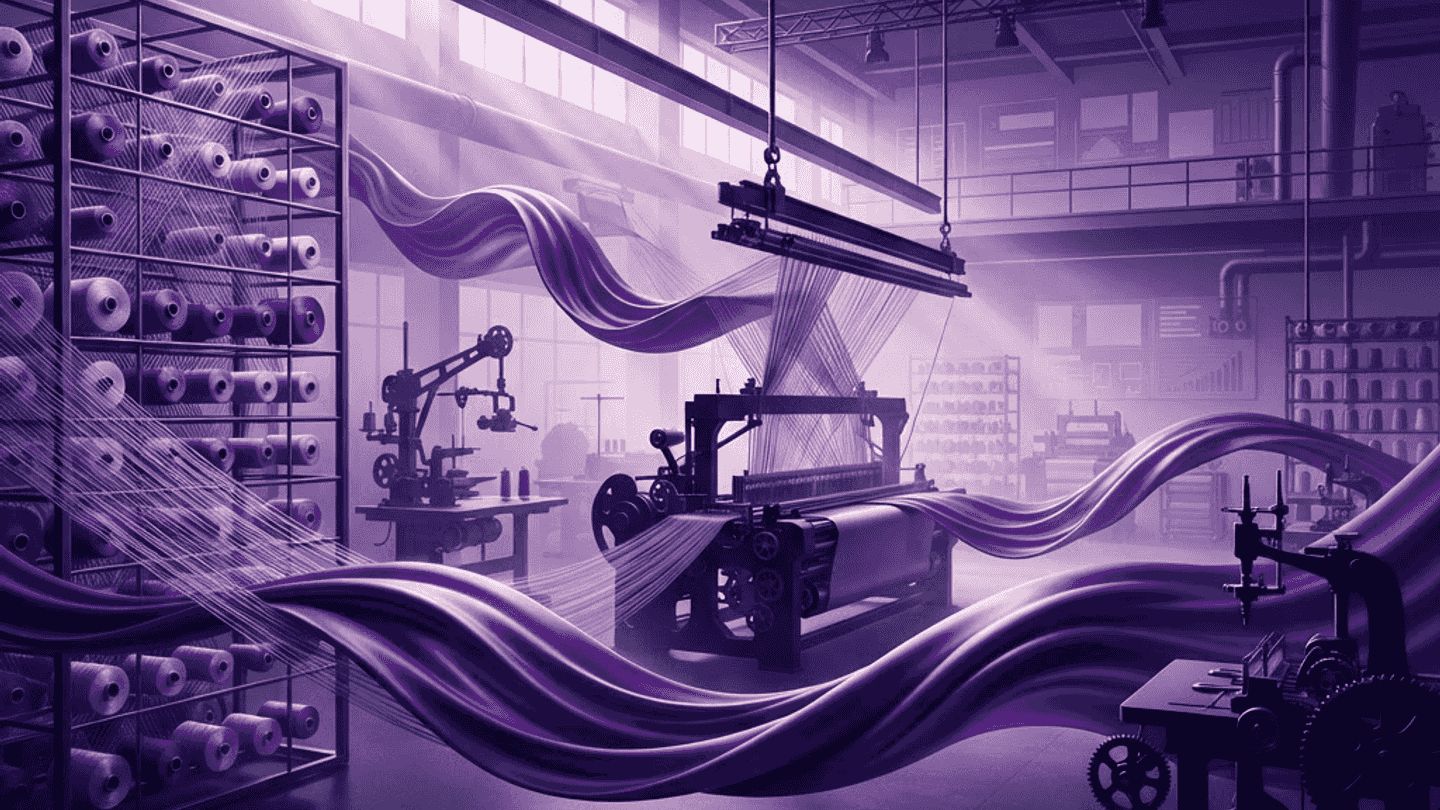
A Practical Textile Sector in North Texas
Arlington's textile industry does not look like the mass-production model that dominated earlier decades. Instead, it has developed into a network of specialists serving demand that rewards speed, customization, and proximity rather than lowest unit cost. Regional apparel brands need small production runs and fast reorders. Sports organizations and school districts require uniforms and custom decoration. Industrial customers need technical fabrics for filtration, protective clothing, upholstery, and equipment covers. Healthcare systems need reusable textiles that survive institutional laundering.
Location supports this work well. Arlington sits within a large consumer market, near major freight corridors and air cargo capacity, with access to a skilled industrial workforce and reasonable facility costs. For brands weary of long ocean transit times and inventory risk, domestic production within driving distance offers genuine operational advantages, particularly for replenishment and seasonal adjustment.
The Top 10 Best Textile Manufacturers in Arlington
1. Lone Star Textile Mills
A vertically integrated operation handling knitting, dyeing, and finishing under one roof, which gives it unusual control over color consistency and lead time. It serves apparel and home goods customers with both stock and developed fabrics. Its laboratory performs colorfastness and shrinkage testing in-house, reducing quality surprises.
2. Trinity Apparel Manufacturing
Trinity operates cut-and-sew production for knit and woven garments, with capacity suited to development samples through mid-volume runs. Pattern making and grading are done internally, which shortens the development cycle considerably. Brands appreciate its willingness to take on small first orders.
3. Meridian Technical Fabrics
Meridian produces engineered textiles for industrial applications, including filtration media, flame-resistant materials, and coated fabrics. Its work is specification driven, with documented testing against performance standards. Customers in safety equipment and equipment manufacturing form the core of its base.
4. Cardinal Uniform Works
Specializing in workwear and institutional uniforms, Cardinal serves hospitality, healthcare, and municipal customers. Durability under industrial laundering is its central design constraint, and construction details reflect that. The company also manages size ranges and reorder programs for large employers.
5. Great Southwest Knitting
This knitter produces circular knit fabrics in performance blends for athletic and activewear customers. Moisture management, stretch recovery, and dimensional stability are its technical focus areas. It supports customers with development trials before committing to production yardage.
6. Palisade Home Textiles
Palisade manufactures upholstery fabric, drapery, and soft furnishings for furniture makers, hospitality projects, and interior designers. Custom width and pattern capability serves contract projects with specific requirements. Flame retardancy compliance for commercial installations is handled routinely.
7. Northgate Embroidery and Screen Printing
Northgate provides decoration services including embroidery, screen printing, heat transfer, and direct-to-garment output. Teams, schools, corporate accounts, and promotional distributors rely on it for turnaround speed. Color matching and setup precision distinguish its output on complex logos.
8. Ironvine Industrial Sewing
Ironvine performs heavy-duty sewn goods fabrication, producing covers, bags, straps, and protective enclosures from technical materials. Its equipment handles thick and coated substrates that standard apparel machinery cannot. Custom engineering support is available for prototype development.
9. Sablon Dye and Finish
This finisher offers dyeing, washing, coating, and specialty finish services to other manufacturers and brands. Water management and wastewater treatment are areas of significant investment, reflecting both regulation and cost pressure. Reproducible color across production lots is its principal claim.
10. Bluebonnet Fabric Recycling
Bluebonnet processes textile waste and post-industrial cuttings into fiber for reuse in nonwovens, insulation, and wiping products. As brands pursue circularity commitments, this capability has become commercially relevant rather than merely virtuous. It also provides documentation for diversion reporting.
Trends Shaping Textile Manufacturing
Nearshoring continues to reshape sourcing decisions. Extended supply chains proved fragile, and carrying months of inventory ties up capital. Domestic manufacturers offering two to four week reorder cycles allow brands to buy closer to demand, reducing markdowns even when unit costs run higher.
Automation is advancing in specific operations. Spreading, cutting, and material handling automate well, while sewing remains labor intensive for complex garments. Manufacturers investing in automated cutting and digital pattern systems achieve better material utilization, which matters because fabric typically dominates cost.
Sustainability requirements have become contractual. Buyers request recycled content verification, chemical compliance documentation, water usage data, and waste diversion reporting. Manufacturers that maintain organized documentation win business from brands with public commitments.
Digital printing is expanding design possibilities. Short-run printed textiles without screen setup costs enable customization and small collections that were previously uneconomical, and the reduced water usage compared with conventional printing is an added benefit.
How to Choose a Textile Manufacturing Partner
Match capability to product. A knitter, a cut-and-sew operation, a technical fabric producer, and a finisher perform fundamentally different work, and complex products often require coordinating several suppliers. Ask directly what happens in-house and what is subcontracted.
Confirm minimum order quantities and development support. Emerging brands need partners willing to run modest quantities and iterate on fit, while established programs need capacity assurance and consistency. Both are legitimate, but they rarely come from the same facility.
Evaluate quality systems. Ask about inspection procedures, defect rate targets, testing capability, and how nonconforming goods are handled. Request physical samples produced on the actual equipment that would run your order, not a showroom swatch from another mill.
Finally, discuss lead time honestly, including material procurement, which frequently drives schedules more than production capacity does. Suppliers who explain constraints candidly tend to deliver more predictably than those who promise aggressively.
Final Thoughts
Arlington's textile manufacturers compete on responsiveness, technical capability, and reliability rather than commodity pricing, which suits buyers who value speed and control. Whether you are developing an apparel line, sourcing industrial fabric, outfitting an institution, or pursuing recycled content goals, the local ecosystem offers specialized partners. Clarify your requirements, verify capability with real samples, and build the relationship around clear specifications.