
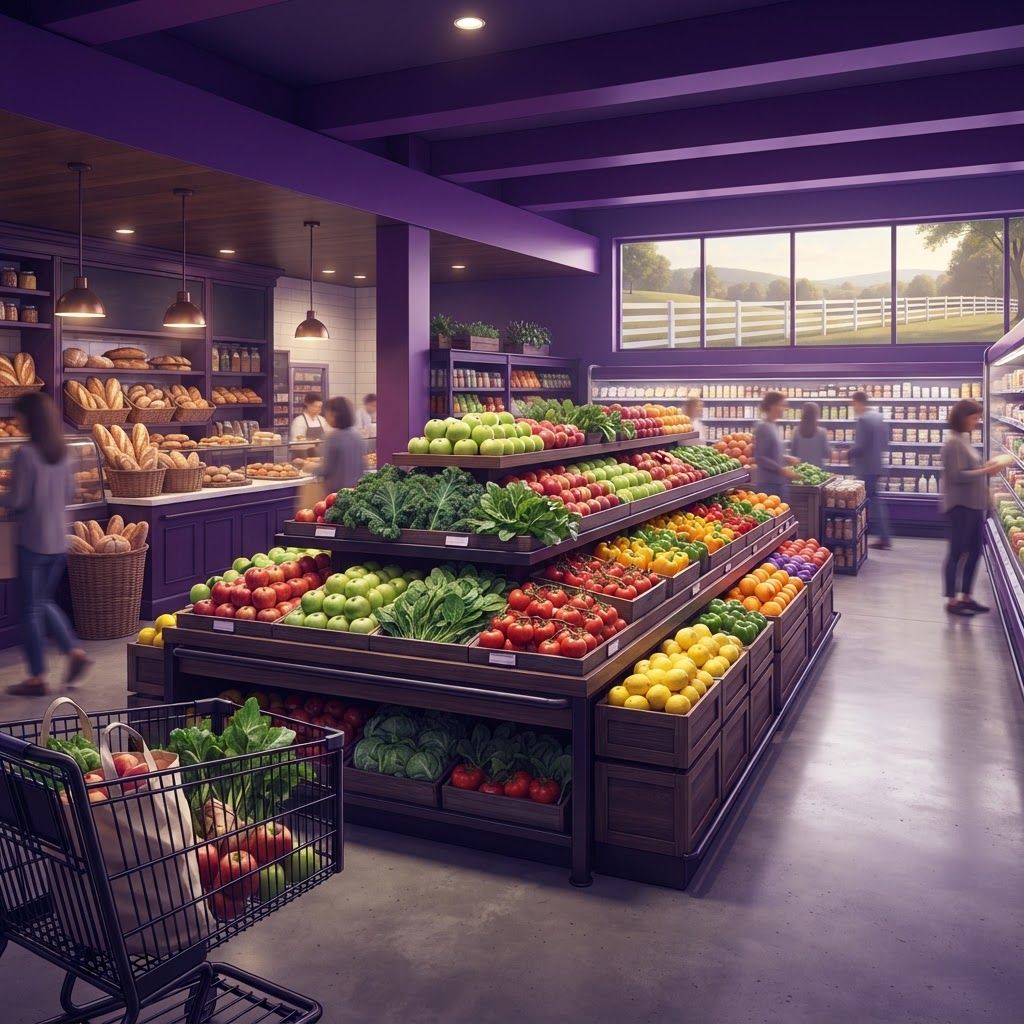
Grocery Shopping in Central Kentucky
Lexington enjoys a healthier grocery market than many cities of comparable size. Its position at the center of Kentucky's agricultural heartland means local produce, dairy, meat, and specialty goods travel short distances. Bourbon country adjacency has strengthened specialty food retail, and a large university population plus a diverse immigrant community have driven demand for international ingredients that mainstream chains once ignored.
Seasonality is genuinely meaningful here. Central Kentucky produces excellent sweet corn, tomatoes, peppers, and stone fruit in summer, apples and squash in autumn, and greens through the shoulder seasons. Households that shop with the local calendar in mind eat better and spend less, and the strongest supermarkets in the market lean into that regional supply.
What Makes a Supermarket Worth Loyalty
Fresh department quality is the clearest differentiator. Produce turnover, meat cutting done in-house, and a properly managed seafood counter separate serious grocers from commodity operators. Bakery and prepared foods have also become decisive as households increasingly buy partially prepared meals.
Price structure deserves scrutiny beyond headline promotions. Consistent everyday pricing usually serves regular shoppers better than deep but narrow weekly discounts, though households willing to plan around circulars can beat both. Loyalty programs that tie to fuel discounts or personalized offers add measurable savings.
Finally, assess practical convenience: store layout, checkout throughput, pickup and delivery reliability, and the availability of pharmacy and specialty services. For families managing tight schedules, these operational details often matter more than a few cents per item.
The Top 10 Supermarket Chains in Lexington
1. Kroger
The dominant grocery presence in Lexington and across Kentucky, with the widest store network and deep assortment. Its combination of pharmacy, fuel rewards, extensive private label lines, and reliable pickup service makes it the default primary grocer for a large share of households.
2. Meijer
A supercenter format combining full grocery with general merchandise, valued for competitive pricing, broad fresh departments, and one-stop convenience. Particularly practical for large household shops and back-to-school periods.
3. Trader Joe's
A specialty-focused grocer with a tightly curated private label assortment, strong frozen and prepared foods, and notably low prices on wine and snacks. Extremely popular with students and smaller households despite limited breadth.
4. Whole Foods Market
The premium organic and natural foods option, strong in specialty cheese, prepared foods, and standards-driven sourcing. Appeals to shoppers prioritizing ingredient transparency and dietary specialty products.
5. ALDI
A hard-discount format delivering substantially lower prices through streamlined operations and private label focus. Fresh produce quality has improved considerably, making it a genuine primary shop for cost-conscious families.
6. Good Foods Co-op
A community-owned cooperative deeply connected to Central Kentucky farms, offering local produce, bulk goods, and regionally produced dairy and meat. Its sourcing transparency and member structure give it a distinctive role locally.
7. Fresh Market Kentucky
A specialty grocer emphasizing full-service butcher and seafood counters, artisan bakery, and prepared foods. A frequent choice for entertaining and holiday cooking where cut-to-order meat matters.
8. Costco Wholesale
A membership warehouse serving bulk buyers, large families, and small businesses. Strong in meat, dairy, and pantry staples, with notably good value in its own-brand lines.
9. Sam's Club
Another warehouse option with bulk grocery, fuel, and pharmacy services. Its scan-and-go checkout and business-oriented assortment appeal to restaurant and catering operators around Lexington.
10. Asia Food Market
Representing Lexington's growing international grocery segment, offering East and Southeast Asian produce, noodles, sauces, and fresh seafood unavailable in mainstream stores. Similar Hispanic and Middle Eastern markets have expanded alongside it, meaningfully broadening the city's culinary access.
Local Sourcing and Farmers Markets
No discussion of Lexington groceries is complete without acknowledging the city's exceptional farmers market culture. Central Kentucky's proximity to working farms allows direct producer relationships, and many households supplement supermarket shopping with seasonal market purchases of vegetables, eggs, honey, cheese, and pasture-raised meat.
Several supermarkets have responded by stocking identifiable Kentucky Proud products and building relationships with regional producers. Shoppers who read origin labeling can support local agriculture within a conventional grocery trip, which is often more practical than a separate market visit.
Practical Savings Strategy
The most effective approach for Lexington households usually combines formats: a discount grocer for staples, a primary chain for breadth and pharmacy, a warehouse club for bulk basics, and specialty or international markets for ingredients that mainstream stores handle poorly.
Planning around seasonal Kentucky produce reduces cost while improving quality. Buying meat in bulk when priced aggressively and portioning for the freezer delivers meaningful savings. Digital coupon clipping through chain apps has become essential rather than optional, as many discounts are no longer available at shelf price.
Final Thoughts
Lexington's grocery market rewards flexible shoppers. Between a strong regional incumbent, aggressive discounters, warehouse clubs, a genuine food cooperative, and a rapidly expanding international segment, nearly any budget or cuisine can be served well. Anchoring shopping habits to local seasonality is the single best way to eat well in the Bluegrass.