
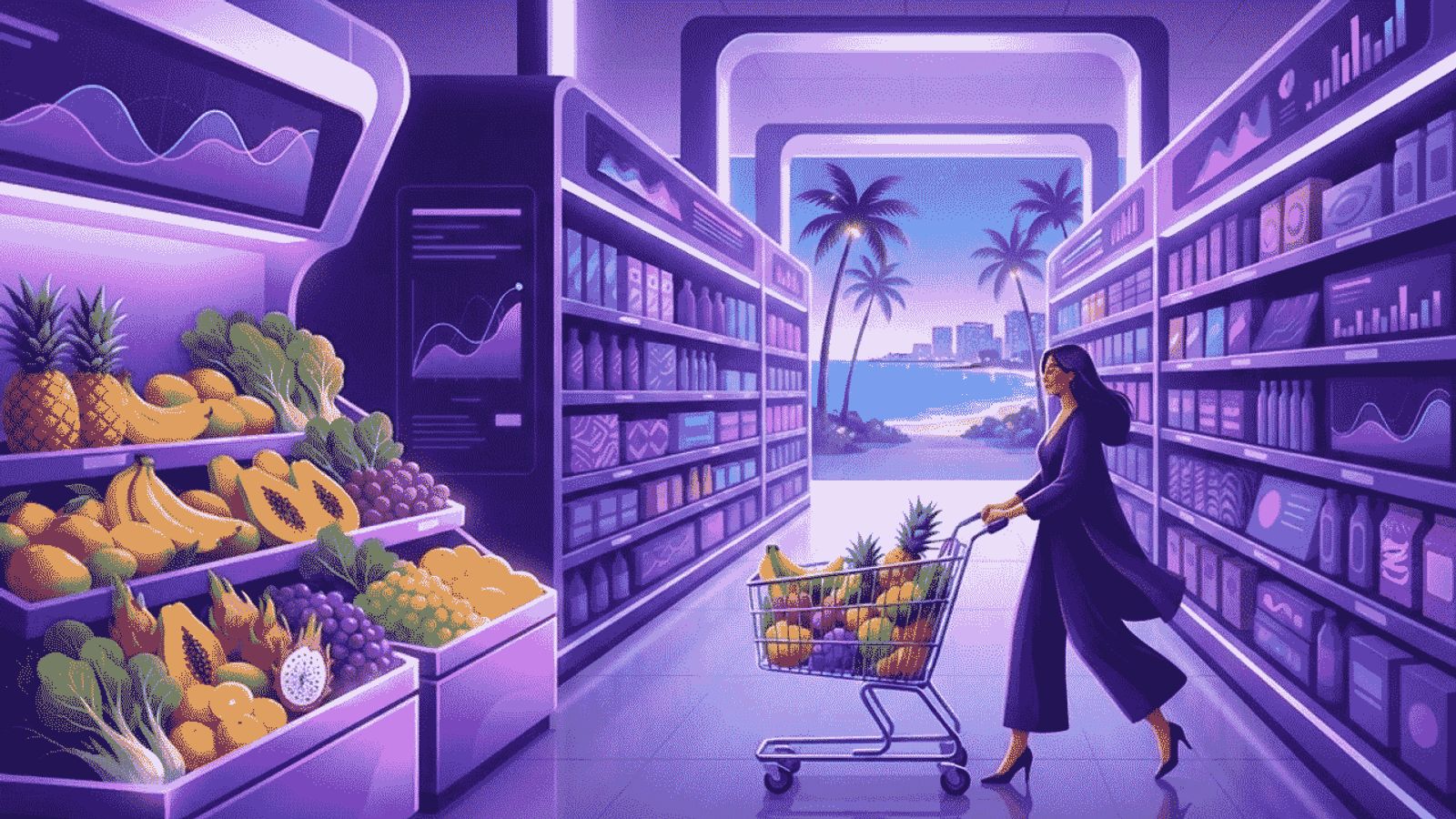
Understanding the Honolulu Grocery Landscape
Grocery shopping in Honolulu is shaped by geography. A large share of packaged goods arrives by ocean freight, which affects both pricing and availability, while local farms and fisheries supply produce, poultry, eggs, and seafood that often outperform imported equivalents on freshness and value. Residents learn quickly that no single store is the cheapest across the board, and that splitting a shopping list between two or three retailers is standard practice rather than an inconvenience.
The city's food culture also drives an unusually broad product mix. Honolulu supermarkets stock poke, plate-lunch staples, Japanese and Korean pantry items, Filipino specialties, and Portuguese-influenced baked goods alongside conventional mainland brands. That diversity is one of the genuine pleasures of grocery shopping here, and it distinguishes the local market from almost anywhere else in the United States.
The 10 Best Supermarket Chains in Honolulu
1. Foodland and Foodland Farms
Foodland is the largest locally owned grocery chain in Hawaii and functions as a community fixture. Its poke counters are widely regarded as a benchmark, and the prepared-foods departments handle everything from bento to hot bars. The upscale Foodland Farms format adds expanded specialty cheese, wine, and chef-driven counters, while the chain's loyalty program delivers meaningful savings for regular shoppers.
2. Times Supermarket
Times is another long-standing local chain, known for competitive weekly specials and strong local produce and meat departments. Shoppers appreciate its neighborhood scale, which makes for faster trips than big-box alternatives, and its selection of Asian pantry staples is deeper than most conventional supermarkets. Weekly ad planning is where Times delivers the most value.
3. Safeway
Safeway brings national scale, consistent store layouts, and a broad private-label lineup to the Honolulu market. Its pharmacy, bakery, and deli departments make it a practical one-stop option, and digital coupons paired with fuel rewards can significantly reduce a weekly bill. Locations tend to be well distributed across residential neighborhoods.
4. Whole Foods Market
Whole Foods anchors the premium and natural-foods segment, with strong organic produce, responsibly sourced seafood, and a large supplements and body-care assortment. Its Honolulu stores highlight Hawaii-grown produce and local food brands, giving small island producers meaningful shelf space. Prepared foods and in-store dining make it a destination beyond the weekly restock.
5. Down to Earth Organic and Natural
Down to Earth is a Hawaii-based natural foods retailer with an entirely plant-based grocery model. It is the go-to option for vegetarian and vegan shoppers, offering bulk bins, organic produce, meat alternatives, and a well-regarded vegan deli. Staff knowledge around dietary needs and supplements is a consistent strength.
6. Costco
Costco is central to how many Honolulu households manage grocery costs. Bulk pricing on staples, a strong fresh meat and produce program, and competitive fuel and pharmacy services offset the annual membership for most families. The tradeoff is package size, which requires storage space that not every condominium offers.
7. Sam's Club
Sam's Club provides an alternative warehouse option with a similar bulk model and a strong emphasis on digital ordering and scan-and-go checkout. Its assortment overlaps with Costco but differs enough in brands and rotating buys that some shoppers maintain both memberships. Business-oriented pack sizes serve small restaurants and caterers well.
8. Nijiya Market
Nijiya specializes in Japanese groceries, with fresh sashimi-grade fish, prepared bento, organic rice, and imported pantry goods. It is a favorite for shoppers cooking Japanese cuisine at home and for anyone seeking high-quality seafood in smaller quantities. The compact format makes for quick, focused trips.
9. Palama Supermarket
Palama Supermarket focuses on Korean groceries and prepared foods, including an extensive kimchi and banchan selection, marinated meats for Korean barbecue, and imported snacks and beverages. Its butcher counters and ready-to-cook offerings are particularly popular for home entertaining. Prices on Asian staples are frequently better than at conventional supermarkets.
10. H Mart
H Mart brings a large-format pan-Asian grocery experience to Honolulu, combining Korean, Japanese, Chinese, and Southeast Asian products under one roof. Its produce and seafood departments are notably deep, and in-store food courts make it as much a dining stop as a grocery run. For shoppers cooking across multiple Asian cuisines, it consolidates what would otherwise be several trips.
Trends in Honolulu Food Retail
Local sourcing is the strongest trend. Retailers increasingly label Hawaii-grown produce and Hawaii-made packaged goods explicitly, responding to consumer interest in food security and shorter supply chains. That has opened shelf space for small island producers in categories from kombucha and honey to tortillas and cold-pressed juice.
Prepared foods continue to expand as well. Poke bars, hot counters, and grab-and-go bento have moved from add-on to core business, reflecting demand from working households and visitors staying in units with limited kitchens. Digital ordering, delivery partnerships, and app-based coupons have also become standard, narrowing the convenience gap between local chains and national competitors.
How to Shop Smarter for Groceries in Honolulu
Build your routine around store strengths rather than loyalty to one banner. Buy shelf-stable staples, paper goods, and proteins in bulk at a warehouse club, then use a neighborhood chain such as Foodland or Times for fresh produce, local fish, and weekly ad items. Reserve specialty markets for the ingredients they do best.
Enroll in loyalty programs, since the discounts in this market are substantial and often gated behind membership. Watch weekly ads before planning menus rather than after, and be flexible on protein and produce choices based on what is local and in season. Finally, factor in storage: bulk savings only help if you can store items properly in a warm, humid climate.
Final Thoughts
Honolulu's supermarket scene rewards a layered strategy. Locally owned chains such as Foodland and Times provide community-scale convenience and outstanding fresh departments, national players such as Safeway and Whole Foods cover breadth and premium categories, warehouse clubs manage cost on staples, and specialty markets such as Nijiya, Palama, and H Mart unlock the city's culinary range. Combining two or three of these consistently produces better value and better food than trying to force one store to do everything.