
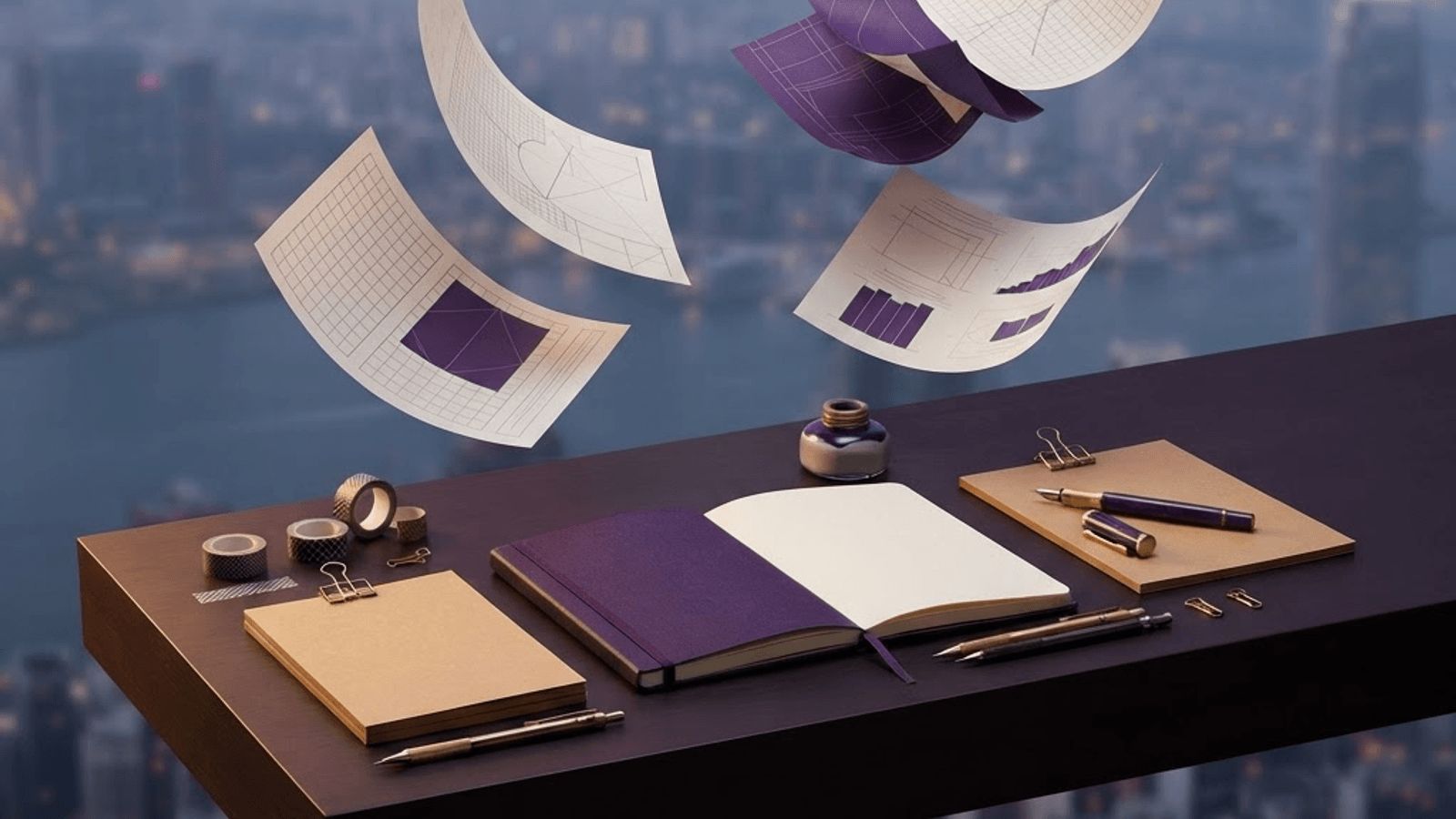
Why Vancouver Supports a Strong Stationery Scene
Vancouver's affection for paper goods is not accidental. The city has several large post-secondary institutions producing a constant population of students who write by hand for study. It has a substantial design, animation, film and architecture sector where sketching remains a professional practice. It has a strong independent retail culture in neighbourhoods like Main Street, Gastown and Commercial Drive that supports specialty shops. And it has weather that keeps people indoors with a notebook for a meaningful part of the year.
There is also a genuine craft dimension. The city and surrounding region host letterpress studios, bookbinders, calligraphers and paper artists, and that maker community sustains demand for quality materials while raising general awareness of what good paper feels like. The Japanese and Korean stationery traditions are well represented through the city's Asian retail sector, which gives Vancouver access to products that are harder to find elsewhere in Canada.
Ten Brands Worth Seeking Out
Midori produces some of the most respected paper in the stationery world, and its notebooks are prized for exceptionally smooth writing surfaces with minimal bleed-through even with fountain pens. The traveler's notebook system, built around a leather cover holding interchangeable inserts, has an almost devotional following because it allows one object to serve many purposes over years.
Leuchtturm1917 offers hardcover notebooks with numbered pages, an index, pre-printed table of contents and a paper weight substantial enough for most inks. It has become the default choice for structured journaling and bullet journal systems, largely because the built-in organizational features remove setup work.
Moleskine remains the most recognizable notebook brand and holds its position on design consistency and availability. Its paper is thinner than several competitors, which suits pencil and ballpoint better than wet fountain pen ink, but its range of formats and its ubiquity make it a practical default.
Rhodia is French-made and beloved by fountain pen users for paper that handles wet ink beautifully with almost no feathering. Its orange staplebound pads are a fixture on designers' and engineers' desks, and its dot grid formats have become the standard for anyone who wants structure without visible ruling.
Lamy makes writing instruments with a distinctive Bauhaus-influenced design language, and its entry-level fountain pens are among the best recommendations for anyone starting out. Interchangeable steel nibs in different widths mean one pen body can be adapted as preferences develop, and the build quality survives years of daily carry.
Pilot covers an enormous range from disposable gel pens to serious fountain pens, and several of its products are quiet benchmarks. Its fine-point gel and hi-tec pens are widely used by students and note-takers, and its erasable ink technology has a devoted following among planners.
Blackwing serves the pencil market with graphite grades and a build quality that makes a case for wooden pencils in a digital age. Sketching, drafting and marking-up all remain pencil activities for many professionals, and the difference between a good pencil and a poor one is immediately obvious in use.
Traveler's Company extends beyond notebooks into brass writing tools, stamps and accessories designed to develop patina with use. The design philosophy of objects that improve visibly with age resonates strongly in Vancouver's craft-conscious market.
Paper-Ya and the local specialty retail scene deserve inclusion because Vancouver's independent paper shops are themselves part of what makes the local stationery culture strong. These stores curate Japanese and European brands, handmade papers, bookbinding supplies and writing instruments, and their staff knowledge is a resource that no online catalogue replaces.
Coast Letterpress Studio represents the regional custom and craft segment, producing letterpress cards, wedding suites and small-run printed goods on cotton papers. Letterpress creates a physical impression in the sheet that digital printing cannot replicate, and the local studios serving this market work closely with clients on paper selection and ink.
Understanding Paper
Paper weight is the specification that matters most, and it is usually expressed in grams per square metre. Lighter papers around seventy to eighty grams are economical and suit pencil and ballpoint, but they show ghosting and often bleed with liquid ink. Weights around ninety to one hundred grams handle most pens comfortably. Above one hundred and twenty grams, paper feels substantial and handles fountain pens, markers and light watercolour, at the cost of bulk and price.
Weight is not the whole story, though. Surface sizing and coating affect how ink behaves as much as thickness does. Some ninety-gram papers handle wet ink better than heavier uncoated stock because they are sized to resist absorption. This is why fountain pen users care about specific brands rather than simply buying heavy paper.
Ruling matters more than people expect. Dot grid has become dominant among people who want flexibility, providing alignment guidance without the visual noise of full lines. Graph paper suits technical work. Blank pages suit sketching. Standard ruling suits linear note-taking. Choosing the wrong ruling for how you actually work is a common reason notebooks go unused.
Choosing a Planning System You Will Keep Using
The most common failure in planning systems is over-engineering. Elaborate setups with multiple trackers, collections and layouts are satisfying to build and exhausting to maintain, and most are abandoned within weeks. Systems that survive are usually simple enough to update in two minutes a day.
Consider your actual planning horizon honestly. Some people think in days and need a daily layout with generous space. Others think in weeks and find daily pages mostly empty and therefore discouraging. Monthly overviews suit people managing appointments rather than tasks. Buying the format that matches how your mind already works beats trying to adopt a format that requires you to change.
Portability is decisive. A notebook that stays at home does not capture the thought you have on the bus. Many people who write extensively end up with a small pocket notebook for capture and a larger one for developed work, which is a more reliable arrangement than trying to make one size serve both.
Sustainability in Paper Goods
Paper has a genuine environmental footprint, and Vancouver's stationery retail reflects local interest in reducing it. Recycled content papers have improved substantially, with modern recycled stock offering acceptable writing surfaces rather than the rough grey sheets of a generation ago. Certification for responsibly managed forestry is worth looking for on virgin fibre products.
Refillable systems deserve attention as the most straightforward improvement available. A leather or fabric cover that accepts new inserts for years, a fountain pen with a converter refilled from a bottle, or a mechanical pencil that lasts decades all reduce waste substantially compared with disposable alternatives. Fountain pens in particular are often overlooked as the sustainable writing choice they are, since a single pen and bottled ink can replace hundreds of disposable pens.
Final Thoughts
Vancouver's stationery culture is one of the quieter pleasures of the city, supported by specialty retailers with genuine curation, access to Japanese and European brands through the local Asian retail sector, and an active craft and letterpress community. Whether you want the paper quality of Midori and Rhodia, the structure of Leuchtturm1917, the writing feel of Lamy and Pilot, or a custom letterpress commission from a local studio, the practical advice is the same: match the paper to your pen, match the format to how you actually think, and choose refillable systems where you can.