
A Sporting City Built Around Its Venues
Vancouver's relationship with live sport is shaped by geography. The city is compact, transit-connected, and hemmed in by water and mountains, which means its major venues sit unusually close to the downtown core rather than in distant suburban parking seas. The practical effect is that attending a game here is a walkable, transit-friendly experience, and the venues themselves are woven into the urban fabric rather than isolated from it.
The city also carries a significant international event legacy. Hosting the 2010 Winter Olympic and Paralympic Games drove substantial venue investment and modernization, and subsequent global football tournament hosting has prompted further upgrades. That history has left Vancouver with facilities that punch above the city's population in terms of capability and profile.
The Top 10 Stadiums and Arenas in Vancouver
1. BC Place
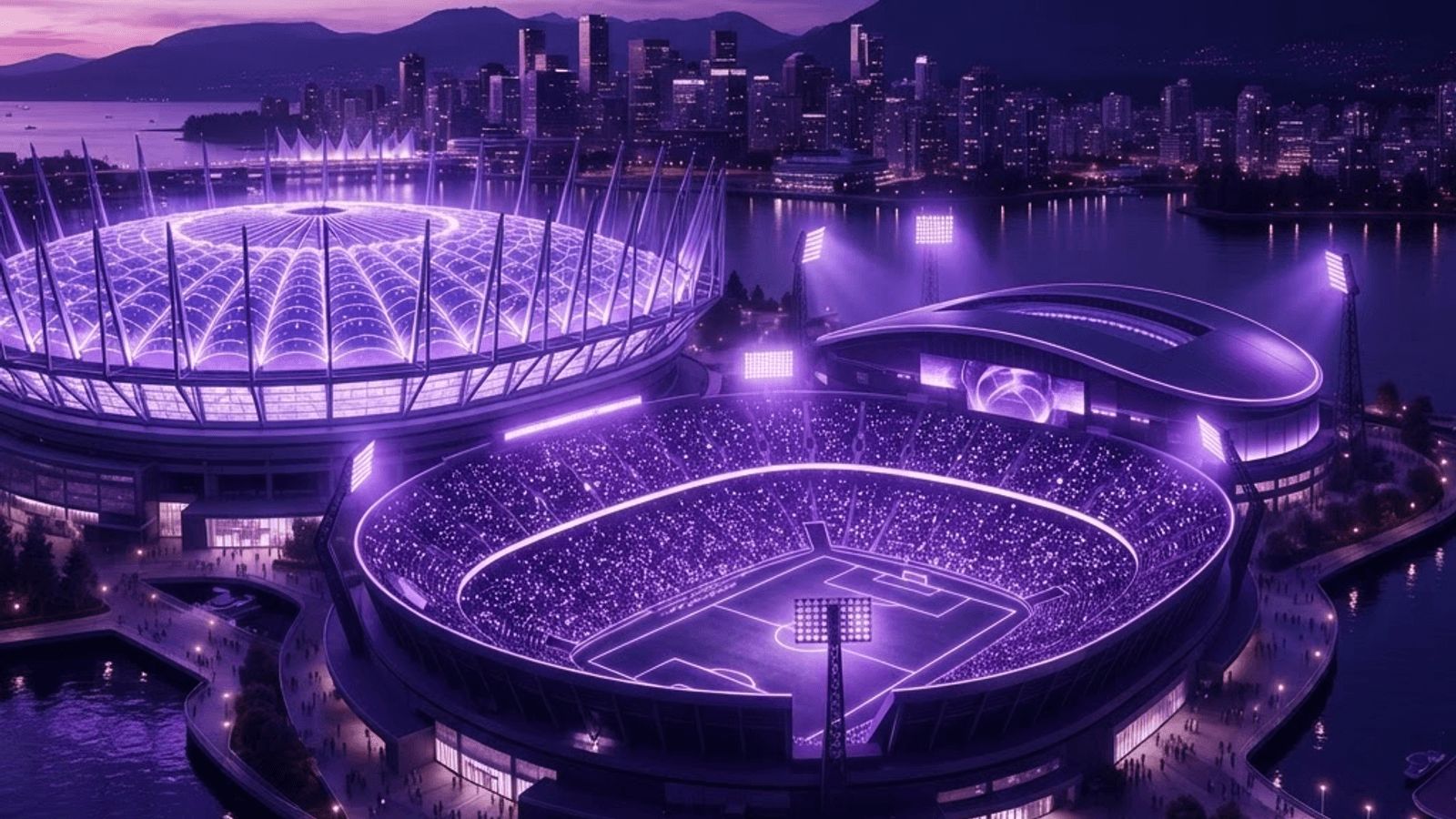
BC Place is the city's flagship stadium and one of the most recognizable structures on the waterfront skyline. Its cable-supported retractable roof, the largest of its kind when installed, solves the fundamental Vancouver problem of rain without sacrificing open-air atmosphere on clear days. The venue hosts Canadian football, professional soccer, rugby sevens, major concerts, and international tournament matches, and it sits directly adjacent to SkyTrain access.
2. Rogers Arena
Home to the city's National Hockey League franchise, Rogers Arena is the premier indoor venue in the region. Its steep seating geometry produces excellent sightlines and a genuinely loud atmosphere, and successive renovations have modernized concourses, premium seating, and video systems. Beyond hockey it is the city's principal large-scale concert venue.
3. Nat Bailey Stadium
Nat Bailey Stadium is one of the most charming ballparks in professional baseball, set against a backdrop of mountains and mature trees in Riley Park. Its intimate scale, retro character, and famously relaxed summer-evening atmosphere make it a beloved local institution, and it consistently ranks among the most enjoyable minor league baseball experiences in North America.
4. Thunderbird Stadium
Located on the University of British Columbia campus, Thunderbird Stadium hosts university football, soccer, and rugby along with festivals and community events. The setting on the western edge of the city, surrounded by forest and near the ocean, gives it an atmosphere unlike any urban venue.
5. Doug Mitchell Thunderbird Sports Centre
Also at the University of British Columbia, this multi-rink facility served as an Olympic hockey venue and now hosts university hockey, figure skating, and community ice sports. Its main arena combines modern facilities with a sightline quality that makes it a genuinely good place to watch a game rather than merely a functional rink.
6. Empire Field and Hastings Park Grounds
The Hastings Park precinct has a long athletic history and has hosted temporary and permanent stadium facilities including Empire Field, built as an interim home during BC Place renovations. The grounds continue to serve major events, racing, and community sport, anchoring East Vancouver's sporting identity.
7. Swangard Stadium
Set within Central Park just beyond the Vancouver boundary in Burnaby, Swangard Stadium has hosted professional soccer, athletics, and community competition for decades. Its bowl set among tall Douglas firs is one of the more distinctive settings for football anywhere in the country.
8. Killarney and Trillium Community Sports Complexes
Vancouver's community sports complexes may lack the scale of the marquee venues, but they carry an enormous share of the city's actual sporting activity. Artificial turf fields, track facilities, and covered seating support youth leagues, amateur football and soccer, and school competition year round, which in a rainy climate is essential infrastructure.
9. Vancouver Tennis and Racquet Facilities at Stanley Park
The public courts and racquet facilities around Stanley Park and the West End function as open-air sporting venues in their own right, hosting tournaments and drawing steady recreational play with a setting of seawall, harbour, and forest that no purpose-built arena can match.
10. Percy Perry and Regional Athletic Stadiums
Serving the broader metropolitan area, regional athletic stadiums such as Percy Perry provide track and field, soccer, and multi-sport capacity for provincial competition and high-performance training. They form the developmental tier beneath the professional venues, and they are where much of British Columbia's athletic talent is actually built.
What Makes a Great Venue Experience
Capacity is the least interesting metric. What determines whether a stadium is genuinely good is sightline geometry, roof coverage and weather protection, concourse circulation, transit access, acoustic character, and the quality of food and beverage. Vancouver performs well on most of these, particularly transit access, where SkyTrain delivers crowds directly to the two largest venues.
Atmosphere is harder to engineer. It comes from seating proximity, steepness, roof reflection of crowd noise, and supporter culture. Rogers Arena and BC Place under a closed roof both generate serious volume, while Nat Bailey trades intensity for a uniquely convivial summer mood.
Trends in Venue Development
Sustainability is now central to stadium operation. Vancouver venues have pursued energy efficiency retrofits, waste diversion programs, reusable serviceware, and transit-first attendance strategies, reflecting both civic policy and audience expectation.
Technology is the second driver. High-density connectivity, digital ticketing, cashless concessions, in-seat ordering, and large-format video have become baseline expectations. Venues that fail to modernize on these fronts feel dated regardless of structural quality.
Third, flexibility increasingly determines viability. Venues designed for a single sport struggle economically. The most successful facilities convert between football, soccer, concerts, and conventions with rapid turnaround, spreading fixed costs across a much larger event calendar.
Attending Events in Vancouver
Use transit. Parking near the downtown venues is limited and expensive, and SkyTrain stations sit within short walking distance of both BC Place and Rogers Arena. Arrive earlier than seems necessary for major events, since security screening at capacity crowds is the primary bottleneck. And dress for rain regardless of the forecast, because even at covered venues the walk is exposed.
Final Thoughts
Vancouver's stadium landscape offers unusual variety for its size: a retractable-roof landmark, a genuinely excellent hockey arena, a beloved heritage ballpark, and a strong tier of university and community facilities. Together they support professional, amateur, and youth sport across a rainy climate, and they remain among the most accessible major venues in North America.