
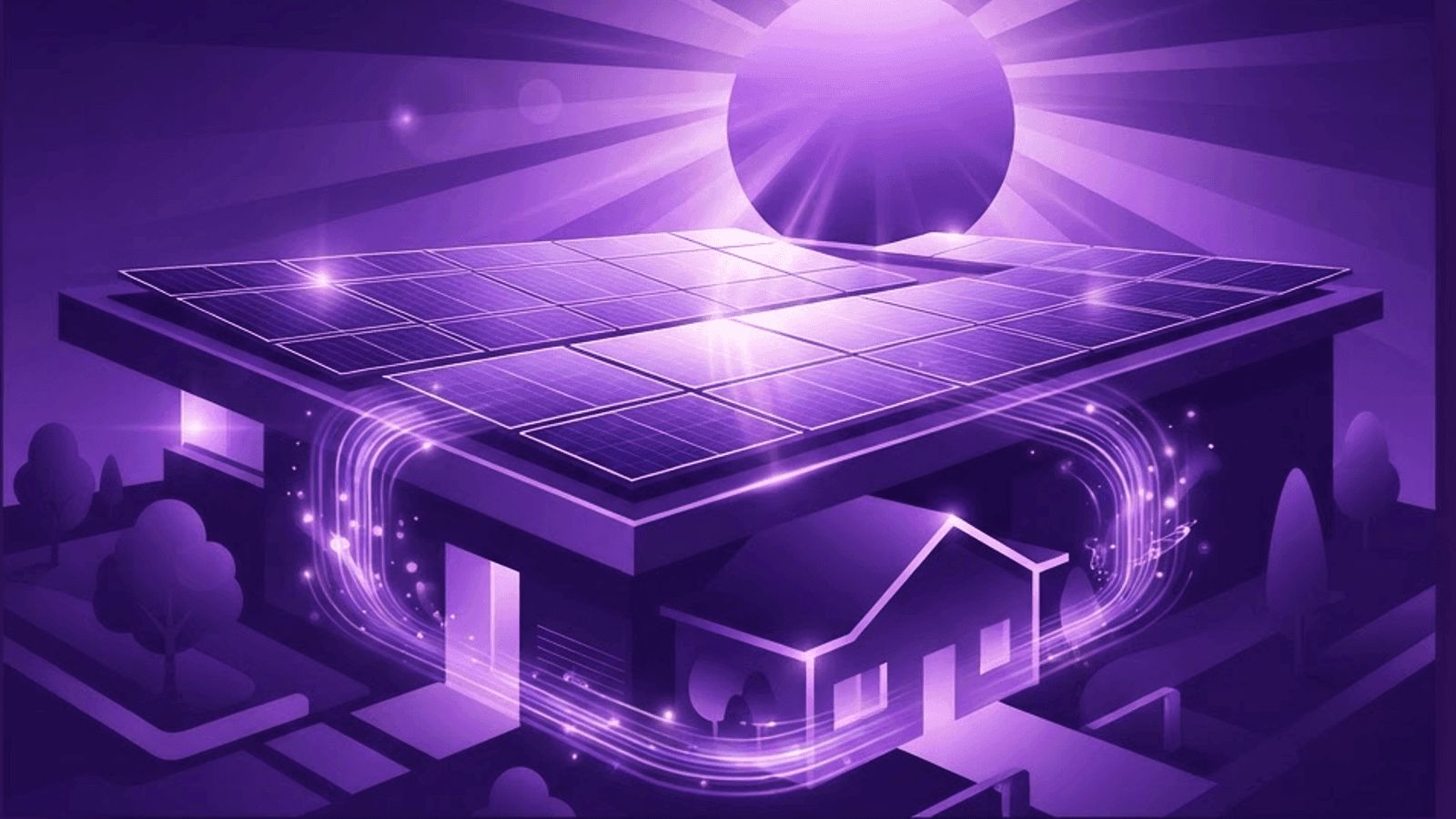
Solar Energy in the Hudson Valley Climate
A common misconception holds that solar only makes sense in consistently sunny regions. In practice, photovoltaic panels operate efficiently in moderate temperatures and perform well throughout the Northeast. Ramapo receives sufficient annual solar resource to support strong system performance, and cooler ambient temperatures actually improve panel efficiency compared with extreme heat.
What makes solar particularly attractive in this area is the combination of relatively high electricity rates, favorable net metering policy, and layered incentives. Together these factors produce payback periods that many homeowners find compelling, after which the system continues generating for decades.
How a Residential Solar System Works
A grid-connected system consists of panels, mounting hardware, inverters that convert direct current to alternating current, monitoring equipment, and safety disconnects. Electricity generated flows first to the building's loads, with any surplus exported to the grid. Under net metering, exported energy earns credits that offset consumption when production is low, such as at night or during winter months.
Microinverters or power optimizers attached to individual panels allow each module to operate independently, which improves performance on roofs with partial shading and provides panel-level monitoring. String inverters remain suitable for unshaded arrays and typically cost less.
Site Assessment and System Design
A proper assessment determines whether solar makes sense and how the system should be configured. Installers evaluate roof orientation and pitch, since south-facing surfaces produce the most energy while east and west exposures still deliver worthwhile output. Shading analysis accounts for trees, chimneys, and neighboring structures across seasons.
Structural review confirms the roof can support the additional load, and roof age is critical. Because panels typically last far longer than shingles, installing over aging roofing means paying later to remove and reinstall the array.
Electrical assessment examines panel capacity and bus bar ratings, which sometimes require an upgrade before interconnection. The design then balances available area, consumption history, and budget to size the system appropriately. Oversizing beyond annual usage generally provides limited benefit under net metering rules.
Permitting and Interconnection
Solar projects in Ramapo require building and electrical permits from the relevant village or town jurisdiction, and each maintains its own submission requirements and review timelines. Historic district or homeowner association approvals may add steps.
Utility interconnection involves a separate application, technical review, and approval to operate. Experienced local installers manage this process routinely and can set accurate expectations for timing, which commonly spans several weeks to a few months from contract to activation.
Understanding Solar Economics
Evaluating a solar proposal requires looking past the headline number. Cost per watt allows comparison across differently sized systems. Projected first-year production, expressed in kilowatt-hours, should be based on transparent modeling that accounts for shading and orientation rather than generic assumptions.
Federal tax credits substantially reduce net cost for taxpayers with sufficient liability. New York offers an additional state tax credit for residential systems along with sales tax and property tax exemptions. Some utility and state programs provide direct incentives applied at the point of sale.
Panel output declines gradually over time, typically at a fraction of a percent annually, and quality manufacturers guarantee a minimum output percentage at year twenty-five. Realistic financial modeling incorporates this degradation alongside expected utility rate changes.
Ownership Versus Third-Party Models
Purchasing a system outright or with a loan gives the owner all incentives and the full value of generated electricity. Leases and power purchase agreements involve no upfront cost, with the provider owning the equipment and the customer paying for the system or the power it produces.
Third-party arrangements suit customers who lack tax liability or capital, but the contract terms deserve careful review, particularly escalation clauses, transfer provisions when selling the home, and end-of-term options. Many real estate attorneys encounter complications when third-party systems are not properly addressed during property sales.
Adding Battery Storage
Batteries extend solar value by storing daytime production for evening use and providing backup during outages. Not all systems provide whole-home backup; most are configured to support selected critical circuits such as refrigeration, heating controls, well pumps, and lighting. Clarify exactly what will remain powered and for how long before committing.
Choosing a Solar Installer
Prioritize companies with a substantial local installation record and verifiable references in nearby communities. Confirm licensing, insurance, and manufacturer certifications for the equipment being installed.
Compare warranties across three dimensions: panel product and performance warranty, inverter warranty, and the installer's workmanship warranty covering roof penetrations and labor. A strong workmanship warranty of ten years or more signals confidence.
Review the contract for the production estimate, total price, incentive handling, payment schedule, timeline, and what happens if permits are denied. Be skeptical of proposals with vague savings claims, door-to-door pressure, or reluctance to provide written documentation.
Living With Solar
Once operating, systems require little intervention. Monitoring applications show daily and cumulative production, and owners should review these periodically to catch underperformance. Snow typically slides off sloped arrays within days, and manual clearing is rarely advisable given roof safety risks. Annual visual inspection and occasional inverter servicing represent the bulk of maintenance.
Solar for Businesses and Institutions
Commercial properties in Ramapo with large flat roofs or parking areas are strong candidates. Businesses benefit from accelerated depreciation in addition to tax credits, often producing shorter payback than residential projects. Schools, houses of worship, and nonprofits can access direct payment mechanisms that allow tax-exempt entities to realize credit value.
Final Thoughts
Solar energy has matured into a reliable, well-understood investment for Ramapo property owners. Success depends far more on installer quality and honest modeling than on any particular panel brand. Take time to gather multiple proposals, verify assumptions, and choose a company that will be available to service the system for years to come.