
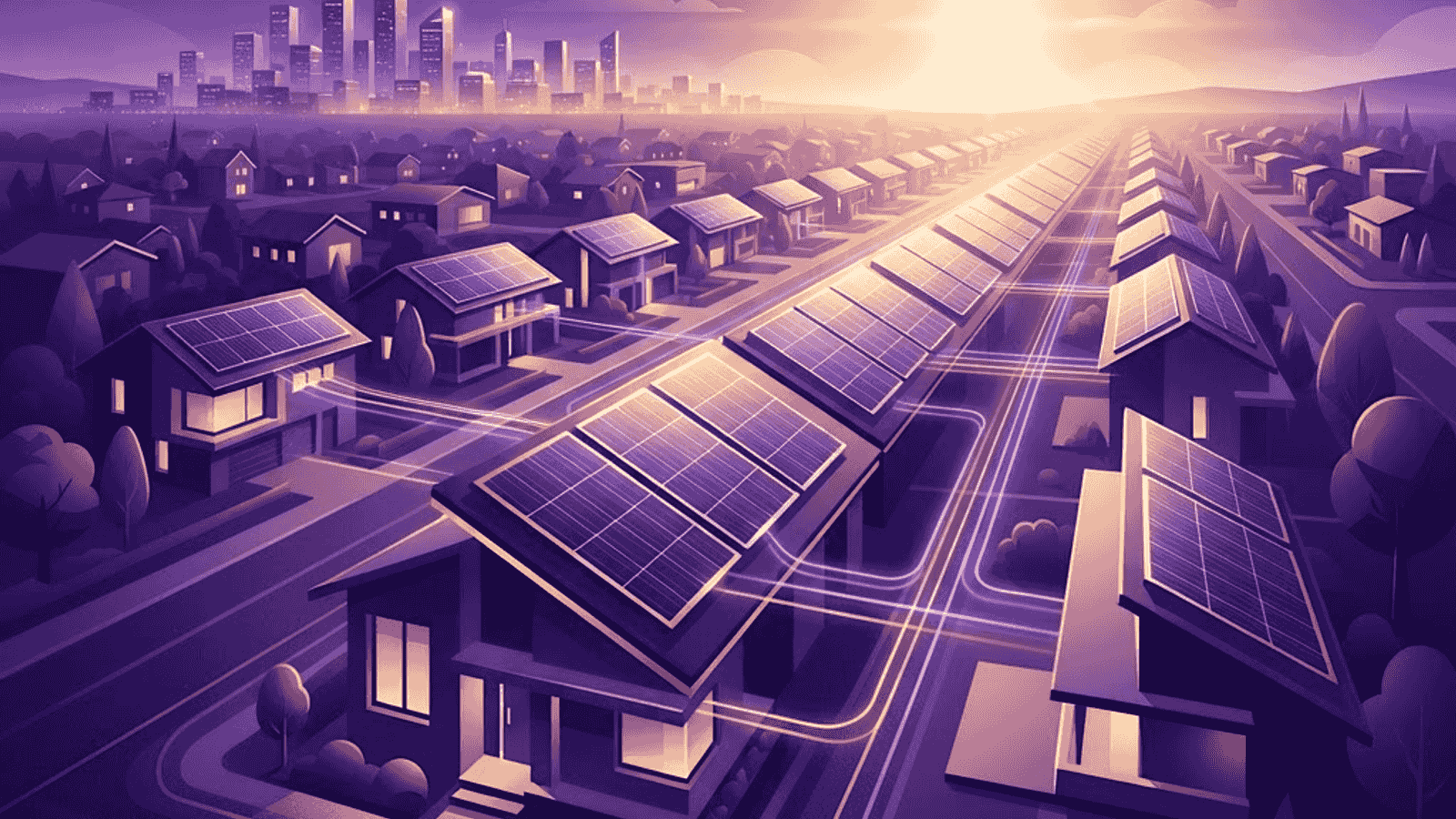
Why Solar Works in Greensboro
Greensboro receives roughly four and a half to five peak sun hours per day on average across the year, which places it comfortably within the range where rooftop solar produces meaningful output. The Piedmont climate helps in a less obvious way as well, since panel efficiency declines at high temperatures and the region's moderate summers are gentler on production than the Desert Southwest. Roof orientation across Greensboro's residential neighborhoods varies widely, and mature tree canopy in older areas such as Fisher Park and Sunset Hills makes shading analysis genuinely important rather than a formality. A competent installer will measure rather than assume.
Understanding the Economics
A residential system in the Greensboro market typically falls in a range determined by roof complexity, equipment tier, and whether battery storage is included. The federal residential clean energy credit remains the largest single factor in payback, and North Carolina's net metering framework governs how exported energy is credited, with utility rate structures shifting toward time-of-use in ways that increasingly favor paired storage. Payback periods for well-designed systems commonly land in the range of eight to fourteen years depending on consumption patterns, with panel warranties extending far beyond that. Commercial projects behave differently, since demand charges often represent a larger share of the bill than energy consumption, which changes system sizing and makes storage more attractive.
Ten Solar Companies Serving Greensboro
1. Southern Energy Management
A North Carolina company pairing solar design and installation with home performance auditing, blower door testing, and insulation work. Customers often reduce load before sizing an array, which lowers total project cost.
2. Yes Solar Solutions
An experienced statewide installer serving the Triad with residential, commercial, and nonprofit projects, along with battery storage and electric vehicle charging integration.
3. 8MSolar
Engineering-focused installer known for detailed modeling, premium module selection, and thorough explanations of production assumptions in customer proposals.
4. NC Solar Now
A high-volume North Carolina residential installer with in-house crews, offering roofing coordination for homes that need a new roof before array installation.
5. Renu Energy Solutions
A Carolinas installer with a long operating history covering solar electric, solar thermal, and battery systems for residential and commercial customers across the Piedmont.
6. Sugar Hollow Solar, Piedmont service
A North Carolina employee-focused installer recognized for careful workmanship and strong post-installation support, serving customers across the western and central parts of the state.
7. Solar Farm Energy, Triad projects
Regional developer and installer working on commercial rooftop and ground-mount arrays for Guilford County businesses, churches, and agricultural properties.
8. Alder Energy Systems
A Carolinas commercial and utility-scale specialist experienced with larger ground-mount arrays, carports, and municipal installations that require competitive procurement.
9. Power Home Solar successors and regional residential installers
Several installers now serve customers left behind by past market consolidation, providing service, monitoring, and warranty support for existing Greensboro systems, which is a real and underappreciated need.
10. Local electrical contractors with solar certification in Guilford County
A number of established Greensboro electrical firms have added certified solar divisions. For homeowners who value a long-standing local relationship and quick service calls, these can be strong options.
How to Compare Proposals
Solar quotes are difficult to compare because installers present them differently. Normalize on a few figures. First, cost per watt before incentives, which strips away financing noise. Second, estimated first-year production in kilowatt hours, along with the modeling tool used and shading assumptions applied. Third, equipment specifics including module manufacturer, inverter type, whether microinverters or string inverters with optimizers are used, and degradation rates. Fourth, warranty structure separated into module performance, inverter, and workmanship coverage, with the term of each stated in years. Fifth, who performs the work, since subcontracted crews vary in quality. Sixth, what happens to the roof, including flashing method and whether the installer warranties penetrations against leaks.
Storage, Charging, and Load Management
Battery storage has moved from novelty to common option in Greensboro proposals. It serves two distinct purposes that buyers often conflate. Backup power keeps critical circuits running during outages, which matters during summer storms and winter ice events in the Piedmont. Rate arbitrage stores midday production for evening use, which only pays under time-of-use rate structures. Clarify which goal you have, because the sizing and configuration differ. Electric vehicle charging changes the calculation as well, since a household adding a vehicle may increase consumption substantially and justify a larger array than current bills suggest. Smart panels and load management devices can defer service upgrades that would otherwise add significant cost.
Permitting and Interconnection in Guilford County
Local process matters. Projects require electrical permits and inspection, and homeowners association approval may be needed in some Greensboro subdivisions, though North Carolina law limits the extent to which associations can prohibit solar outright. Utility interconnection approval must be secured before the system can operate, and this step commonly determines timeline. Experienced local installers handle the paperwork routinely and can give realistic schedules. Ask specifically how many recent projects the company has permitted in Greensboro, because familiarity with local inspectors shortens the process meaningfully.
Avoiding Common Pitfalls
Be cautious with high-pressure sales tactics, savings claims built on unrealistic utility rate escalation, and financing arrangements where dealer fees are folded invisibly into system cost. Confirm the roof has adequate remaining life, because removing and reinstalling an array later is expensive. Verify the company's North Carolina licensing and insurance directly. Ask for local references from installations at least three years old, since early performance tells you little about durability or service responsiveness. A good solar decision in Greensboro is rarely the cheapest quote or the flashiest pitch. It is the well-modeled system, properly sized, installed by a company that will still answer the phone in year seven.