
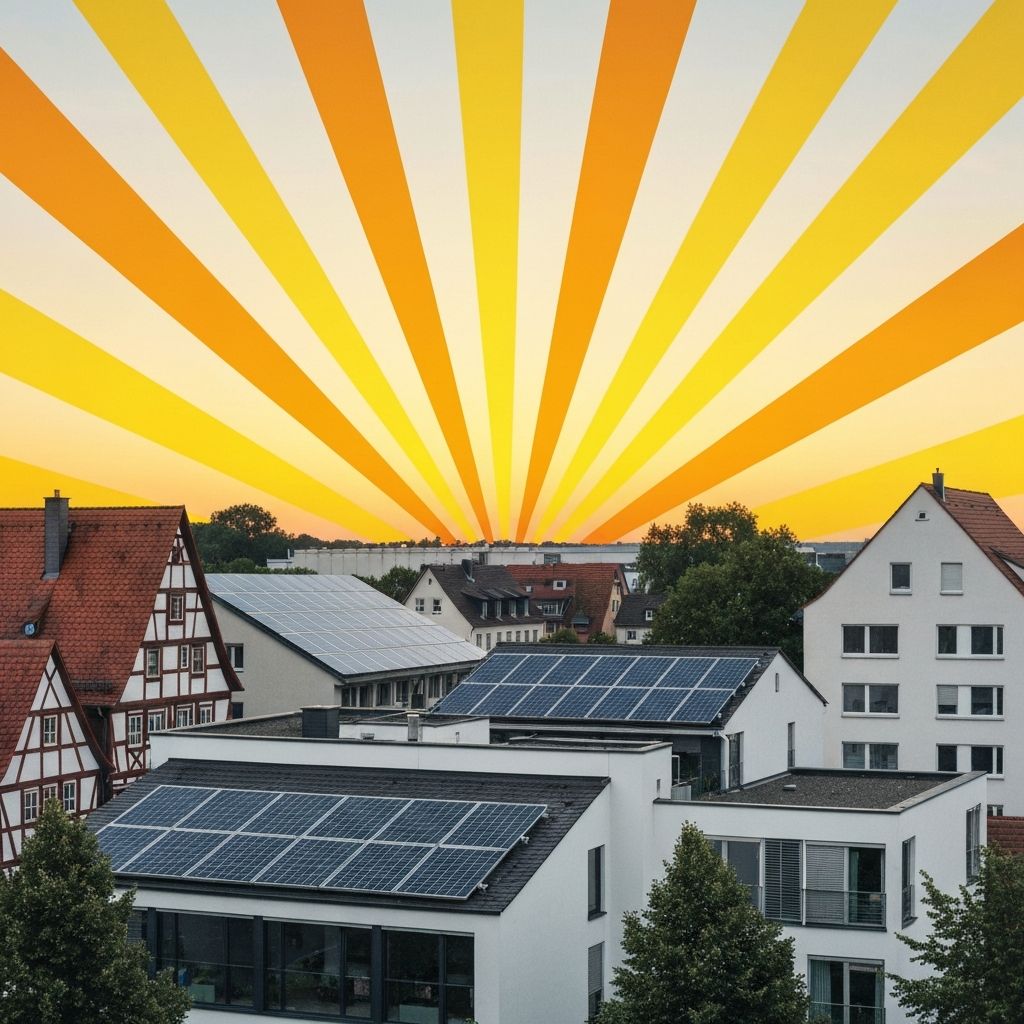
Germany's Solar Power Revolution
Germany has long been a global pioneer in solar energy, despite its temperate climate. With strong government incentives, technological innovation, and an enthusiastic public, Germany has become one of the top solar markets in the world. Solar installations on rooftops, fields, and industrial sites contribute substantially to the country's electricity generation, and the industry continues to expand rapidly.
The Importance of Solar Energy in Germany
Solar power is a cornerstone of the Energiewende. With ambitious targets to triple solar capacity by 2030, Germany is investing heavily in photovoltaic (PV) systems, energy storage, and smart grid technologies. The sector creates jobs, reduces carbon emissions, and empowers consumers to generate their own clean electricity.
Top 10 Best Solar Energy Companies in Germany
1. SMA Solar Technology — Headquartered in Niestetal, SMA is a global leader in solar inverter technology, supplying products for residential, commercial, and utility-scale installations worldwide.
2. Q CELLS Germany — Operating one of Europe's most advanced solar R&D centers in Thalheim, Q CELLS produces high-performance solar modules and complete energy solutions.
3. BayWa r.e. Solar Solutions — One of Europe's largest distributors and project developers, BayWa r.e. offers solar systems, battery storage, and EPC services.
4. IBC Solar — A pioneer in the German solar industry, IBC Solar offers complete PV systems, planning, and partner support across residential and commercial segments.
5. Solarwatt — A Dresden-based manufacturer of high-quality solar modules and integrated home energy storage systems.
6. SunPower Germany — Known globally for premium efficiency solar panels, SunPower serves the German market with high-performance residential systems.
7. EnBW Solar — A division of EnBW developing large-scale solar parks across Germany as part of its renewable expansion strategy.
8. Enerix — A franchise network of certified installers providing turnkey solar and storage solutions to households and small businesses.
9. SENEC — A leader in residential energy storage, SENEC offers innovative battery systems and energy management platforms.
10. Wirsol — Specializing in commercial and utility-scale solar projects, Wirsol has delivered numerous large-scale installations across Europe.
Solar Market Segments
The German solar market spans multiple segments: residential rooftops, commercial buildings, utility-scale solar parks, agrivoltaics, and floating solar. Each segment has unique requirements, and leading companies offer tailored solutions backed by financing options and long-term performance guarantees.
Innovation in German Solar Technology
German firms are at the cutting edge of solar innovation, including bifacial modules, high-efficiency cells, smart inverters, and integrated battery storage. Research collaborations with institutions like the Fraunhofer Institute for Solar Energy Systems (Fraunhofer ISE) drive continuous improvement in efficiency and cost reduction.
Government Support and Incentives
The German government supports solar adoption through feed-in tariffs, tax exemptions for residential systems, and subsidies for storage. Recent regulatory changes have made it easier for homeowners to sell excess solar electricity and for businesses to install on-site generation.
Benefits for Consumers
Installing solar panels in Germany significantly reduces electricity bills, increases property value, and provides energy independence. Combined with battery storage, solar systems can supply most of a household's annual electricity needs, even in cloudy regions.
Choosing the Right Solar Company
When evaluating solar providers, consider equipment quality, installation expertise, warranty terms, monitoring capabilities, and after-sales support. Reputable companies provide transparent pricing, performance guarantees, and ongoing maintenance services.
Future Outlook
Germany's solar industry is expected to grow exponentially in the coming years. With falling technology costs, supportive policies, and rising electricity prices, solar is becoming increasingly attractive. Innovations in vehicle-integrated PV, building-integrated PV, and AI-powered energy management will further expand opportunities.
Conclusion
Germany's solar energy sector showcases the power of policy, innovation, and entrepreneurship working together. The companies listed above are leading the country's transition to clean, affordable, and reliable solar power, benefiting consumers, businesses, and the climate alike.