
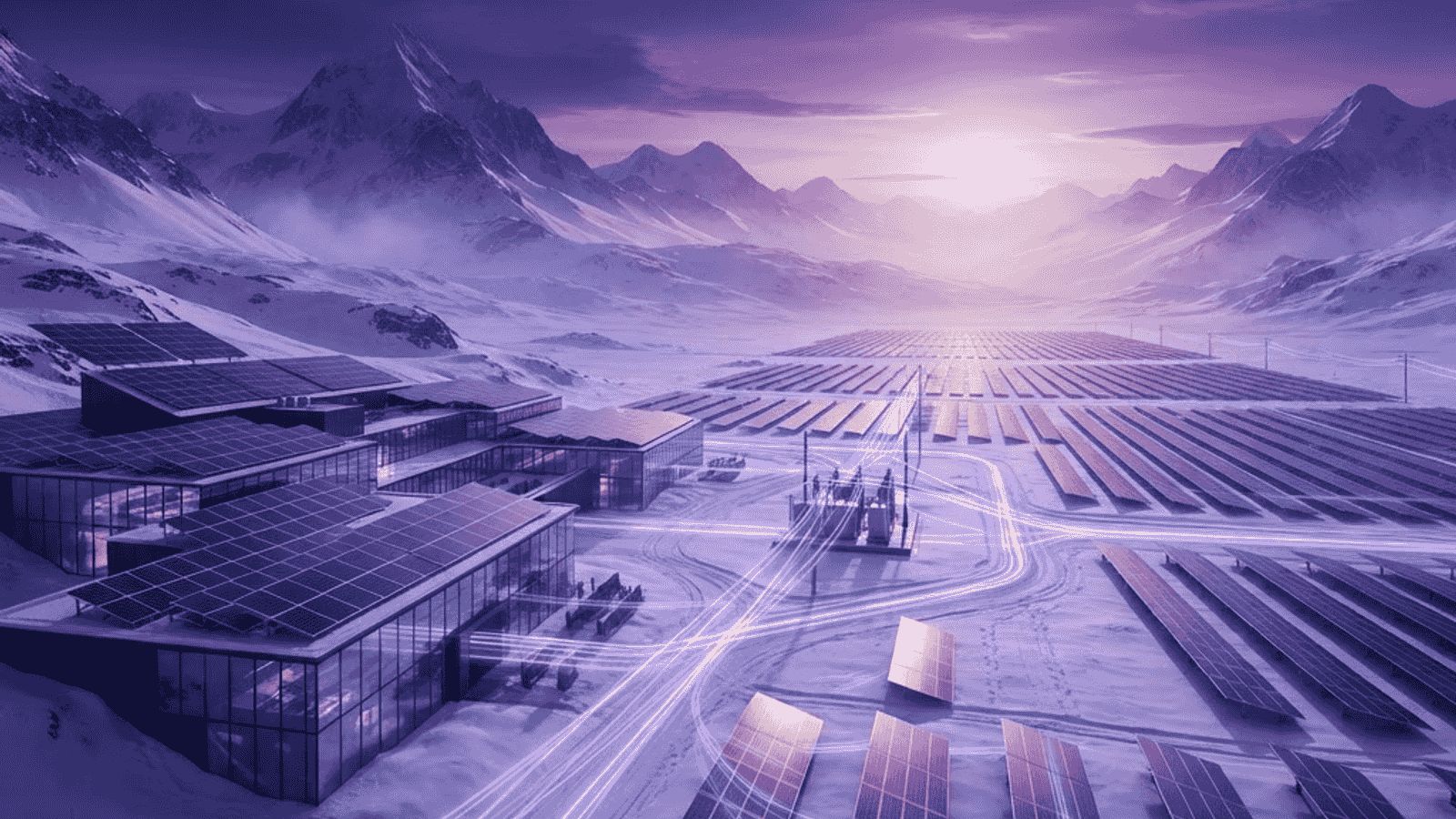
Solar at 61 Degrees North
The instinctive reaction to solar power in Anchorage is skepticism, and it is misplaced. The city receives roughly nineteen hours of daylight around the summer solstice, and cold operating temperatures actually improve photovoltaic panel efficiency. Snow-covered ground reflects additional light onto steeply tilted arrays, producing measurable albedo gains that flatter installations elsewhere never see. Real installations in the region routinely outperform naive latitude-based estimates.
The genuine limitation is seasonal distribution rather than total output. Production is heavily concentrated between March and September and drops to near zero in December, which means solar in Anchorage is best understood as a summer generation asset paired with grid interconnection or storage rather than a year-round standalone supply. Designers who acknowledge that openly produce systems that satisfy owners; those who promise uniform output do not.
What Distinguishes a Competent Installer
Array geometry is the first tell. Steep tilt angles — often far steeper than in southern states — capture low-angle light, shed snow, and exploit ground reflection. Mounting must handle snow load and frost movement, and roof penetrations must remain sealed through repeated freeze-thaw cycles. An installer who proposes a shallow, Lower 48-style layout has not adapted to the environment.
Then examine the electrical design and the paperwork. Inverter selection, rapid shutdown compliance, and interconnection agreements with the local utility all affect whether a system operates legally and profitably. Request monitored production data from existing local installations across at least one full year, and confirm warranty coverage on labor as well as equipment, since service calls are expensive in this market.
The Top 10 Solar Energy Companies in Anchorage
1. Midnight Sun Solar
A residential and light commercial installer known for high-tilt rooftop and ground-mount designs optimized for snow shedding.
2. Cook Inlet Photovoltaics
Focuses on commercial rooftop systems for warehouses, retail, and institutional buildings, including structural assessment.
3. Denali Solar Engineering
Provides design and engineering services, production modeling, and interconnection support for larger arrays.
4. Chugach Solar & Storage
Pairs photovoltaic installations with battery systems to extend usable output into evening and shoulder seasons.
5. Aurora Ground Mount Systems
Specializes in ground-mounted and pole-mounted arrays engineered for frost heave and heavy snow loading.
6. Glacier Off-Grid Solar
Builds standalone systems for cabins, remote sites, and seasonal properties, integrating generators and battery banks.
7. Tundra Solar Maintenance
Concentrates on service, monitoring, panel cleaning, inverter replacement, and performance troubleshooting for existing systems.
8. Inlet Municipal Solar Partners
Works with schools, boroughs, and public facilities on procurement, financing, and phased installation.
9. Northern Frontier Solar Contractors
A general contractor with an established solar division serving new construction and major renovations.
10. Sourdough Solar Cooperative
Coordinates group purchasing and shared community arrays to reduce per-household installation cost.
Trends in the Local Solar Market
Bifacial panel adoption stands out as particularly well-suited to Alaska, since modules that collect light on both faces capture snow-reflected irradiance that conventional panels waste. Combined with steep tilt, bifacial arrays have measurably improved production figures on recent local installations.
Battery pairing has also become standard rather than optional, driven by falling storage costs and interest in outage resilience. On the demand side, electrification — heat pumps, electric vehicles, and induction cooking — is raising household consumption, which improves the economics of self-generation. Financing has broadened too, with more lenders offering solar-specific products and more commercial owners using third-party ownership structures.
Costs and Payback Reality
Installed costs in Anchorage run above national averages because of shipping, labor, and structural requirements, but local electricity rates are also above average, and they are expected to rise as Cook Inlet gas supply tightens. Payback periods are therefore competitive, particularly for buildings with high summer load such as commercial refrigeration or air handling.
Get at least three quotes with production estimates stated in kilowatt-hours per year and the assumptions behind them made explicit. Be wary of any proposal that will not show its shading analysis, and confirm what happens to the warranty if the installing company ceases operating.
Final Thoughts
Solar works in Anchorage when it is designed for Anchorage. Prioritize installers with high-latitude experience, steep and snow-shedding array geometry, verified local production data, and honest seasonal expectations rather than year-round promises.