
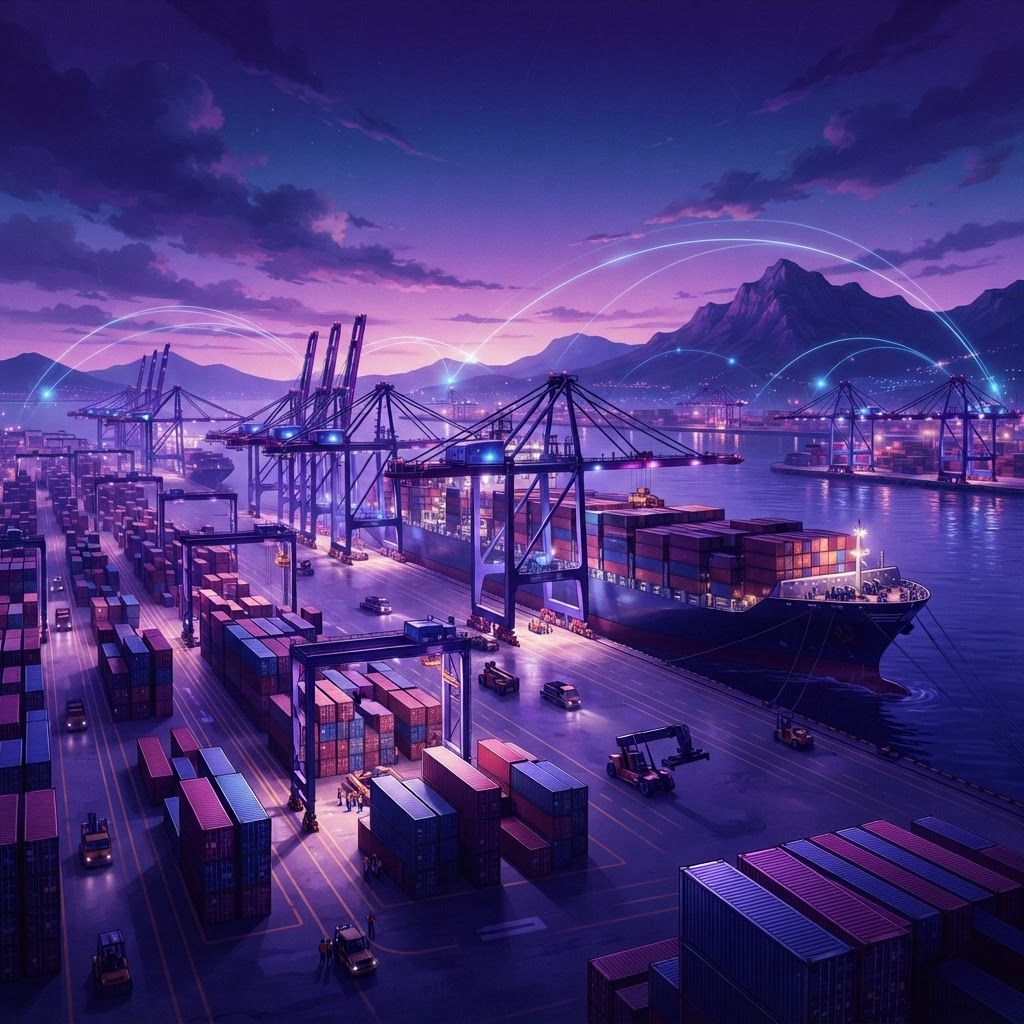
Vancouver: Canada's Maritime Front Door
The Port of Vancouver handles more cargo than any other port in Canada and ranks among the most diversified ports in North America, moving containers, grain, coal, potash, forest products, automobiles, and cruise passengers through a series of terminals stretching from Roberts Bank to Burrard Inlet. This diversity shapes the shipping industry that has grown up around it, producing a market where global container lines, bulk operators, specialised project cargo handlers, and marine service firms all coexist.
For businesses, this concentration is an advantage. Whether you are exporting agricultural commodities to Asia, importing consumer goods from manufacturing hubs across the Pacific, or moving oversized industrial equipment, there is almost certainly a Vancouver-based provider with directly relevant experience.
Understanding the Different Types of Shipping Companies
The term shipping company covers several distinct business models, and confusing them leads to poor procurement decisions. Ocean carriers own or charter vessels and sell space on them. Freight forwarders do not own ships but buy space in bulk and resell it, arranging the full door-to-door journey including inland transport, customs, and documentation. Non-vessel operating common carriers occupy a middle position, issuing their own bills of lading while using carrier vessels. Marine agencies and terminal operators provide the shore-side services that make vessel calls possible.
Most small and mid-sized businesses are best served by a good freight forwarder, which handles complexity on their behalf. Very large shippers with consistent volume often contract directly with carriers to secure guaranteed allocation and better rates.
Leading Shipping Companies Serving Vancouver
Maersk operates as the world's largest integrated container logistics company and calls regularly at Vancouver terminals. Beyond vessel capacity, the company has invested heavily in end-to-end logistics services, offering customers a single relationship covering ocean transport, customs clearance, warehousing, and inland distribution.
MSC is the other giant of container shipping, with an enormous fleet and extensive network coverage. Its Vancouver services connect the port to Asian, Oceanian, and Latin American markets, and its scale generally translates into schedule frequency that smaller carriers cannot match.
COSCO Shipping Lines maintains a strong transpacific presence and is a significant carrier for importers sourcing from Chinese manufacturing regions. Its integrated port and terminal investments globally give it operational advantages on high-volume lanes.
Ocean Network Express, formed from the container operations of three Japanese carriers, has established itself as a major transpacific operator with a reputation for schedule reliability and consistent service quality.
Hapag-Lloyd serves the Vancouver market with strengths in reefer cargo and specialised equipment, making it a common choice for exporters of perishable agricultural and seafood products where temperature integrity is critical.
CMA CGM rounds out the major carrier group with broad global coverage and a growing logistics services arm that appeals to shippers seeking more than pure ocean transport.
Fraser Surrey Docks and associated terminal operators provide the physical infrastructure for break-bulk, project cargo, and agricultural exports along the Fraser River, serving shippers whose cargo does not fit standard container dimensions.
Seaspan is a distinctly local success story, operating marine transportation, shipbuilding, and repair across the West Coast. Its tug and barge services move freight along the coast to communities and industrial sites unreachable by road, and its shipyards build vessels for government and commercial customers.
Montship and similar marine agency firms represent foreign vessel owners locally, handling port calls, crew logistics, customs formalities, and cargo documentation. These agencies are invisible to most cargo owners but essential to the functioning of the port.
Rhenus Logistics and comparable forwarders serve mid-market shippers with consolidation services, project cargo engineering, and customs brokerage, bridging the gap between global carrier scale and individual business needs.
Key Trends Shaping Ocean Shipping
Environmental regulation has become the dominant force in the industry. Emissions rules governing sulphur content, carbon intensity ratings for vessels, and growing pressure for alternative fuels are reshaping fleet investment. Vancouver has been an early adopter of shore power for berthed vessels, allowing ships to shut down auxiliary engines while in port and reducing local air pollution meaningfully.
Digitalisation has transformed booking and documentation. Electronic bills of lading, automated customs filing, and API-based rate quoting have compressed processes that once took days into minutes. Shippers now expect visibility platforms showing container position, terminal status, and estimated arrival with reasonable accuracy.
Supply chain resilience has replaced pure cost minimisation as the strategic priority for many importers. After several years of disruption, businesses are diversifying sourcing geographies, holding more buffer inventory, and building relationships with multiple carriers rather than concentrating volume with one.
How to Select a Shipping Partner
Begin with your cargo characteristics. Containerised general merchandise, temperature-controlled goods, hazardous materials, oversized project pieces, and bulk commodities each require different capabilities and different equipment. A provider excellent in one category may lack the certifications or assets for another.
Evaluate documentation competence carefully. Errors in commercial invoices, certificates of origin, or customs classifications cause delays and penalties that dwarf any rate savings. Ask prospective partners about their compliance processes and their experience with your specific trade lanes and product categories.
Consider service consistency over headline rates. Ocean freight pricing is volatile, and the cheapest quote in a soft market often becomes the first cancelled booking when capacity tightens. Providers who honour commitments through cycles are worth a premium.
Final Thoughts
Vancouver's shipping sector reflects the city's role as a genuine global trade hub. The presence of every major container line, a deep bench of forwarders and brokers, and specialised marine operators serving the coastal economy means that almost any shipping requirement can be met locally. Success comes from clearly defining your needs, understanding which type of provider addresses them, and building relationships that hold up when conditions become difficult.