
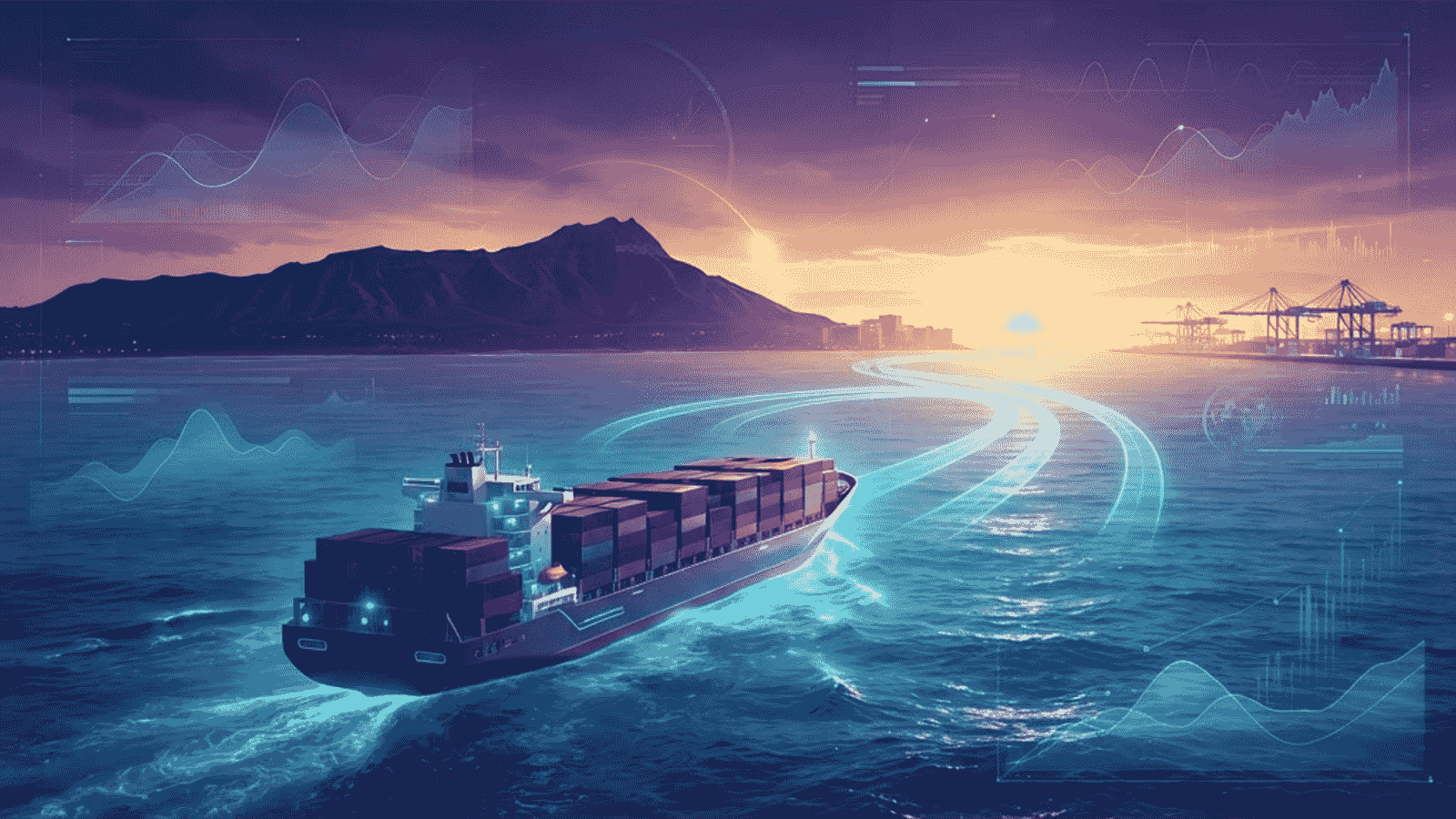
Honolulu Harbor and the Economics of Distance
Honolulu Harbor is the pivot point of Hawaii's economy. Cargo bound for anywhere in the state typically arrives here first, is discharged, and is then either distributed across Oahu or transferred to interisland vessels. That hub-and-spoke structure exists because concentrating deep-water container handling in one well-equipped port is far more efficient than duplicating it across the archipelago.
The distance involved defines the commercial reality. Voyages from the West Coast take several days, and from Asia considerably longer. Vessels frequently return with limited backhaul cargo, which raises the effective cost per unit shipped inbound. Combined with the Jones Act framework governing domestic maritime trade, the result is a market with a small number of large, deeply established carriers rather than a fragmented field.
Ten Shipping Companies Serving Honolulu
1. Matson Navigation Company is the defining name in Hawaii shipping, with a history dating to the 1880s. It operates frequent container service between West Coast ports and Honolulu, with capability across dry, refrigerated, and vehicle cargo. Its reputation rests overwhelmingly on schedule reliability, which allows Hawaii retailers and manufacturers to plan inventory with confidence.
2. Pasha Hawaii is the other principal carrier on the mainland trade, distinguished by strong roll-on roll-off capability that makes it a preferred choice for cars, trucks, construction plant, and other wheeled or oversized equipment, alongside container service. Its newer, cleaner-fuel vessels have raised environmental standards in the trade.
3. Young Brothers operates the interisland barge network from Honolulu to Maui, Kauai, Molokai, Lanai, and the Big Island. For statewide distribution it is indispensable, and its published sailing schedules effectively set the delivery calendar for neighbour island businesses.
4. Sause Brothers provides ocean towing and barge services in the Pacific, handling bulk commodities, petroleum products, and project cargo. Tug-and-barge operations of this kind are essential for cargo that does not fit standard container economics.
5. Foss Maritime supplies marine transportation and harbour services including tug assistance for vessels manoeuvring in Honolulu Harbor. Ship-assist work is invisible to most people yet fundamental to safe port operation.
6. Hawaii Stevedores handles terminal operations, container handling, and cargo processing at the harbour. Stevedoring quality directly determines vessel turnaround time and damage rates, making it a critical link that shippers rarely see but always feel.
7. Horizon Lines legacy operations form part of Honolulu's shipping history, having served the Hawaii trade before consolidation reshaped the market. Understanding that lineage helps explain the current carrier landscape and terminal arrangements.
8. Maersk participates in Hawaii-related international trades, connecting Honolulu shippers to global networks for cargo originating outside the United States. Its documentation, container availability, and global tracking systems are valuable to importers.
9. Norwegian Cruise Line and passenger shipping operators represent a different but economically significant strand, with interisland cruise itineraries based from Honolulu contributing substantially to the visitor economy and to harbour activity.
10. Aloha Cargo Transport and similar consolidators occupy the essential space between shippers and carriers, aggregating less-than-container-load freight so that smaller Honolulu businesses can access ocean shipping economics without filling an entire container.
Container, Roll-On Roll-Off, or Break Bulk
Choosing the right shipping method has more effect on cost than negotiating rates. Standard palletised goods belong in containers, and full container loads deliver the best per-unit economics for consistent volume. Vehicles and self-propelled equipment are far better suited to roll-on roll-off service, which avoids the cost and risk of lifting them into boxes. Genuinely oversized items such as generators, tanks, and structural steel usually move as break bulk or on barges, requiring engineered lifting plans.
Refrigerated cargo needs verified reefer capacity and continuous power through the entire chain, including at the terminal. Because Honolulu's food supply depends on this, reefer slots tighten around holiday periods and should be booked well ahead.
Timelines, Costs, and Planning
Practical planning starts with sailing schedules rather than transit days. A shipment that misses a cut-off waits for the next vessel, which can add most of a week. Building that into procurement calendars prevents the panic air freight that destroys margins. Hurricane season, roughly June through November, adds schedule uncertainty, and prudent shippers hold deeper inventory during those months.
Costs comprise base ocean freight, fuel-related surcharges, terminal handling, documentation, and inland delivery. Comparing all-in landed cost rather than headline freight rates is the only meaningful way to evaluate quotations.
Sustainability in Pacific Shipping
Emissions reduction has become a central theme. Carriers serving Hawaii have been introducing vessels designed for cleaner-burning fuels, improving hull and propulsion efficiency, and adopting slower steaming where schedules allow. Terminal electrification and reduced idling of handling equipment contribute as well. For island communities acutely exposed to sea level change and ocean health, these are not abstract concerns, and shippers increasingly ask carriers to document progress.
Choosing a Shipping Partner
Assess schedule frequency first, because more sailings mean smaller inventory buffers. Then evaluate equipment availability in the specific type you need, whether that is reefers, flat racks, or roll-on roll-off space. Review claims history and how damage is handled, since goods crossing an ocean face real handling exposure. Confirm interisland connectivity if you distribute statewide, and finally weigh the quality of digital booking and tracking, which increasingly separates responsive carriers from opaque ones.
Honolulu's shipping sector is compact but highly capable, and its reliability is the reason island life functions as smoothly as it does. Working with carriers and consolidators who understand your cargo profile is the surest way to control cost and avoid the disruptions that island supply lines punish most severely.