
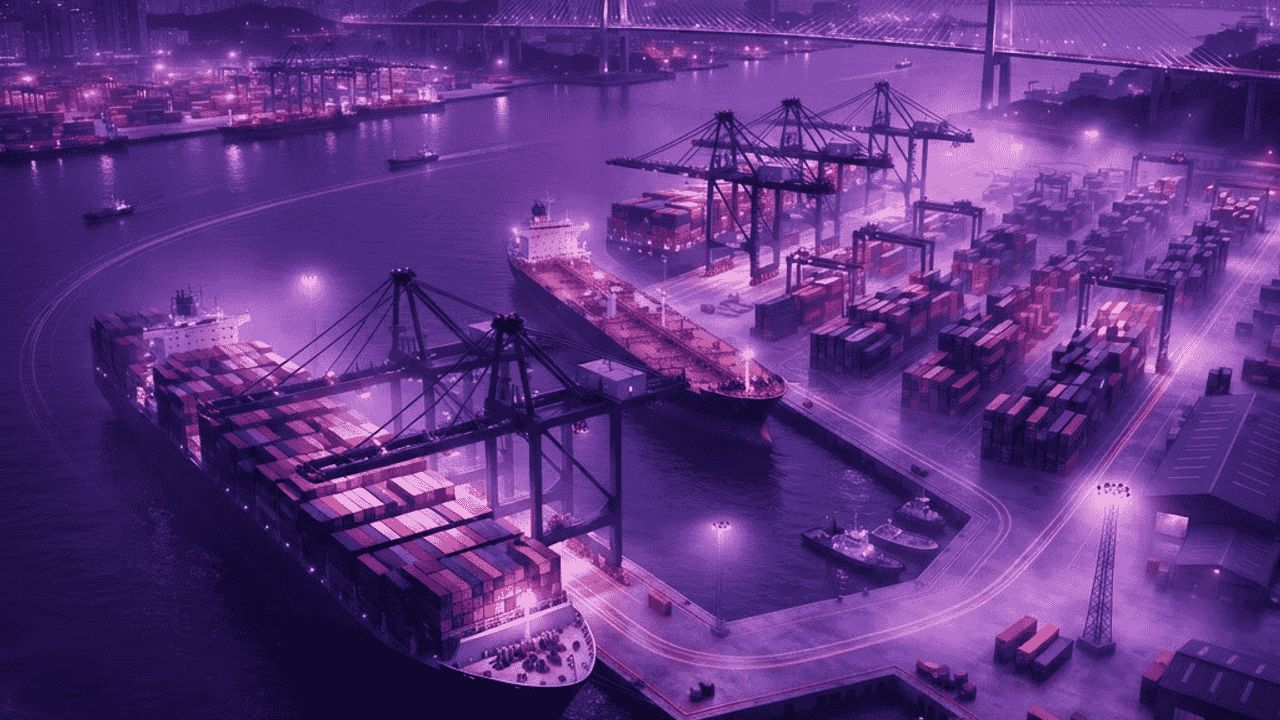
Shipping in One of America's Busiest Ports
The word shipping covers two very different worlds in Corpus Christi. There is maritime shipping, dominated by tankers, bulk carriers, and heavy-lift vessels moving crude oil, refined products, liquefied gases, grain, and industrial project cargo through a deepwater ship channel that has been progressively widened and deepened. And there is commercial shipping in the everyday sense, the parcel and freight services that let a local manufacturer, retailer, or online seller get products to customers.
Both matter to the local economy, and both are represented below. The maritime side explains why Corpus Christi consistently ranks among the top American ports by tonnage and why so much industrial investment has clustered along the channel. The parcel and courier side determines whether a small Coastal Bend business can compete with national sellers on delivery speed and cost.
Key Shipping Concepts Worth Knowing
For ocean freight, the fundamental distinction is between liner service, which runs published schedules on fixed routes, and tramp or charter service, where a vessel is hired for a specific voyage. Corpus Christi's export energy trade relies heavily on chartered tankers, while breakbulk and project cargo often move on specialized heavy-lift vessels. Terms of sale matter enormously; Incoterms determine who arranges carriage, who bears risk at each stage, and who pays duties.
For parcel and small package shipping, the drivers are dimensional weight, zone distance, service level, and surcharges. Dimensional weight pricing means bulky lightweight items are billed on volume rather than actual weight, which is why packaging optimization often produces bigger savings than rate negotiation.
The Top 10 Shipping Companies Serving Corpus Christi
1. Maersk
Maersk is the world's most recognized container shipping and integrated logistics company, and its combination of ocean capacity, inland transport, and customs services makes it a natural choice for Coastal Bend importers and exporters. Its strengths are network reliability, schedule integrity, and digital booking tools that give shippers visibility from factory to final destination. The company has also invested heavily in lower-emission vessels, which appeals to customers with published sustainability targets.
2. Mediterranean Shipping Company
MSC operates one of the largest container fleets in the world with extensive coverage of transatlantic, Latin American, and Asian trades. For Texas shippers, its capacity depth and competitive pricing on major lanes are the primary attractions, along with reefer expertise that supports agricultural exports requiring temperature control.
3. CMA CGM
CMA CGM brings strong service on transatlantic and Mediterranean routes plus a growing logistics arm handling warehousing and inland distribution. Shippers appreciate its flexibility on specialized equipment, including flat racks and open tops for cargo that cannot be loaded through standard container doors, which is common with industrial equipment moving through Corpus Christi.
4. Hapag-Lloyd
Hapag-Lloyd has a reputation for operational discipline and quality documentation, qualities that matter when a single error on a bill of lading can hold cargo at a port for days. Its dangerous goods handling expertise is relevant to the chemical shippers concentrated in the region, and its customer service model emphasizes consistency over lowest price.
5. Ocean Network Express
ONE, formed from the container operations of three Japanese carriers, offers broad global coverage with a focus on service reliability and container availability. For exporters in South Texas competing for equipment during peak season, dependable empty container supply is often as important as the freight rate itself.
6. Port of Corpus Christi Terminal Operators
Cargo does not move without stevedores and terminal operators. The companies handling liquid bulk, dry bulk, breakbulk, and project cargo at the port provide the cranes, laydown yards, warehouses, pipelines, and labor that connect vessels to land transport. Their efficiency determines vessel turnaround time, and for oversized project cargo their engineering capability determines whether a lift is even feasible.
7. UPS
UPS anchors the parcel side of the market with dense coverage across the Coastal Bend, a full range of ground and express air services, and freight capability for larger shipments. Its differentiators include strong tracking, integrated returns handling, and business tools that help local retailers offer competitive delivery promises without building their own logistics.
8. FedEx
FedEx competes head to head with UPS and often leads on time-definite air service, which matters for oilfield and industrial customers needing a part delivered overnight to avoid costly downtime. Its Express, Ground, and Freight divisions cover nearly every shipment profile, and its extensive drop-off network across Corpus Christi simplifies logistics for small businesses.
9. DHL Express
DHL is the strongest option for international express shipping, with customs expertise that reduces clearance delays on documents and small parcels moving abroad. Coastal Bend companies exporting samples, spare parts, or technical documentation to overseas partners frequently rely on DHL for the combination of speed and regulatory competence.
10. United States Postal Service
The Postal Service remains highly competitive for lightweight parcels and offers the broadest residential coverage, including rural Coastal Bend addresses where private carriers add surcharges. Flat rate options simplify pricing for small e-commerce sellers, and hybrid services that combine private line-haul with postal final delivery often produce the lowest total cost for low-weight shipments.
Choosing Between Ocean, Air, and Parcel
The decision framework is straightforward once cargo characteristics are documented. Ocean freight wins on cost for anything heavy, bulky, or non-urgent moving internationally, with transit measured in weeks. Air freight wins when the value of speed exceeds its substantial premium, typically for high-value goods, perishables, or production-critical parts. Parcel networks handle small packages domestically and internationally with unmatched convenience but at a high cost per pound that becomes uneconomic above roughly one hundred and fifty pounds.
Trends in the Shipping Industry
Decarbonization is the defining pressure on maritime shipping, driving investment in dual-fuel vessels, alternative fuels, and slow steaming practices that reduce emissions at the cost of transit time. Digitalization is second, with electronic bills of lading and standardized data exchange gradually replacing paper processes that have persisted for generations. Supply chain diversification is third, as importers spread sourcing across multiple countries and carriers to limit exposure to single-point disruptions.
Locally, channel improvement projects and continued energy export growth have expanded the size and number of vessels Corpus Christi can accommodate, reinforcing its position in global energy trade and attracting further terminal investment.
Practical Advice for Local Shippers
Audit your packaging before negotiating rates, because dimensional weight reductions deliver immediate savings across every carrier. Compare landed cost rather than freight cost, including duties, brokerage, terminal handling, and insurance. Insure high-value cargo properly; carrier liability limits are far lower than most shippers assume. Build relationships with more than one carrier so a service failure or capacity shortage has an alternative. And for international movements, engage a licensed customs broker early rather than after cargo has arrived.
Final Thoughts
Corpus Christi's shipping ecosystem spans global ocean carriers, sophisticated terminal operators, and the parcel networks that keep local commerce competitive. The right choice always follows from cargo characteristics, destination, and urgency rather than brand familiarity. Shippers who understand the tradeoffs, verify documentation carefully, and maintain multiple carrier relationships consistently move goods faster and at lower total cost through one of the most important ports in the United States.