
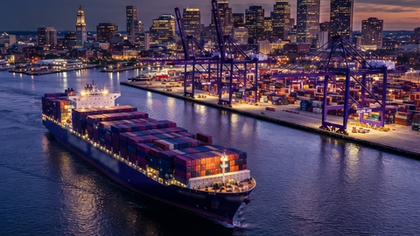
Boston's Maritime Advantage
Few American cities carry as deep a maritime legacy as Boston. The Port of Boston has been central to commerce for centuries, and it remains a vital gateway for containerized cargo, bulk goods, and specialized freight moving in and out of New England. This deepwater port, combined with excellent inland connections, gives Boston shipping companies a powerful platform from which to serve regional and global markets.
The city's diverse economy shapes the demands placed on shipping providers. Life-science exports, seafood, consumer goods, and industrial equipment all flow through Boston, each with its own handling requirements. The best shipping companies understand this diversity and offer tailored solutions that keep cargo secure, compliant, and on schedule.
Hallmarks of a Leading Shipping Company
Top shipping companies in Boston are built on reliability and expertise. They maintain strong carrier relationships, negotiate competitive rates, and provide dependable transit times that clients can plan around. Their teams bring deep knowledge of international regulations, documentation, and customs procedures, reducing the risk of costly delays.
Transparency is another defining trait. Leading providers offer real-time shipment tracking, proactive communication, and clear pricing. When issues arise, they respond quickly and keep clients informed, turning potential setbacks into demonstrations of service quality. This dependability is what earns long-term trust in a competitive industry.
Comprehensive Shipping Services
The strongest shipping companies offer a full range of services spanning ocean, air, and ground transport. Ocean freight remains essential for large-volume international shipments, while air freight serves time-sensitive and high-value cargo. Ground services connect ports and airports to final destinations throughout New England and beyond.
Beyond basic transport, top providers add value through freight consolidation, warehousing, customs brokerage, and cargo insurance. Many also offer specialized handling for hazardous materials, oversized loads, and temperature-sensitive goods. This breadth of capability allows businesses to rely on a single trusted partner for complex logistics needs.
Technology Transforming Shipping
Technology has revolutionized the shipping industry, and Boston's leading companies are at the forefront. Digital platforms now allow clients to request quotes, book shipments, and monitor cargo from a single dashboard. Data analytics help optimize routing, forecast demand, and improve efficiency across the supply chain.
Automation and integration are also reshaping operations. By connecting their systems directly with clients and carriers, top providers reduce paperwork, minimize errors, and accelerate the flow of goods. These digital capabilities have become essential differentiators in an industry where speed and accuracy matter enormously.
Ten Shipping Companies Serving the Boston Market
Maersk offers ocean transport and integrated logistics for shippers seeking global scale. MSC operates an extensive container network and supports a wide variety of international trade lanes. CMA CGM combines vessel services with inland and logistics capabilities, giving importers and exporters coordinated options.
Hapag-Lloyd is a significant global container carrier known for scheduled liner services and specialized equipment. Ocean Network Express provides broad international container coverage through a modern global network. Evergreen Marine serves major trade routes and offers established container-shipping expertise for diverse cargo.
Yang Ming Marine Transport is another international carrier available through the regional shipping ecosystem, with services spanning key global markets. ZIM Integrated Shipping Services is recognized for its agile approach, digital tools, and targeted liner services. OOCL combines ocean transportation with strong shipment-information systems. Matson is especially relevant to customers moving goods through its specialized Pacific services and integrated logistics operations.
Actual port calls, routes, sailing frequencies, and terminal arrangements change over time, so a famous name alone should not determine the decision. Boston-area shippers should compare current schedules, total landed cost, equipment availability, demurrage terms, inland connections, and performance on the exact lane required. A freight forwarder can also combine carriers when no single line provides the ideal itinerary.
Questions to Ask Before Booking
Importers and exporters should ask who controls each leg, which terminal will handle the container, and what happens if a sailing is omitted or cargo is rolled. Clarify free time, detention, demurrage, chassis, documentation, and customs responsibilities in writing. For refrigerated freight, confirm equipment condition, temperature instructions, monitoring, and emergency escalation. Companies moving smaller volumes should compare less-than-container consolidation against air freight on total cost and risk, not price alone. Finally, build realistic time around port availability and inland delivery; an attractive ocean transit estimate does not necessarily include terminal dwell or the final trip through Greater Boston traffic.
Selecting the Right Shipping Partner
Choosing a shipping company in Boston requires careful evaluation of service scope, industry experience, and reliability. Businesses should assess whether a provider has expertise in their specific cargo type, a strong network of carriers, and a track record of consistent performance. Responsiveness and communication are equally important indicators of a quality partner.
The best shipping companies in Boston function as strategic allies, helping businesses navigate complex global trade with confidence. By combining maritime heritage, comprehensive services, and modern technology, they ensure that goods reach their destinations efficiently and reliably, supporting the continued growth of New England's dynamic economy.