
Why Seed Selection Is the Most Consequential Farm Decision
Every input a grower applies over a season — water, fertilizer, labor, protection — operates within limits set by genetics. A variety bred for heat tolerance will survive a Mojave summer that destroys a cooler-climate cultivar. A disease-resistant tomato eliminates fungicide applications. A shorter-season melon fits an extra rotation into the same ground. In San Bernardino County, where growers face high heat, alkaline soils, restricted water and demanding market specifications, seed selection is not a routine purchase but a strategic decision made months before planting.
The county's diversity compounds this. A single seed dealer might serve a desert alfalfa producer, a valley-floor nursery, a greenhouse leafy-green operation, a community garden program and a landscape restoration contractor in the same week. Each needs entirely different genetics, and the leading suppliers have organized themselves around those distinctions.
Leading Seed Companies Serving the Region
1. Bayer Crop Science and its vegetable seed division. Operating one of the largest global vegetable breeding programs, the company supplies commercial growers with hybrid varieties across tomato, pepper, melon, brassica, cucumber and leafy categories. Its research investment produces traits that matter directly in Southern California: heat set in peppers and tomatoes, disease resistance packages, shipping durability and uniform maturity for mechanized harvest.
2. Syngenta. Syngenta's vegetable and field seed portfolio is similarly broad, with strong programs in leafy greens, melons and processing crops. The company pairs genetics with agronomic support, and its regional trials help growers select varieties validated under local heat and soil conditions rather than relying on catalog descriptions.
3. Sakata Seed America. Sakata has a long and respected presence in California vegetable and ornamental breeding. It is particularly well known for brassicas, including broccoli and cauliflower, and for high-quality ornamental flower genetics used by bedding-plant growers. Nurseries in the Inland Empire producing color for the Southern California landscape market are core customers.
4. Takii Seed. Another respected Japanese breeder with California operations, Takii supplies vegetable and flower seed known for consistency and refined quality traits. Growers serving premium retail and specialty markets often favor these varieties where appearance and flavor command a price premium.
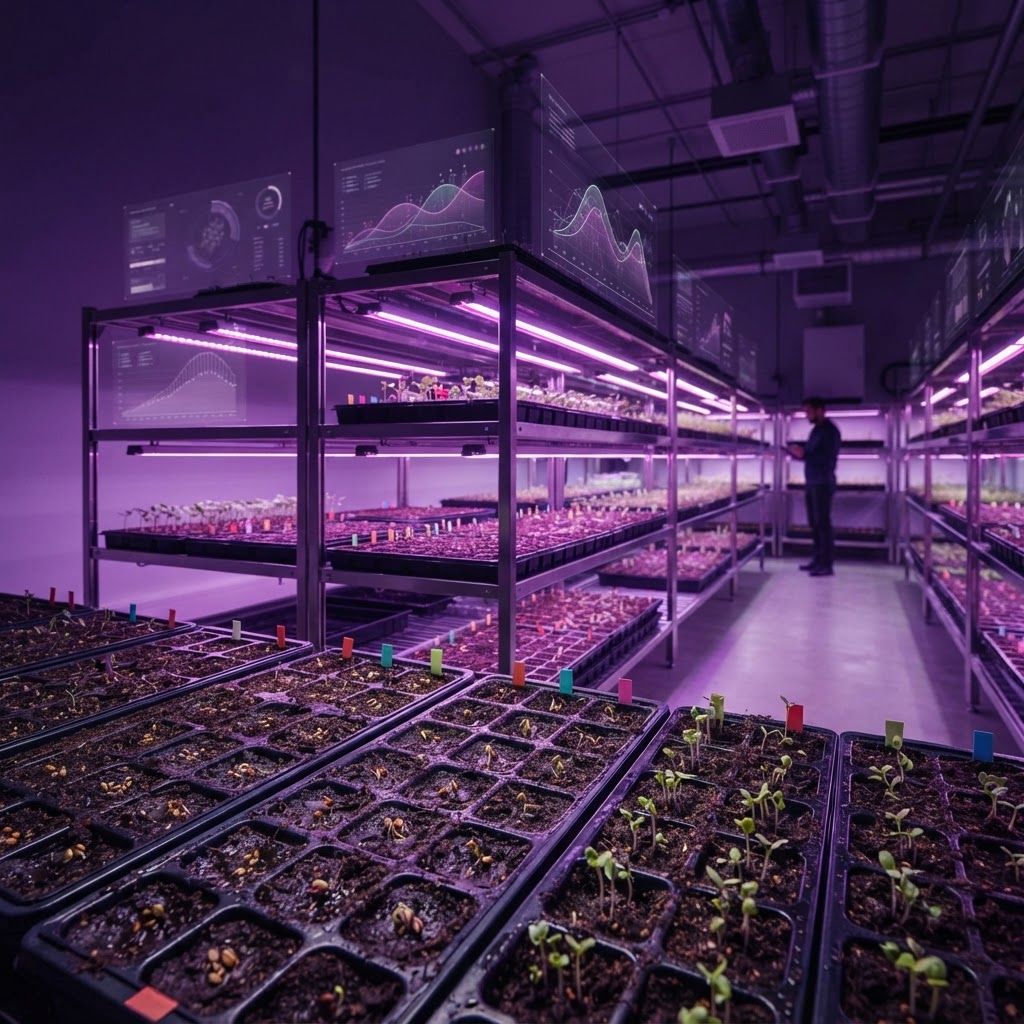
5. Rijk Zwaan and Enza Zaden. These Dutch breeding houses have become increasingly influential in the controlled-environment segment. Their genetics are developed specifically for greenhouse and hydroponic production — compact growth habit, high yield per square foot, extended shelf life and resistance to the pathogens that thrive in protected environments. As indoor agriculture expands across the Inland Empire, demand for this category of seed is growing quickly.
6. S&W Seed Company. With deep expertise in alfalfa and forage genetics, S&W is directly relevant to the county's desert hay economy. Modern alfalfa varieties offer improved salinity tolerance, dormancy characteristics matched to specific climates, pest resistance and higher forage quality — all of which translate into more tons and better feed value per acre-foot of water applied.
7. Alforex and forage-focused breeders. Specialist forage seed companies concentrate on alfalfa, sorghum, sudangrass and grass mixtures suited to hot, arid conditions. Their salinity-tolerant and reduced-lignin varieties address two of the hardest problems in desert forage production: degraded irrigation water quality and the tradeoff between yield and digestibility.
8. S&S Seeds. Native and restoration seed is a genuinely important Southern California category. Suppliers in this space provide native grasses, wildflowers, shrubs and erosion-control mixes for habitat restoration, post-fire rehabilitation, roadside stabilization and water-wise landscaping. Given the region's wildfire history and slope-stability challenges, this work has substantial public value.
9. Kamprath Seed and regional turf and cover crop suppliers. Regional houses supply turf blends, pasture mixes and cover crop seed such as vetch, clover, mustard and cereal rye. Cover cropping has gained real traction among California growers for soil health, nematode suppression, erosion control and organic matter building, and regional suppliers provide the practical blending expertise that makes it work.
10. Heirloom, organic and small-lot seed suppliers. Finally, an expanding tier of suppliers serves market gardeners, community farms, school programs and home growers with open-pollinated, heirloom and certified-organic seed. These companies emphasize regional adaptation, seed-saving viability and flavor over shipping durability, and they have become an important channel for the county's direct-market farms.
Trends in Seed and Genetics
Water-use efficiency is now an explicit breeding objective. Varieties with deeper root architecture, improved drought tolerance and shorter maturity windows allow growers to produce a crop with fewer irrigations, which in a regulated groundwater basin translates directly into more acres farmed per unit of allocation.
Salinity tolerance has become equally important. As growers rely increasingly on recycled and lower-quality water, genetics that tolerate elevated salts protect yield where soil and water chemistry would otherwise force a crop change.
Disease-resistance stacking continues to advance, reducing pesticide reliance and simplifying compliance. Meanwhile, breeding for controlled-environment production is emerging as a distinct discipline, since indoor growing rewards entirely different plant characteristics than open-field farming. Seed treatment technology, pelleting for precision planting and improved germination testing round out the practical improvements growers experience.
How to Select a Seed Supplier
Insist on local trial data. A variety's performance in another growing region tells you relatively little about how it will handle San Bernardino County heat, soil pH and water quality. Reputable suppliers run regional trials and will discuss results candidly, including failures.
Evaluate agronomic support as part of the purchase. The best seed companies provide planting-rate guidance, spacing recommendations, disease scouting advice and post-planting troubleshooting. Confirm seed quality documentation as well — germination percentage, purity, seed lot traceability and, where relevant, organic or non-genetically-modified certification.
Consider supply reliability. Popular varieties periodically go short, and growers who plan a season around a specific cultivar need assurance of availability or a validated alternative. Finally, weigh cost against outcome rather than per-pound price. Premium hybrid seed frequently costs several times more than commodity seed while returning far more in yield, uniformity and reduced input use.
Final Thoughts
The seed companies serving San Bernardino County span the full spectrum from global breeding programs to regional native-plant specialists, and that range is exactly what a county this ecologically varied requires. Growers who treat seed selection as a research exercise — reviewing trials, testing on limited acreage before committing, and matching genetics to their specific water and soil reality — capture value that no amount of downstream management can recover once the wrong variety is in the ground.