
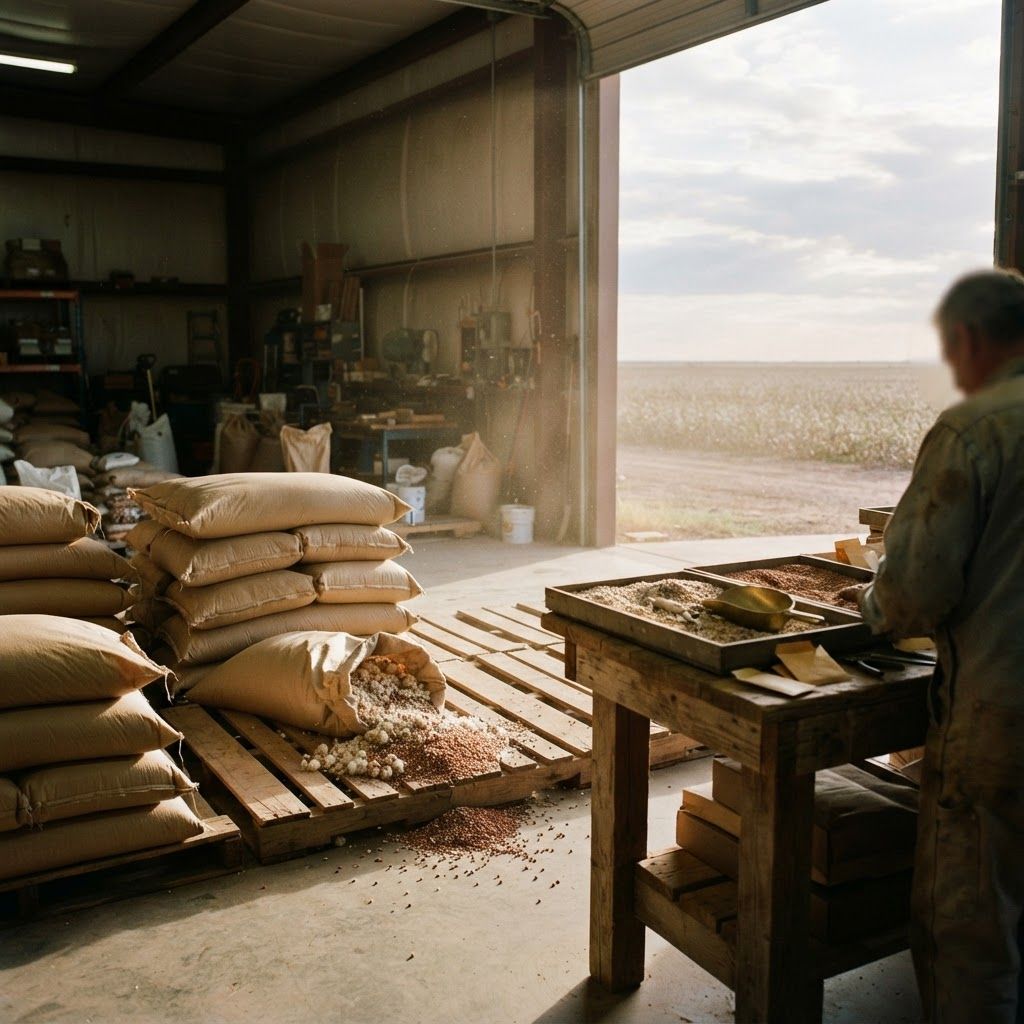
Seed as the Foundation of High Plains Agriculture
Every other input decision a grower makes is downstream of variety selection. Irrigation scheduling, fertility programmes, pest management and harvest timing all follow from the genetics planted in April and May. In the counties surrounding Lubbock, where rainfall is limited and the growing season is compressed, that decision carries even more weight than in wetter regions.
Lubbock's importance in the seed business comes from three things: enormous cotton acreage, a concentration of agricultural research capability, and a climate that makes the area a valuable testing ground for drought and heat tolerance. Varieties that perform on the Llano Estacado are proven under genuinely difficult conditions, which gives regional trial data unusual credibility.
What Growers Look For in a Seed Supplier
Local trial data matters more than national performance averages, because regional adaptation is the whole point. Beyond that, growers weigh seed quality and germination consistency, trait packages matched to local pest and herbicide programmes, agronomic support during the season, and availability of adequate quantities of the varieties they actually want rather than whatever is left in the warehouse.
The Top 10 Seed Companies Serving Lubbock
1. Caprock Cotton Seed Company
Focused specifically on cotton genetics for the High Plains, Caprock Cotton Seed Company maintains an extensive regional trial network and publishes results by soil type and irrigation level. Growers value that granularity, since a variety that excels under full pivot irrigation may disappoint on limited water. Its emphasis on early maturity suits the region's short season.
2. Llano Estacado Seed & Genetics
A multi-crop supplier covering cotton, sorghum, wheat and forages, this company positions itself as an agronomic adviser rather than simply a seller. Its field staff work with growers on rotation planning and variety placement across a whole farm, which tends to produce better outcomes than optimising each field in isolation.
3. South Plains Sorghum Seed Company
Grain and forage sorghum are the region's most important dryland crops, and this specialist concentrates on drought tolerance, sugarcane aphid resistance and standability. As water constraints push acres from cotton toward sorghum, its expertise has become increasingly relevant, and its hybrids are widely used in limited-irrigation rotations.
4. Hub City Wheat & Small Grains
Serving growers who use wheat for grain, grazing or dual-purpose systems, Hub City Wheat & Small Grains offers varieties selected for winter hardiness, forage yield and rust resistance. Its guidance on planting dates and grazing management is practical rather than generic, reflecting genuine familiarity with local conditions.
5. West Texas Peanut Seed Supply
Peanut production in the region requires careful variety matching to soil type, disease pressure and market class. West Texas Peanut Seed Supply provides certified seed alongside inoculants and planting advice, and its coordination with shellers and contract buyers helps growers align variety choice with the market they intend to sell into.
6. Panhandle Forage & Cover Crop Seed
As cover cropping and grazing integration expand, this supplier has become important. It provides custom cover crop mixes, forage sorghums, small grains and legumes tailored to specific goals such as compaction relief, nitrogen fixation or winter grazing. Its willingness to blend to order rather than push prepackaged mixes is a meaningful advantage.
7. Texas Plains Seed Conditioning & Treatment
Operating a seed cleaning, conditioning and treatment facility, this company serves both seed companies and growers saving or conditioning their own eligible seed. Accurate treatment application affects stand establishment directly, and its quality control in this often-overlooked step protects the value of everything upstream.
8. Redbud Vegetable & Specialty Seed
Supplying market gardeners, greenhouse growers and specialty producers around Lubbock, Redbud Vegetable & Specialty Seed carries vegetable varieties suited to high heat, intense sunlight and wind exposure. Its regional trialling of heat-tolerant tomatoes, peppers and brassicas has helped local growers extend production windows on both ends of the season.
9. Cotton Belt Seed Distributors
A distribution-focused business rather than a breeder, Cotton Belt Seed Distributors carries multiple brands and trait platforms, which lets growers compare genetics without brand loyalty pressure. Its logistical strength is getting the right varieties delivered during the compressed planting window, when availability decides what actually goes in the ground.
10. High Plains Research Seed Company
Working closely with public and private breeding programmes, this company handles increase and pre-commercial seed production for varieties in development. Its work is largely invisible to growers, but it is how promising genetics move from research plots to commercial availability, and its production discipline directly affects the purity of future commercial seed lots.
Breeding and Technology Trends
Drought and heat tolerance dominate current breeding priorities for this region, driven by aquifer decline and warming summer temperatures. Gene editing has accelerated development timelines for specific traits, and marker-assisted selection has made regional adaptation work faster and more precise than conventional breeding alone allowed.
Herbicide-resistant weeds, particularly Palmer amaranth, continue to shape trait package demand, pushing growers toward stacked systems combined with diversified chemistry and cultural controls. On the seed treatment side, biological products aimed at early root development and stress tolerance are moving from experimental to routine use.
Practical Advice on Variety Selection
Use multi-year, multi-location trial data rather than a single spectacular result. Split acreage across two or three varieties with different maturity profiles to spread weather risk. Match variety to your realistic water availability rather than your best-case scenario, and confirm that the trait package aligns with the herbicide programme you intend to run.
Final Thoughts
Seed decisions on the South Plains are made under real constraints, and the companies profiled here have built their reputations on regional performance data rather than national marketing claims. From cotton genetics and drought-tolerant sorghum to cover crop blends and specialty vegetable seed, Lubbock offers growers unusually well-informed choices. Getting that first decision right is still the most cost-effective yield investment available.