
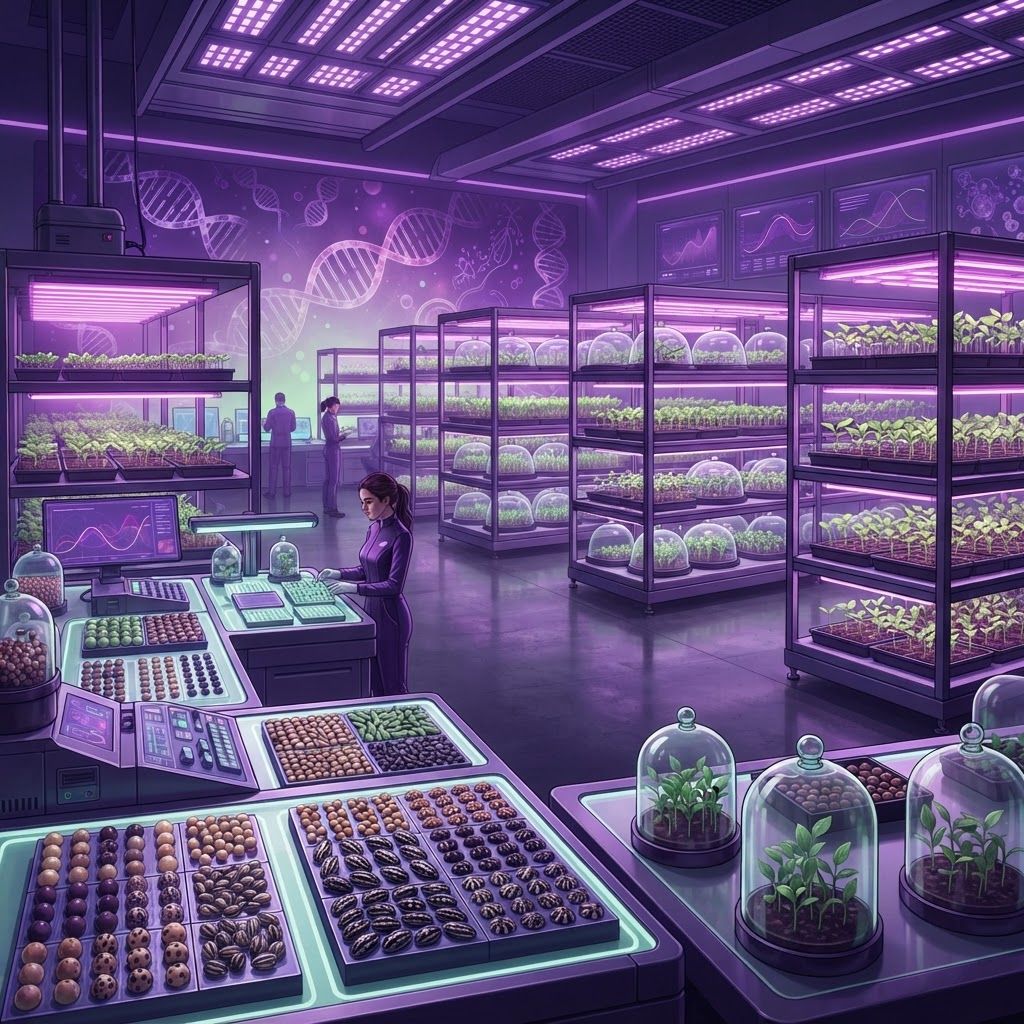
Why Seed Selection Matters More Than Almost Anything
Every garden and farm begins with a decision that constrains everything after it. Seed determines what a plant can become: its disease resistance, heat tolerance, days to maturity, flavor, and yield potential. No amount of skilled cultivation converts a variety poorly suited to local conditions into a successful crop.
Southern California presents specific challenges that make variety selection unusually consequential. Summers are long and hot with intense sun. Winters are mild, permitting cool season production when much of the country cannot grow. Water is limited. Coastal influence and inland heat create sharply different microclimates within short distances. Varieties bred for temperate summers frequently bolt, refuse to set fruit, or succumb to heat stress here, which is why suppliers with genuine regional knowledge are worth seeking out.
Types of Seed Suppliers
Vegetable seed companies supply food crop varieties, ranging from broad catalogs to regionally specialized selections. Native plant seed suppliers provide species indigenous to California habitats for restoration, habitat gardening, and low-water landscaping. Herb and medicinal seed specialists focus on culinary and medicinal plants.
Cover crop and soil building seed suppliers offer legumes, grasses, and mixes that fix nitrogen, suppress weeds, and improve soil structure. Flower and ornamental seed companies serve cut flower growers and gardeners. Heirloom and seed preservation organizations maintain genetic diversity in older, open-pollinated varieties. Sprouting and microgreen seed suppliers provide seed specifically tested for the food safety requirements of raw consumption.
Ten Notable Seed Companies Serving Glendale
1. Verdugo Regional Seed Company — Offers vegetable varieties selected for Southern California heat and mild winters, with planting calendars specific to the region. Regional trialing means recommendations reflect actual local performance rather than general catalog descriptions.
2. California Native Seed Collective — Supplies native wildflower, grass, and shrub seed with ecotype information for restoration and habitat planting. Provenance matters ecologically, and documentation of collection origin is a genuine differentiator.
3. Glendale Heirloom Seed Exchange — Maintains open-pollinated heirloom varieties with growing histories and seed saving guidance, preserving genetic diversity and allowing growers to save seed year over year.
4. Crescenta Herb Seed Supply — Focuses on culinary and medicinal herb seed with germination guidance, which matters because many herb species require stratification, light exposure, or specific temperature conditions to germinate reliably.
5. Adams Hill Cover Crop Seed — Provides legume, grass, and brassica cover crop seed and custom mixes for soil building, nitrogen fixation, and weed suppression in both small farm and garden contexts.
6. Foothill Microgreen Seed Company — Supplies seed specifically for microgreen and sprouting production, tested for pathogens as raw consumption requires, with germination rates suited to dense sowing.
7. Kenneth Road Cut Flower Seed — Offers flower varieties selected for stem length, vase life, and productivity for market growers and florists, along with succession planting guidance.
8. Grandview Drought Tolerant Seed — Specializes in species and varieties requiring minimal irrigation once established, supporting water-conscious landscaping and dryland gardening.
9. Glenoaks Organic Seed Supply — Provides certified organic seed for growers maintaining organic certification, where seed sourcing requirements are part of compliance rather than preference.
10. Chevy Chase Seed Library — Operates a community seed sharing program with locally adapted varieties and educational programming, functioning as both a resource and a preservation effort.
Open-Pollinated, Hybrid, and What the Difference Means
Open-pollinated varieties breed true, meaning saved seed produces plants resembling the parent. This allows seed saving and, over generations, local adaptation as a grower selects the best-performing plants. Heirlooms are open-pollinated varieties with documented history, often prized for flavor.
Hybrid seed results from controlled crossing of two parent lines, producing offspring with vigor, uniformity, and often disease resistance exceeding either parent. The tradeoff is that saved seed from hybrids does not reproduce the parent reliably, so seed must be repurchased. Neither category is superior in the abstract. Hybrids often excel where uniformity and disease resistance are essential; open-pollinated varieties offer flavor diversity and seed sovereignty. Many growers deliberately use both.
Germination, Viability, and Storage
Seed is a living product with finite life. Germination rates decline over time at species-specific rates: onion and parsnip seed loses viability quickly, while tomato and many brassica seeds remain viable for years. Reputable suppliers print packing dates and often germination test results, which is far more useful than a generic expiration date.
Storage conditions determine how quickly viability declines. Cool, dry, dark conditions dramatically extend seed life, while heat and humidity destroy it. Store seed in sealed containers in the coolest available location, and consider testing older seed before relying on it by germinating a small counted sample on damp paper towel. A twenty percent germination rate is still usable if you sow more densely, but only if you know about it before planting.
Planting Timing in a Mild Climate
Southern California's planting calendar confuses growers accustomed to other regions. Cool season crops such as lettuce, brassicas, peas, and root vegetables perform best planted in fall for winter and early spring harvest, precisely when much of the country grows nothing. Warm season crops go in during spring, but the extended season allows successive plantings and, for some crops, a second fall planting.
Heat is the limiting factor rather than cold. Many varieties bolt or fail to set fruit above certain temperatures, making heat-tolerant selections essential for summer production. Suppliers offering region-specific planting calendars save considerable trial and error.
Trends in Seed
Interest in locally adapted and regionally bred varieties continues to grow as growers recognize the limits of nationally distributed catalogs. Seed sovereignty movements have strengthened community seed libraries and saving practices. Disease resistance breeding remains a priority, reducing pesticide dependence.
Climate adaptation has become an explicit breeding goal, with heat and drought tolerance receiving increased attention. Meanwhile, biodiversity concerns have driven renewed interest in maintaining rare varieties that commercial consolidation had pushed toward extinction.
Final Thoughts
Seed companies serving Glendale offer regionally adapted vegetables, California natives, herbs, cover crops, and preserved heirlooms. Choose varieties suited to local heat and mild winters, understand the tradeoffs between hybrid and open-pollinated seed, store seed properly, and follow regional planting calendars rather than generic national ones. Seed is the cheapest input in any growing operation and the one that most determines the outcome, which makes careful selection the highest-leverage decision a grower makes.